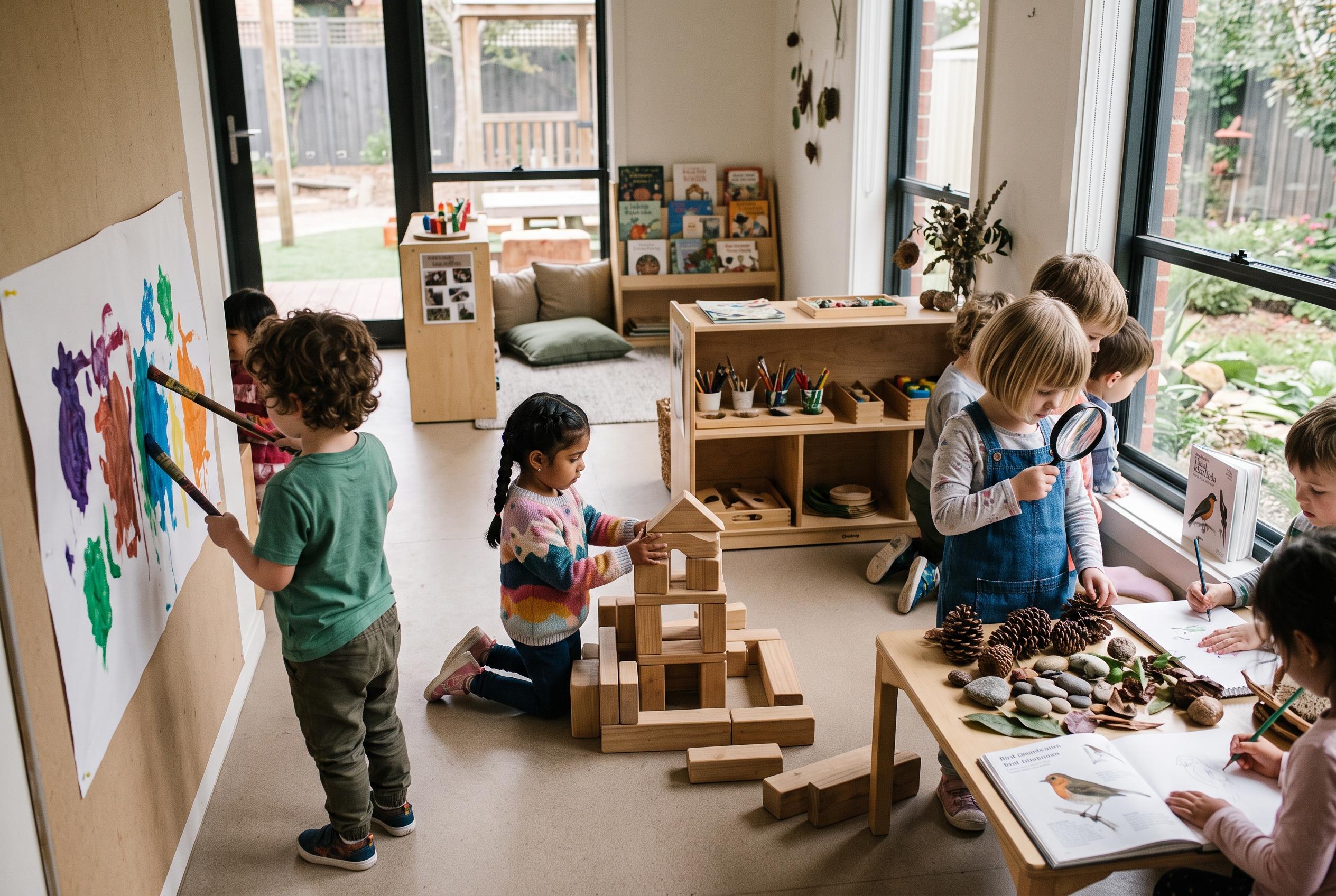

An insightful piece advocates for a more holistic and flexible approach to recognising children’s abilities, emphasising growth, resilience, and the importance of diverse learning styles over rigid categorisation.
A boy is not a finished product. He is a work in progress, shaped by observation, movement, language and the early discoveries that teach him how the world works. As the Good Men Project piece argues, childhood is not a countdown to adulthood but a long process of becoming, in which curiosity, effort and experience gradually build a person. That view aligns with the wider educational idea that children should be understood for their potential, not just for their latest test score or classroom performance. According to Psychology Today, Carol Dweck’s growth mindset model holds that ability is developed through effort, practice and resilience rather than fixed at birth.
That matters because boys, like all children, often reveal intelligence in ways schools do not always reward. A child may struggle with spelling in a workbook yet remember sports statistics, spot patterns in games or grasp risk and trade instinctively. The Good Men Project article makes the case that this is not failure so much as a mismatch between the child and the system trying to measure him. Psychology Today’s explanation of growth mindset reinforces that point: people learn more effectively when they see mistakes as part of progress rather than as proof of limitation.
Sport is used in the piece as a useful counterweight to classroom labels. On the field, a child learns that defeat is temporary, preparation matters and ability can change under pressure. Those lessons are rarely tidy, but they are real. The article argues that competition teaches a form of practical intelligence: how to adapt, recover and keep going when the first answer does not work. That is why the author sees the “dumb jock” stereotype as badly misplaced. In sport, as in life, a person is never fully known in advance.
The larger argument is about humility. Adults are often too quick to sort children into categories that feel definitive: smart, average, behind, gifted, difficult. The article pushes back against that instinct, saying measurement can be useful but must not be mistaken for a full account of a human being. That view fits with Dweck’s work, which suggests that labels can either open or close off effort, depending on how they are used. It also echoes a broader educational tradition that values experience, creativity and the uneven pace of development over simple standardisation.
In the end, the boy in the essay stands for something bigger than one child’s story. He represents the idea that potential is often hidden, delayed or expressed in unexpected forms. Schools, parents and coaches do not need to predict the whole future; they need to avoid shrinking it. The article’s central message is plain enough: children should be given room to grow into themselves, not treated as if they have already been measured to completion.
Disclaimer: This content is for informational purposes only and is not intended to be a substitute for professional medical judgment, advice, diagnosis, or treatment.