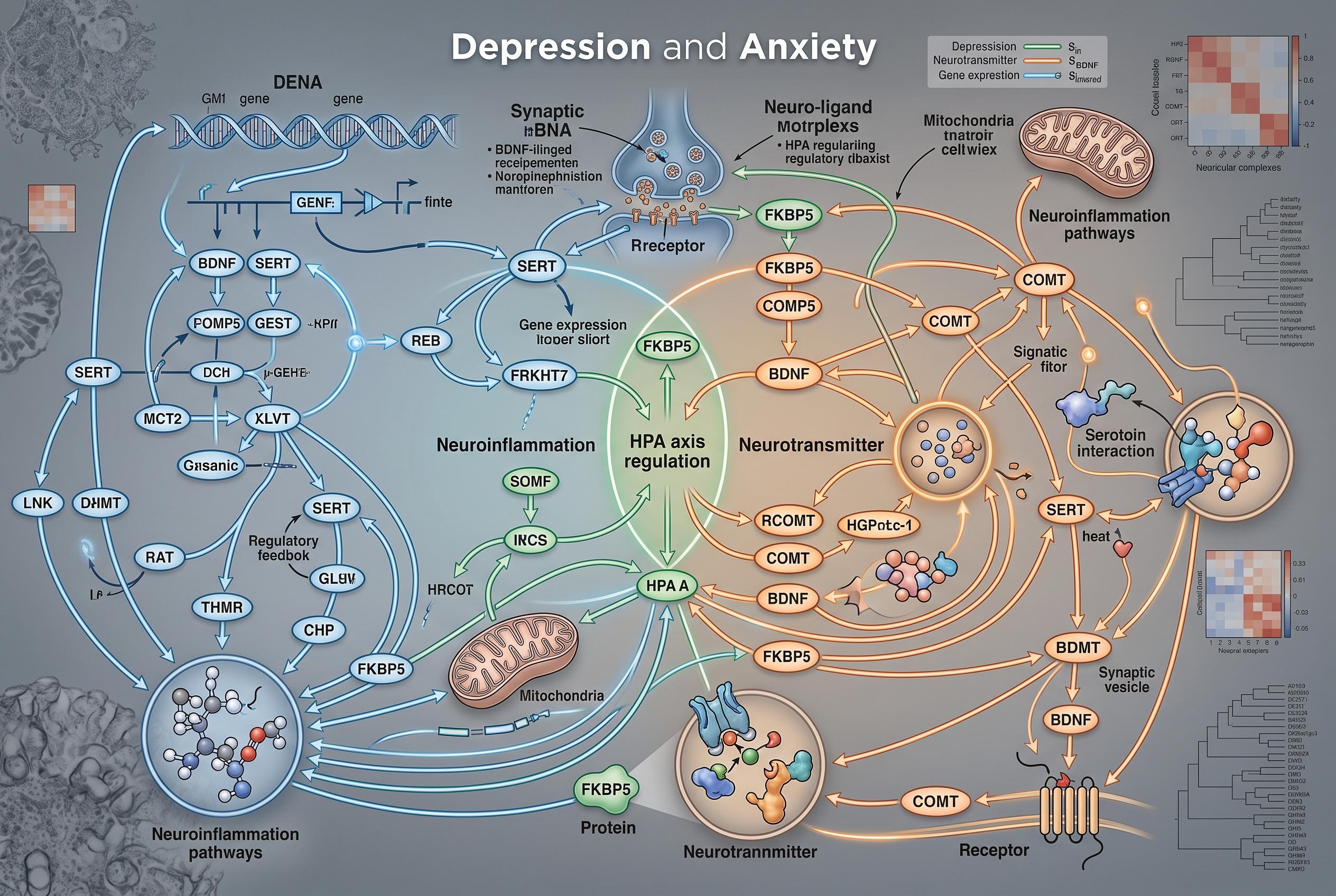

Two groundbreaking studies highlight shared genetic mechanisms underlying depression, anxiety, and other psychiatric conditions, paving the way for personalised treatments while emphasising the importance of environmental factors.
Two new studies are sharpening the picture of why depression, anxiety and other psychiatric conditions so often appear together, pointing to shared genetic pathways rather than neatly separate diseases. Researchers say the findings could help move psychiatry towards more personalised care, although they caution that genes are only part of the story.
One study, led by the University of Barcelona, identified the RBFOX1 gene as a central regulator of nearly 20 genes linked to depression, anxiety, irritability and neuroticism. The researchers described RBFOX1 as acting like a conductor in the brain, helping coordinate when other genes switch on and how they influence neural activity. Their work, published in Progress in Neuro-Psychopharmacology and Biological Psychiatry, also highlighted other genes including SP4, TCF4, PAX6 and CADM2, several of which have previously been associated with schizophrenia, addiction and neurological disorders.
A second international study, drawing on genetic data from Europe and East Asia, broadened that picture considerably. Researchers at Zhejiang University analysed more than 400 genomic regions tied to bipolar disorder, major depression, schizophrenia and anxiety disorders, and identified 88 previously unknown regions. Published in Molecular Psychiatry, the work found that many of the variants were active in brain regions involved in emotion, thought and decision-making, reinforcing the idea that different psychiatric diagnoses can share underlying biological mechanisms across ancestries.
The studies also carry practical implications. According to the researchers, overlapping genetic risk could one day help doctors identify people most likely to develop psychiatric illness earlier, improve diagnosis using biological markers and select treatments that target shared pathways. But they stressed that environment, lifestyle and sex differences also matter, and that much larger and more diverse datasets will be needed before genetic testing becomes routine in mental health care.
Disclaimer: This content is for informational purposes only and is not intended to be a substitute for professional medical judgment, advice, diagnosis, or treatment.