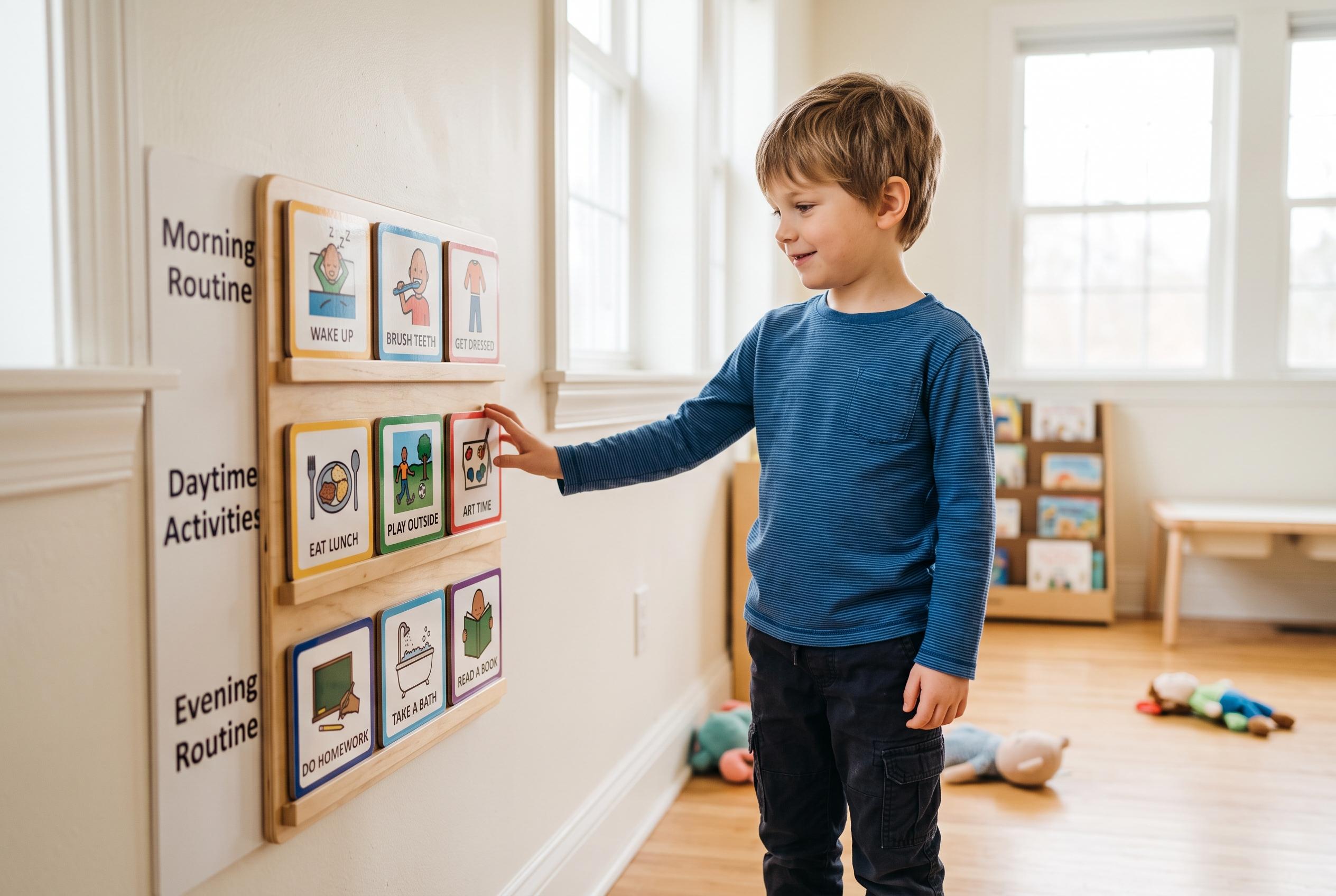

Visual choice boards are emerging as essential tools to help neurodivergent children navigate daily routines with confidence, offering clear, manageable options that reduce overwhelm and foster independence.
For many children, especially those who are neurodivergent, ordinary questions can quickly become overwhelming. A simple breakfast prompt can stall the morning, and even a limited verbal choice can tip into distress. Visual choice boards offer a calmer route by turning abstract questions into clear, concrete options a child can see, touch and select.
According to Autisable, choice boards replace open-ended pressure with visible answers, helping children indicate preferences without having to find the right words on the spot. The format can be printed, laminated, attached with Velcro or built into a tablet app. What matters most is that the child can see what is actually available, rather than having to guess or negotiate through language.
Educators and parenting resources make a similar case for giving children a small number of acceptable options. The Early Childhood Education Resource Hub says offering 2 or 3 realistic choices can increase engagement because children feel more capable and have a greater sense of control. Great Schools and Positive Discipline both describe visual decision-making tools such as the Wheel of Choice as ways to help children practise problem-solving and build responsibility in a structured, reassuring way.
That sense of structure is one reason choice boards can work so well. They reduce the strain on language processing, give children extra time to think and make the decision feel concrete rather than abstract. Visual supports can also lower anxiety, because the boundaries of the choice are clear. For children who often feel overwhelmed by open questions, that narrow frame can be the difference between resistance and cooperation.
Different formats suit different needs. Some boards offer just 2 choices for quick decisions, while others group options by category, such as snacks, toys or activities. More specialised versions can help with routines, rewards, feelings or calming strategies. My Neurodiversity says a useful board should keep options limited and meaningful, while Sensory Gift notes that the best choice board is not the most exhaustive one, but the one that reflects what is truly possible in the moment.
Choice boards can also be used across the day. At mealtimes, they can show only the foods on offer and prevent arguments over unavailable items. During play, they can guide a child towards activities that are actually permitted. They can also ease getting dressed by showing weather-appropriate outfits or help children name feelings and needs when words are hard to find. TES describes similar visual supports for break time and recess, designed to promote independence and self-regulation.
Using the boards well depends on consistency. Autisable notes that boards should include only real choices, because offering something that cannot be provided undermines trust. It also says many children do best with just a few options at first. If a child always picks the same item, that may simply reflect comfort and predictability. If a child refuses the board altogether, adults may need to simplify the layout, reduce pressure or temporarily step back.
Over time, choice boards can support wider independence. Some children begin by pointing to pictures and later start saying the words as well. Others learn to carry the skill into new settings, from home to school to public places. Digital systems can make that easier by allowing quick updates, portable use and even audio prompts. In that sense, the boards are not just about making one decision. They are about teaching children that their preferences can be expressed, understood and respected.
Disclaimer: This content is for informational purposes only and is not intended to be a substitute for professional medical judgment, advice, diagnosis, or treatment.