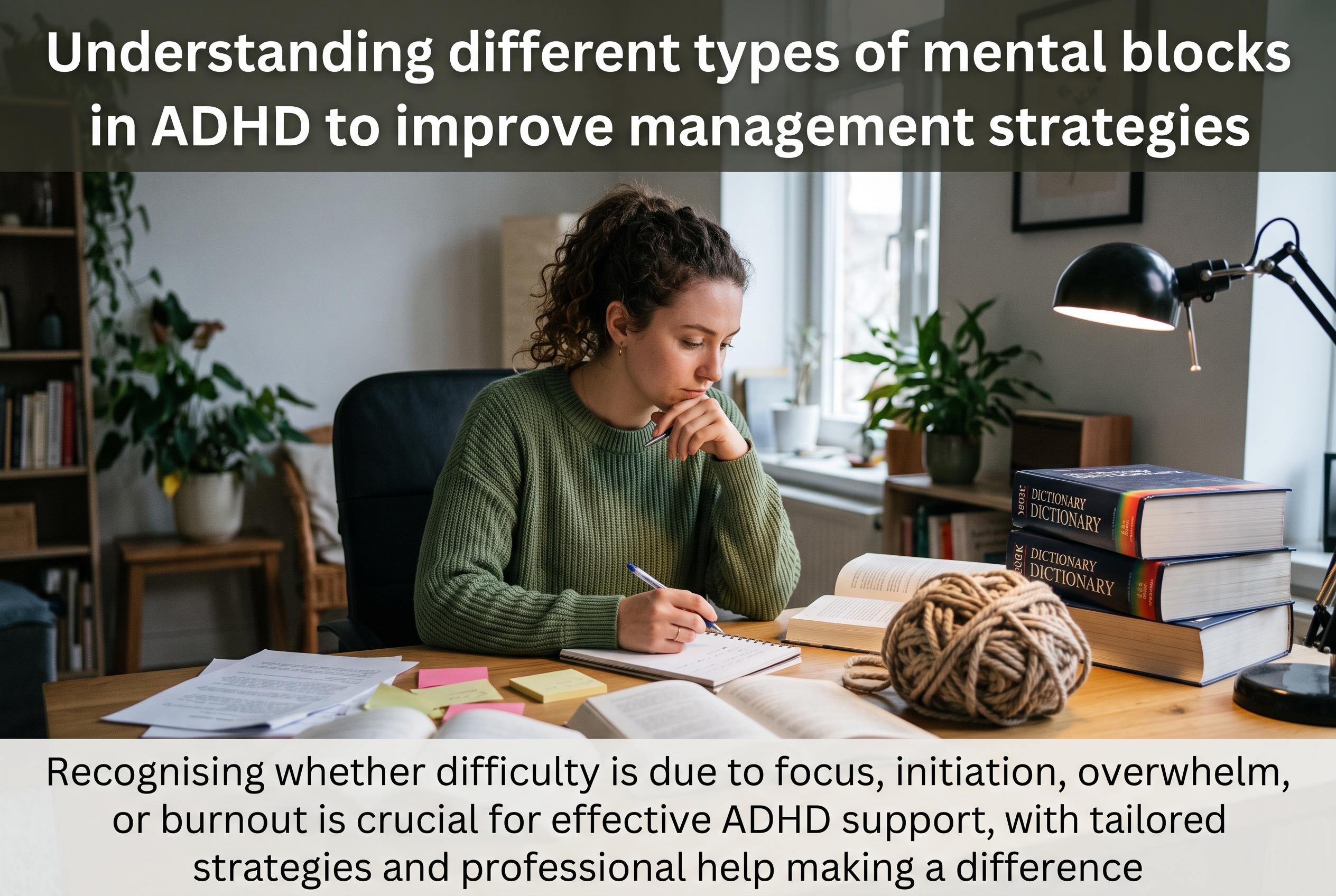

Recognising whether difficulty is due to focus, initiation, overwhelm, or burnout is crucial for effective ADHD support, with tailored strategies and professional help making a difference.
Many people with ADHD describe the same frustrating sensation: they know what needs doing, yet their mind seems to stall. But that blockage is not always the same thing. Sometimes the issue is attention, sometimes it is getting started, sometimes it is overwhelm and sometimes it is deeper exhaustion that looks like burnout. Distinguishing between them matters because each calls for a different response.
Focus problems usually show up as drifting attention, with the mind wandering away from the task in hand. Task initiation is different: the person may understand the job clearly but still feel unable to begin. ADHD specialists say this can be tied to executive dysfunction, which makes planning, prioritising and sequencing ordinary actions feel unusually hard. In practice, that can look like mental freezing, or what many people call ADHD paralysis.
Overwhelm and burnout can be even easier to confuse. According to ADHD-focused health guides, overwhelm tends to be a short-term response to too much input at once, whether that is noise, too many demands or too many decisions. Burnout is more cumulative. It builds over time and is marked by persistent exhaustion that does not ease simply with a single night’s rest. Some experts also distinguish burnout from a meltdown, which is usually an acute, intense reaction rather than a long-running state of depletion.
The triggers can be varied. Sensory overload can leave someone irritated, scattered and desperate to escape the situation, while decision fatigue can make even small choices feel heavy. ADHD resources also point to the role of dopamine, the brain chemical linked to motivation and reward, in explaining why some tasks feel almost impossible to start or sustain. That is why strategies such as breaking work into smaller steps, using time blocks and working alongside another person can help. So can routines that reduce the number of decisions required each day.
The first step is to notice the pattern. If attention slips but energy is intact, the answer may be a focus strategy. If the problem is starting, task initiation supports may help most. If everything feels too much, the priority is to reduce stimulation and simplify the load. If exhaustion has become chronic, the issue may be burnout, and that can require genuine rest and a broader treatment plan. ADHD organisations and mental health writers alike stress that medication can help some people, but practical structure, pacing and professional support are often part of the solution too.
Disclaimer: This content is for informational purposes only and is not intended to be a substitute for professional medical judgment, advice, diagnosis, or treatment.