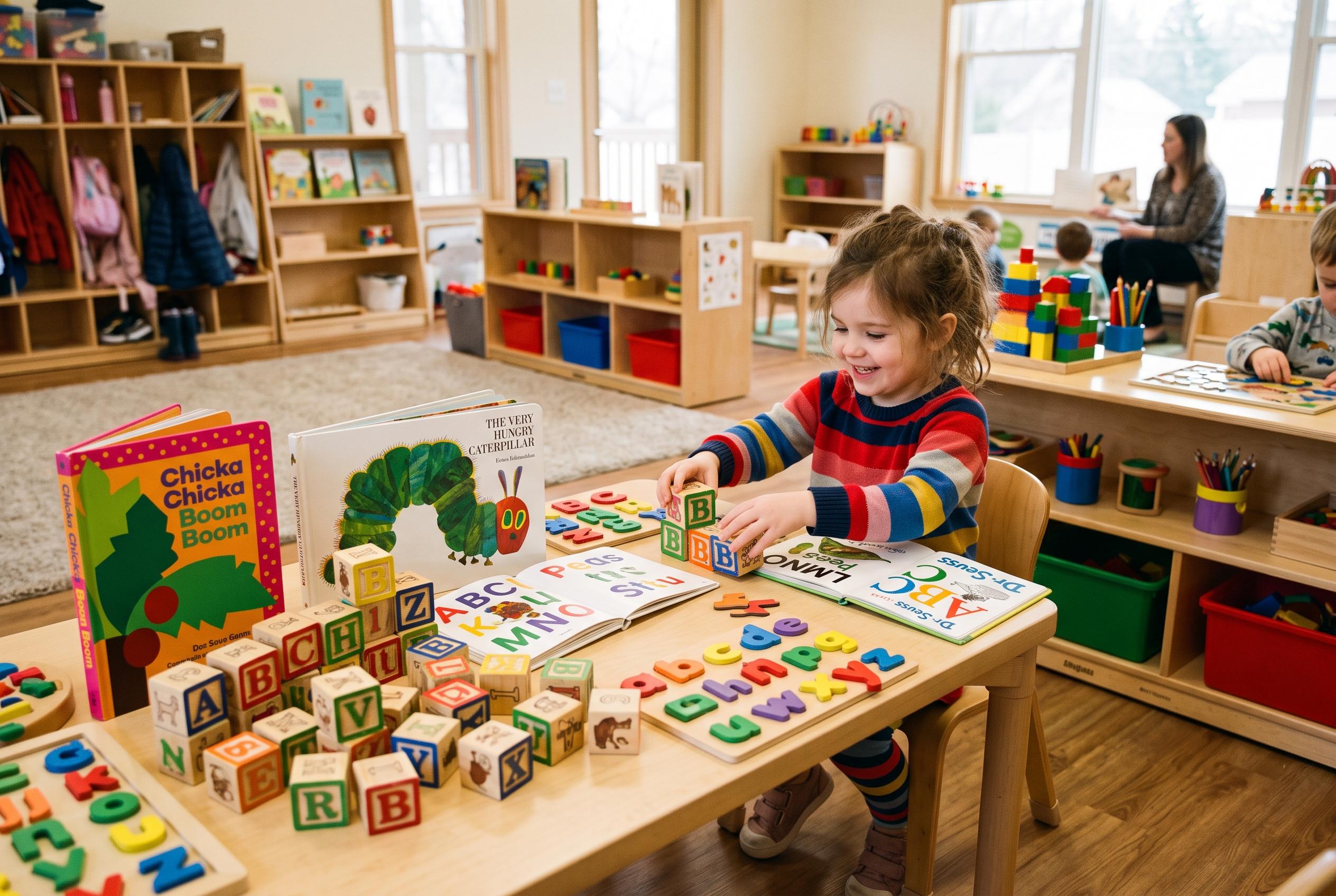

Research indicates that embedding letter learning into play, conversation, and everyday activities significantly enhances preschoolers’ letter recognition skills, challenging traditional worksheet-based methods.
Helping preschool children learn letters does not have to mean handing out worksheets or drilling flashcards. Research suggests they make the most progress when letters are woven into play, conversation and repeated everyday experiences that feel meaningful rather than forced.
The reason is simple: letter recognition is one of the earliest building blocks of reading. Before children can sound out words, they need to notice letters, know their names and begin connecting those symbols with speech sounds. A 2010 meta-analysis by S. B. Piasta and R. K. Wagner found that deliberate alphabet teaching improves letter knowledge far more than mere exposure to print, and that children tend to learn best when letter names and letter sounds are taught together.
That evidence supports a more active approach. Children are more likely to remember letters when they can touch, move and build them with materials such as magnetic letters, puzzles, play dough, sand trays and craft sticks. Experts also recommend starting with a child’s own name, which gives letters immediate meaning and tends to spark more interest than a random sequence of symbols. Shared reading can help as well, especially when adults point out letters, talk about beginning sounds and invite children to look for familiar names on the page.
Research also points to the value of keeping the focus narrow. Rather than trying to cover the whole alphabet at once, teachers and parents can work with just a few letters at a time and revisit them often. Studies on early literacy instruction have found that young children benefit from explicit teaching, regular review and a planned sequence that steadily builds confidence instead of overwhelming them with too much at once. That approach also helps explain why many educators favour a cumulative routine in which new letters are introduced only after earlier ones have been reinforced.
In practice, the most effective alphabet work often happens outside formal lessons. Sidewalk chalk, scavenger hunts, baking, outdoor writing, sorting games and classroom labels all create natural chances to notice letters in context. Research on preschool teaching practices has found that many educators still miss those opportunities, even though they are available throughout the day. The broader lesson is that letter learning works best when it is playful, intentional and repeated often enough for children to make the connection between symbols, sounds and meaning.
Disclaimer: This content is for informational purposes only and is not intended to be a substitute for professional medical judgment, advice, diagnosis, or treatment.