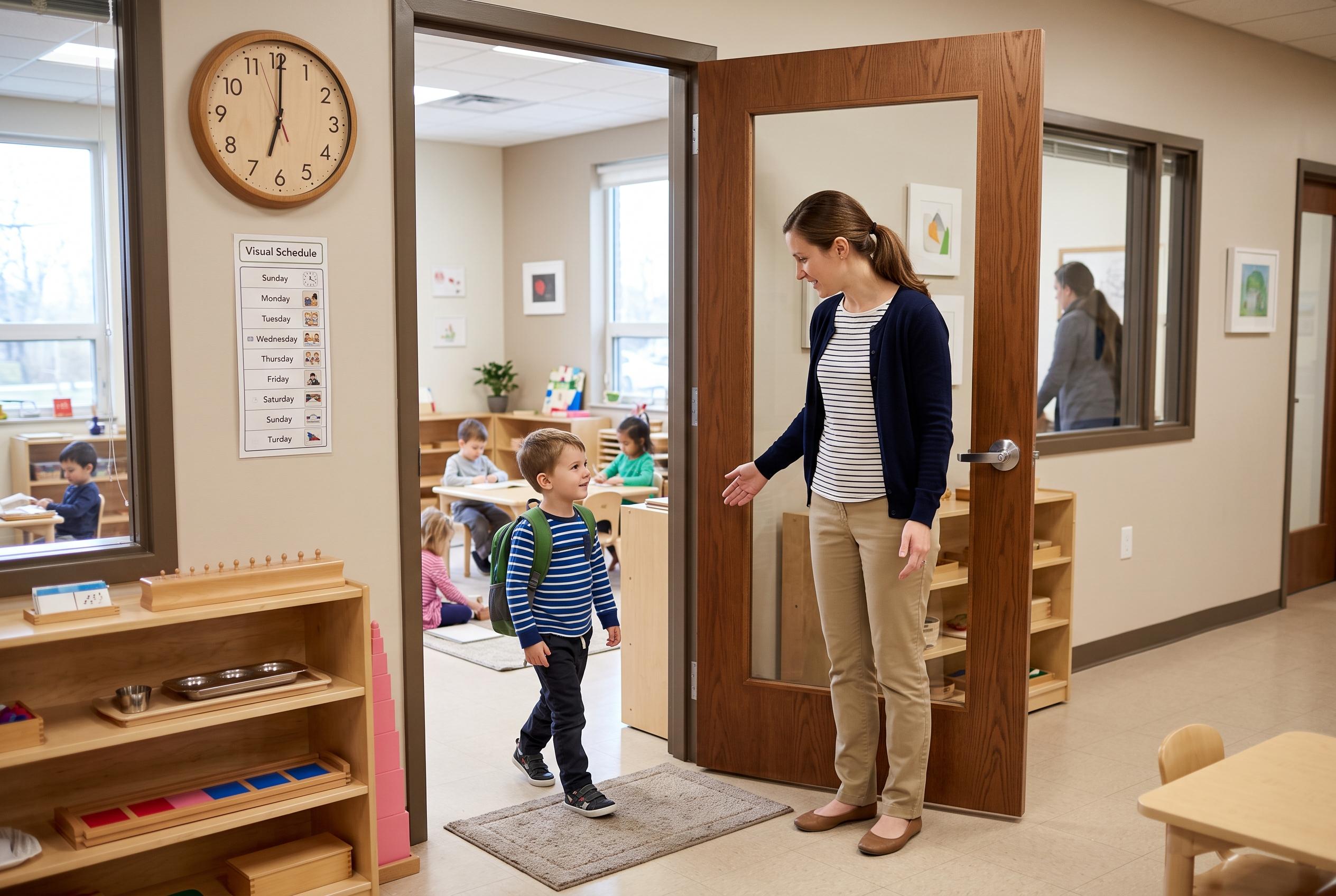

In Montessori settings, timely arrivals and departures are more than routine; they underpin the focus, social harmony, and emotional safety of young learners, while also supporting teachers’ workflow.
In Montessori classrooms, punctuality is not a minor household habit but part of how the day is designed to work. The morning work cycle depends on an unbroken stretch of time in which children can choose activities, concentrate and settle into purposeful work. According to Montessori guidance, repeated late arrivals do not just affect the child walking in after the rest of the class; they can also unsettle the wider room by breaking the rhythm that helps young children focus.
That disruption can be especially hard for the child arriving late. By the time they enter, classmates may already be absorbed in work, coats may be hung up and activities underway. For a young child, stepping into that scene can feel like being behind before the day has properly begun. Montessori writers say that sense of lag can matter because children are often more aware of social and emotional cues than adults realise.
The same logic applies at the end of the day. When a child is regularly among the last to be collected, they can begin to notice that their friends have left and the room is emptying around them. Montessori educators often frame arrival and departure routines as part of the classroom’s sense of safety and belonging, not merely as a timetable issue. Predictability, they argue, helps children move between home and school with less stress.
There is also a practical cost for teachers. A delayed pick-up can leave staff members staying beyond their planned hours, supervising one child while also closing down the classroom. Montessori commentators note that this kind of regular strain can contribute to staff fatigue, which in turn affects the patience and steadiness families expect from teachers each day.
For families dealing with a slow morning routine, the problem is often less about discipline than about pace. Montessori educators say many young children move through dressing, breakfast and other transitions on their own internal timetable, and pressure can make them dig in further. The answer is usually not more shouting or tighter control, but more structure that respects the child’s rhythm.
Practical steps can help. Montessori advice commonly includes building in a proper time buffer, offering limited choices within routines, using visual schedules for younger children and preparing as much as possible the night before. Those approaches are meant to reduce friction without turning the morning into a contest of wills.
Montessori education places a strong emphasis on grace and courtesy, routine and observation, and punctuality fits within that wider philosophy. The goal is not rigid rule-following for its own sake, but a classroom culture in which children, teachers and families can rely on one another. In that sense, being on time is treated as a small but meaningful form of respect.
Disclaimer: This content is for informational purposes only and is not intended to be a substitute for professional medical judgment, advice, diagnosis, or treatment.