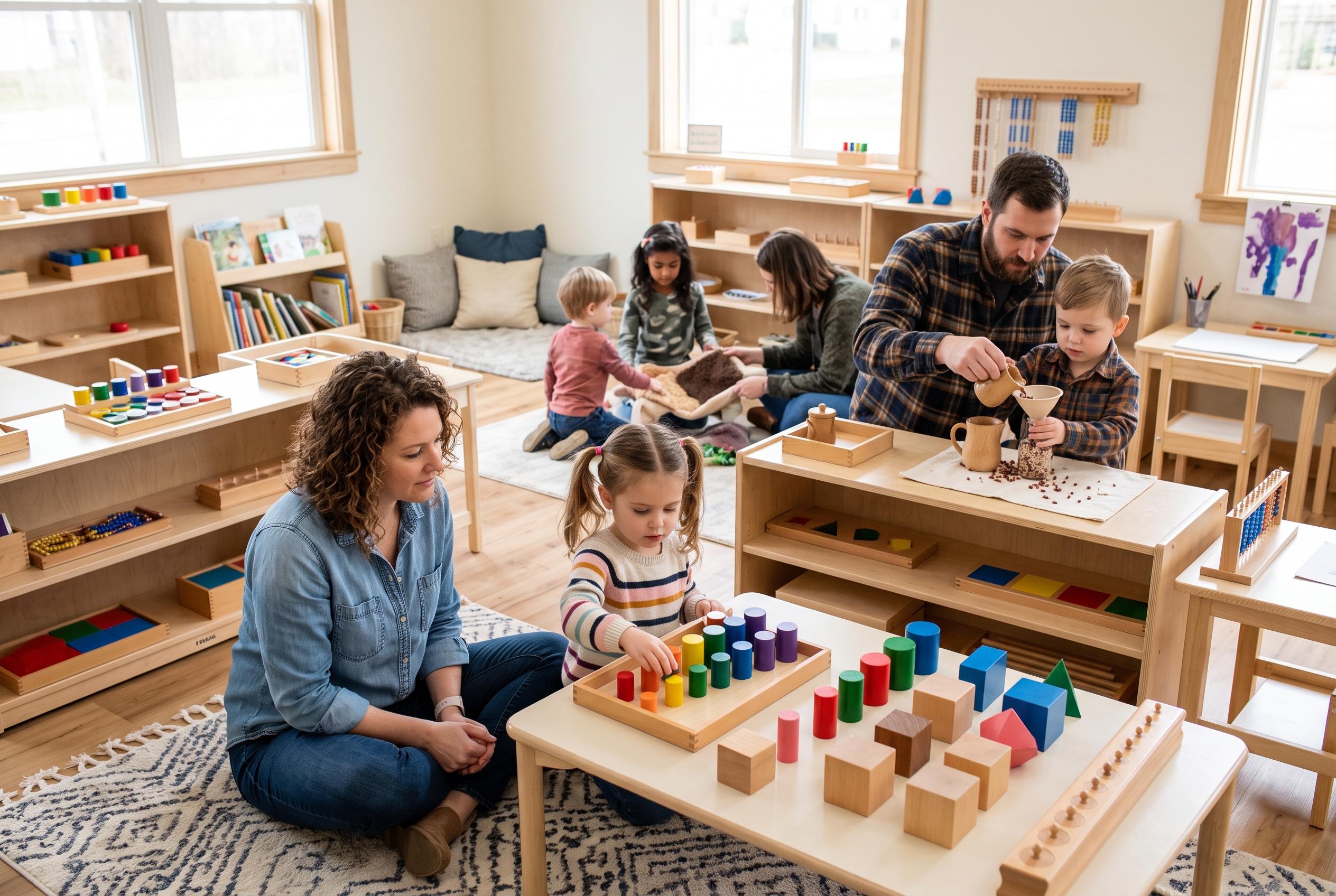

Montessori.org highlights the importance of deliberate, sustainable parent participation that benefits children, schools, and families alike, emphasising structured support over volunteer excess.
In Montessori communities, parent involvement can start as a small gesture and quickly swell into something far larger than intended. Montessori.org argues that the answer is not to disengage, but to participate in a way that is deliberate and sustainable, so that families, children and schools all gain from the arrangement rather than one parent carrying an outsized burden.
The article says children benefit most when parents appear in school life in a steady, recognisable way, because it links home and classroom and reinforces the Montessori idea that belonging to a community carries responsibilities. That same involvement can also help parents feel less like names on a register and more like part of a genuine school network, which Montessori.org says is especially important at a time when many families are already stretched by work, cost pressures and fatigue.
Schools, meanwhile, often depend on family help in practical ways, from maintaining materials to supporting events and sharing specialist knowledge. New School Montessori Center says volunteers may include parents, grandparents, guardians and siblings, while other Montessori schools set formal service expectations, such as minimum annual volunteer hours or required clearance processes for anyone working on campus. Montessori.org’s broader point is that this support matters, but only when it is structured well enough to remain useful rather than chaotic.
That is why the piece urges parents to choose one realistic commitment, ask what is actually needed and offer a specific skill instead of vague availability. It also encourages families to set limits on communication and to decline a request when they are at capacity. In practical terms, Montessori.org presents the healthiest model as consistent, bounded participation: enough to strengthen the school, but not so much that volunteering becomes unpaid staff work.
Disclaimer: This content is for informational purposes only and is not intended to be a substitute for professional medical judgment, advice, diagnosis, or treatment.