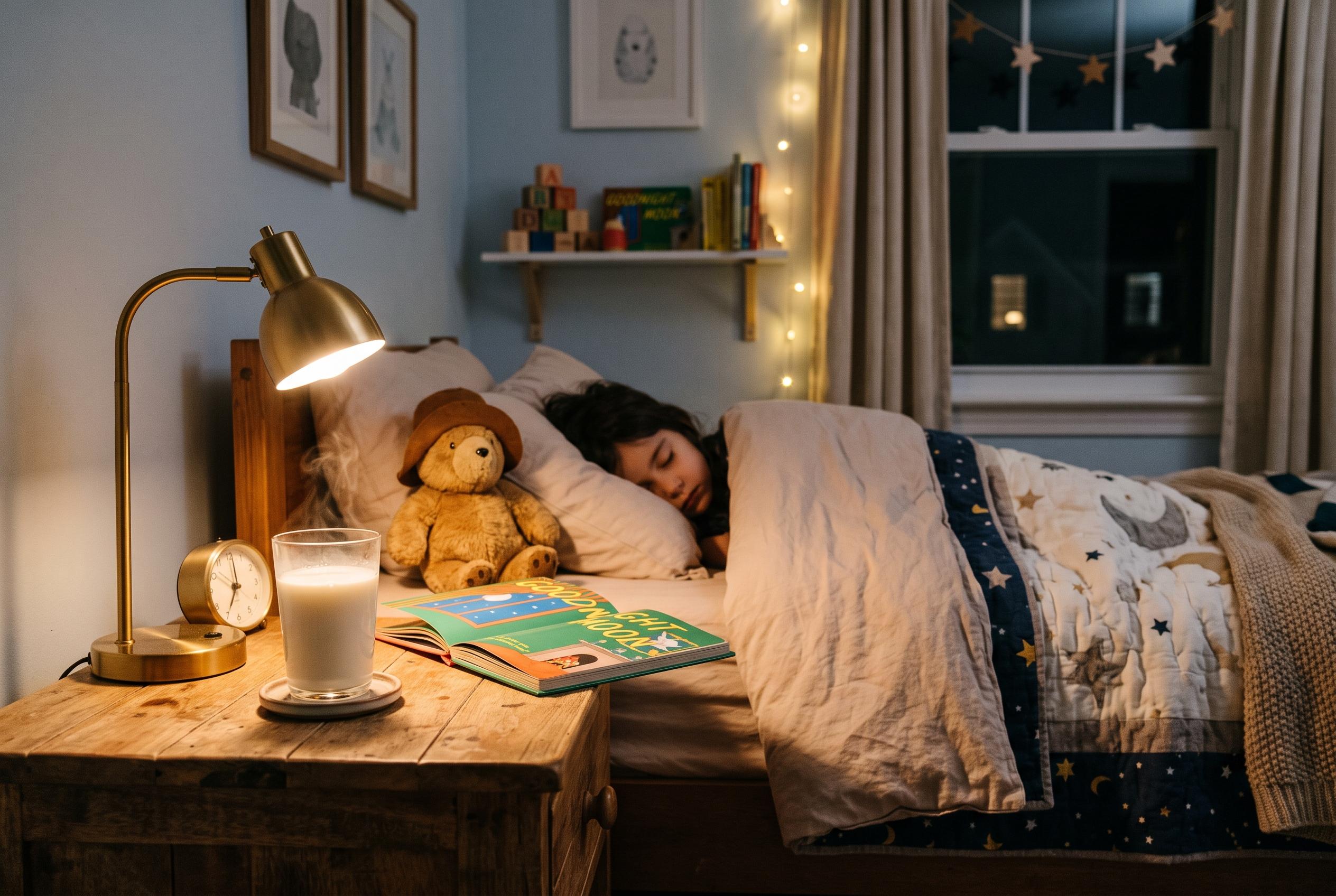

Child sleep experts emphasise that predictable and enjoyable evening rituals, from baths to storytime, can significantly reduce bedtime resistance and promote more natural sleep patterns for children.
A calmer bedtime often begins long before lights out. Child sleep experts say the most effective evening rituals are not the strictest ones, but those that feel predictable, soothing and slightly enjoyable. When the final hour of the day becomes something children can anticipate, resistance tends to ease and sleep comes more naturally.
One of the most effective starting points is a warm bath followed by softer lighting. According to sleep guidance cited by the Sleep Foundation and other child sleep resources, a warm bath roughly 30 to 60 minutes before bed can help the body cool afterwards in a way that mirrors the natural temperature drop linked with sleepiness. Gradually dimming lights during that period can also support the body’s melatonin rise, making the move from active play to rest feel less abrupt.
Reading aloud remains one of the most durable bedtime habits, even after children can read on their own. The Sleep Foundation says shared reading helps signal that the day is winding down, while NapLab and Scholastic note that it also strengthens the parent-child bond and can help older children build fluency and language skills. Just as importantly, it gives families a quiet space to talk through the day in a less pressured setting.
Small rituals of closeness can matter just as much as stories. A short cuddle, a back rub or a brief check-in can help a child feel secure before sleep. Some parents use that moment to ask about the best part of the day, a simple prompt that can help children process feelings and close out the evening on a calm note.
Repetition is a powerful tool at night, which is why many families stick with the same song or lullaby. Familiar music can become a cue the child associates with rest, much like a bedtime story or a bath towel used every evening. The same logic applies to a fixed sequence of events: bath, pyjamas, brushing teeth, story, then lights out. Sleep Foundation guidance suggests that predictable order reduces anxiety because children know what comes next and have less reason to stall or negotiate.
Screens are another common obstacle. Blue light from phones, tablets and televisions can interfere with the body’s sleep signals, so sleep specialists often recommend turning them off at least an hour before bed. Families who replace that time with colouring, puzzles or quiet play often find the transition easier. Some even set aside a special basket of low-key toys reserved only for bedtime, turning the change into a treat rather than a restriction.
Giving children small choices can also cut down on pushback. Letting them pick between two sets of pyjamas, choose a stuffed animal or decide on a pillowcase offers a sense of control in a part of the day that is usually highly structured. That same idea explains why some parents rotate special sleepwear on certain nights, adding novelty without disrupting the routine.
Sound can help, too. White noise, a fan or soft nature recordings may mask household noises and help children settle more deeply. For some, choosing the sound becomes part of the ritual itself, a small act of independence that makes bedtime feel like something they own. The benefit lies less in the volume than in the consistency.
Just before lights out, a brief mention of something pleasant planned for the next day can give children something comforting to hold on to as they fall asleep. A favourite breakfast, a park visit or even a simple family outing can shift attention away from worries and towards anticipation. Done consistently, it can make bedtime feel less like an ending and more like a gentle bridge to tomorrow.
Disclaimer: This content is for informational purposes only and is not intended to be a substitute for professional medical judgment, advice, diagnosis, or treatment.