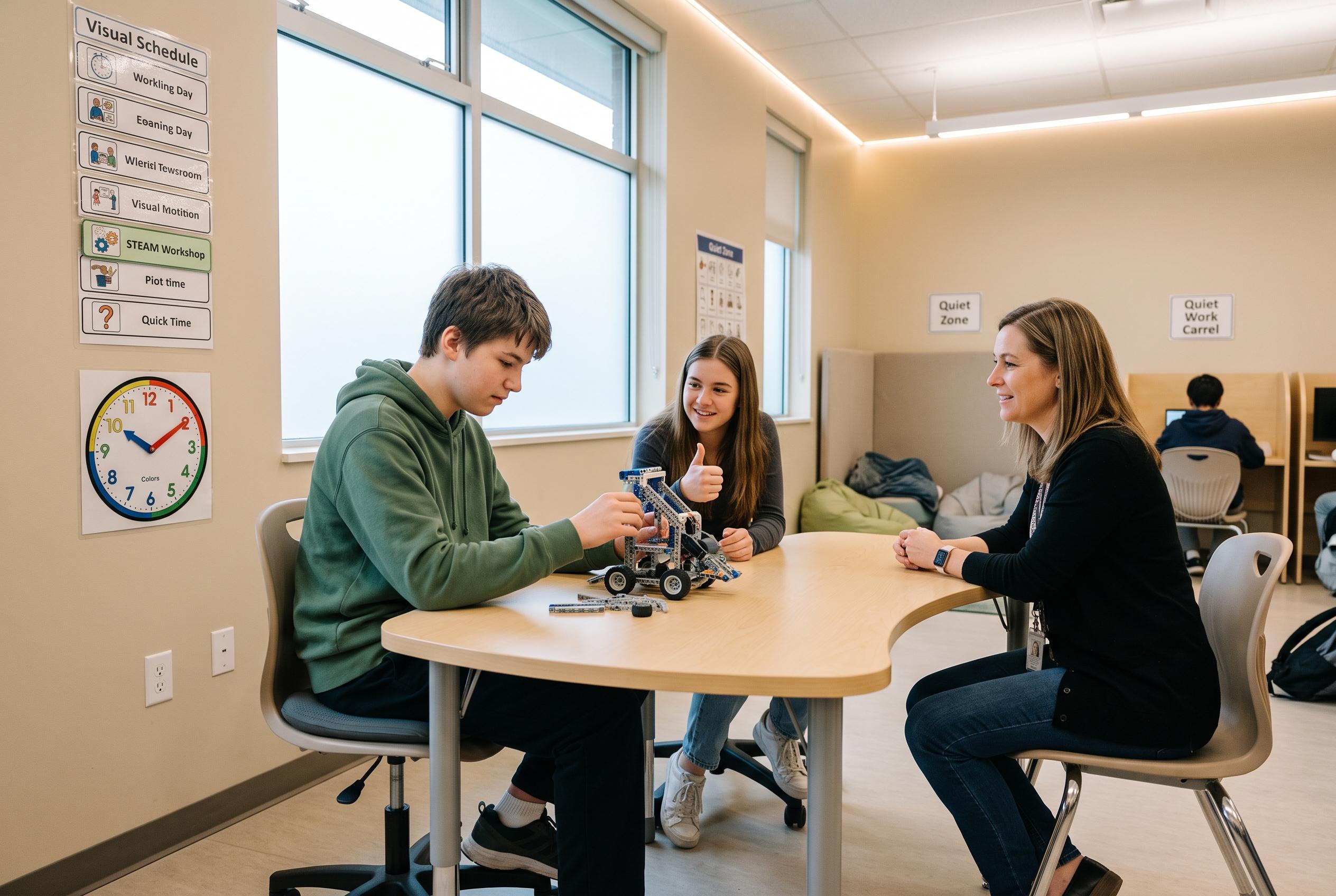

A clinical psychologist highlights the importance of tailoring school, home, and social settings to better support autistic teenagers, emphasising environmental adjustments over resilience alone to promote genuine flourishing during adolescence.
Autistic teenagers can thrive, but flourishing in adolescence does not mean coping with every demand without strain. In an article for They Are The Future, clinical psychologist Dr Lucy Russell argues that the key is not asking autistic young people to bend themselves to a world built for someone else, but making school, home and social settings more workable for them.
Russell says the teenage years often bring a sharper mix of academic pressure, sensory overload and social expectation, with masking becoming harder to sustain. The young people who do best, she says, usually have schools that understand their needs, a trusted adult to turn to, and a home environment that allows proper recovery. Research on autistic students in mainstream secondary schools points in the same direction, with supportive relationships and tailored environments linked to better experiences, resilience and mental health. The Adolescent Thriving Collaborative likewise stresses the protective value of safe, attuned adult relationships.
Russell also argues that basic wellbeing cannot be an afterthought. Sleep, movement, nutrition and downtime all matter, particularly when a teenager is already expending energy on coping. She says stress management works best when it is practical and individual, whether that means music, sensory activities, time alone or movement. The article also emphasises the importance of meaningful friendships and a positive autistic identity, suggesting that self-acceptance can buffer self-esteem when the wider environment feels mismatched.
For teenagers who are struggling, Russell advises looking first at the environment rather than the young person’s resilience. Schoolwork, noise, travel, transitions and social demands can all drain energy, and even modest changes , such as reducing workload, creating quieter spaces or arranging regular check-ins , can make participation possible again. She warns that increasing pressure is unlikely to help if a teenager is already overloaded. Instead, families and schools should watch for signs of autistic burnout, including withdrawal, heightened sensory sensitivity, school refusal, emotional distress and a loss of previously mastered skills.
Her advice is to begin with the biggest source of strain and make one realistic adjustment at a time. If sensory stress is the issue, start there; if friendships are the problem, focus on shared interests; if identity and confidence are fragile, make space for autistic pride and self-understanding. That approach is echoed in intervention research, including the Surviving and Thriving in the Real World programme, which uses structured teaching and visual supports to build daily living skills, and has found gains in domestic independence. Taken together, the evidence suggests that autistic teenagers are most likely to flourish when the adults around them stop asking, “How can this young person cope with less?” and start asking, “How can we make the world fit better?”
Disclaimer: This content is for informational purposes only and is not intended to be a substitute for professional medical judgment, advice, diagnosis, or treatment.