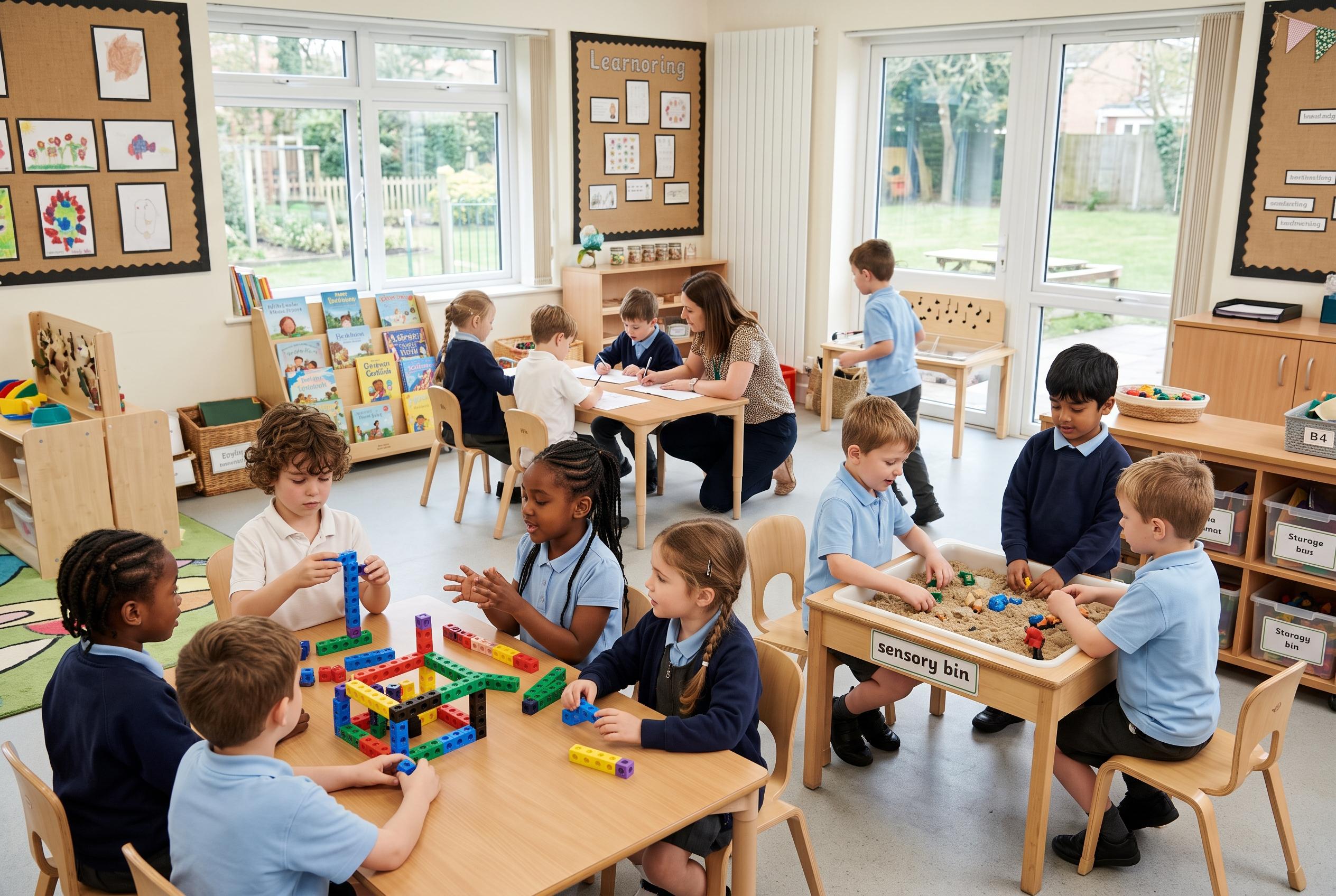

Experts clarify that restlessness and talkativeness in children do not automatically indicate ADHD, emphasising that diagnosis involves thorough evaluation and understanding brain development, with practical responses being most effective in managing the condition.
Child behaviour before school can be unsettling for families, but specialists say restlessness and constant talking do not automatically point to poor parenting. In cases of attention deficit hyperactivity disorder, or ADHD, the issue lies in brain chemistry and development rather than discipline, according to the Pirogov Russian National Research Medical University’s Zaur Khatshukov, who says the condition affects the brain’s ability to regulate impulses, focus and planning. The MSD Manual likewise describes ADHD in children as a pattern of inattention, overactivity and impulsive behaviour that becomes more visible at school age, when sustained concentration and task completion are expected.
Doctors advise against jumping to conclusions too early. ADHD is generally not diagnosed before the age of 4 or 5, because many young children can appear unusually active, and the problem may only become clear once school begins. Experts also stress that diagnosis should not rely on one appointment alone. A fuller assessment usually involves a paediatrician, a neurologist and a child psychologist or psychiatrist, with the aim of ruling out other causes such as iron deficiency, thyroid problems or sleep disorders.
For parents who are worried, simple home observations can be useful as a prompt to seek help, though they are not diagnostic. These include asking a child to sit quietly for several minutes, remember a short list of words or describe the school day in sequence. Frequent fidgeting, poor recall and disorganised or fragmented answers may suggest the need for formal evaluation. More serious warning signs include dangerous impulsivity, persistent aggression, repeated complaints from teachers and difficulty following even simple rules in games or classroom tasks. Online screening tools such as the Vanderbilt scale and other digital assessments may help identify patterns, but they are screening aids rather than a final diagnosis, according to the developers of those tools.
If ADHD is confirmed, specialists say the response should be practical rather than punitive. Khatshukov recommends first addressing sleep, diet and other medical factors, then using behavioural support, structured routines and, where appropriate, medication prescribed by a doctor. Children with ADHD often respond better to short, step-by-step instructions, visual reminders, immediate praise and physical activity before lessons. Long lectures, comparisons with other children and punishment that relies on sitting still for long periods are usually ineffective, and can make behaviour worse rather than better.
Disclaimer: This content is for informational purposes only and is not intended to be a substitute for professional medical judgment, advice, diagnosis, or treatment.