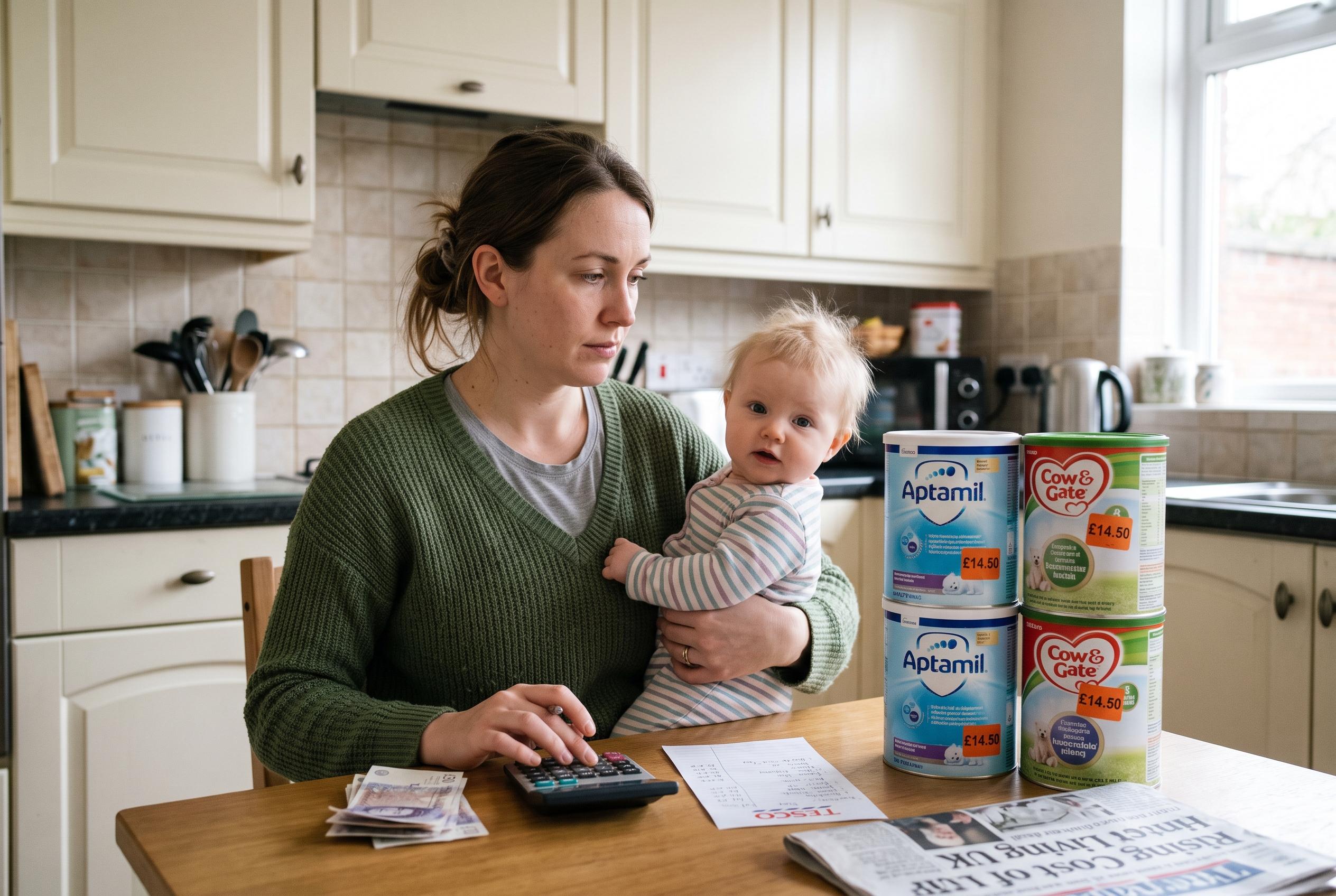

A Swansea University study reveals that escalating infant formula costs are forcing parents into risky feeding methods and causing emotional strain, highlighting urgent calls for stronger support and market regulation.
A Swansea University study has found that rising formula prices are pushing some parents into feeding practices they know may be unsafe, underlining how infant feeding has become a financial, as well as a health, issue for many families. Researchers surveyed and interviewed 281 parents and found that nearly 40% had used methods that could put babies at risk in an effort to stretch supplies, while 47% had taken on debts they were struggling to repay.
Among the most common cost-cutting measures were reusing leftover formula for later feeds and cutting back on sterilisation, both of which can increase the risk of illness. Nearly 14% said they had watered down feeds to make them last longer, a practice that can affect a baby’s growth and development. The study also found that 10% had taken formula from shops without paying for it.
The findings sit alongside wider concern about infant formula affordability in the UK. A parliamentary inquiry by the Baby Friendly Initiative found that powdered formula can cost families between £6.44 and £13.52 a week, while the Competition and Markets Authority said parents may be paying hundreds of pounds more than necessary because of weak competition and other market problems. The CMA said prices rose sharply between December 2021 and December 2023, outpacing inflation.
The mental health toll also appears severe. Swansea researchers said nearly every parent they spoke to had been affected emotionally, with many mothers describing guilt, anxiety and heartbreak, particularly if they had hoped to breastfeed but did not receive enough support. Amy Brown, who led the study at Swansea University, said the scale of the problem surprised the research team and argued for more comprehensive support for infant feeding so families are not forced into choices that threaten both baby and parent wellbeing.
Disclaimer: This content is for informational purposes only and is not intended to be a substitute for professional medical judgment, advice, diagnosis, or treatment.