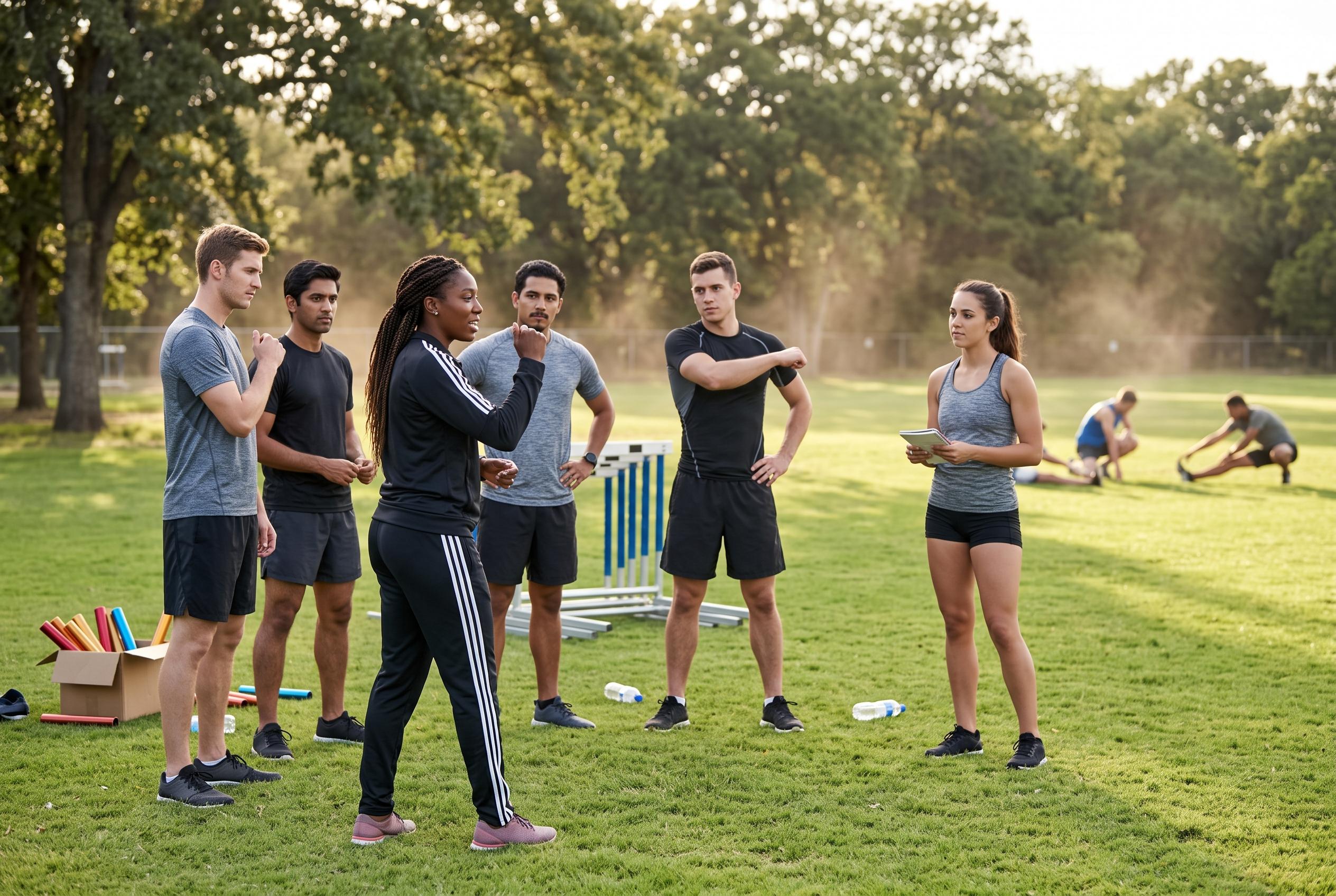

Emphasising process goals over outcome metrics can reduce pressure, boost motivation, and foster long-term growth in athletes, says Canadian Sport Institute Network.
Competition is too often judged only by what appears on the scoreboard, but the stronger message from sport psychology and coaching practice is that results are only part of the picture. The Canadian Sport Institute Network says competition can be one of the most useful learning environments in sport when coaches frame it around preparation, execution and improvement rather than final placing alone. That approach matters because a narrow emphasis on winning can leave athletes more anxious, less willing to take risks and more likely to define their value by outcomes they cannot fully control.
The difference between process and outcome is straightforward, yet it has major consequences. Outcome goals depend on things such as rankings, times, selection standards and judges, all of which can be affected by rivals and conditions outside an athlete’s control. Process goals, by contrast, focus on controllable actions such as pacing, technique, decision-making and effort. USA Field Hockey says process goals can be broken into tactical, technical, mental and physical components, while other coaching guidance makes the same case more simply: athletes perform better when they concentrate on what they can do, not just what they want to get.
That distinction is especially important for younger athletes. Research cited by the Canadian article points to links between outcome-heavy environments and greater pressure, reduced motivation, fear of failure and burnout. Studies on perfectionism and burnout in sport support that concern, and newer work on autonomy-supportive coaching suggests that athletes do better when coaches create environments that support confidence and personal control. A 2021 study on authentic coaching also found that athletes reported more enjoyment and prosocial behaviour when coaches adopted a more authentic leadership style.
Coaches can shift the tone well before competition starts. Instead of asking only about winning or qualifying, they can help athletes identify two or three process cues to hold in mind during the event. Those cues might relate to stroke rhythm in swimming, cadence on a bike, defensive positioning in basketball or maintaining an opening pace. Eswim.ca, which promotes process-driven coaching, argues that this kind of language helps athletes stay focused on execution rather than becoming trapped by result anxiety.
The same principle should guide what happens afterwards. A short debrief built around what went well, what was learned and what should change next time can turn a disappointing result into useful information. The Canadian article also sets out a simple PER loop , prepare, execute, reflect and adjust , as a practical way to make competition part of an ongoing cycle of learning. In that model, athletes prepare with clear intentions, execute under pressure, reflect on what happened and then adjust training or tactics for the next performance.
That matters because sport rarely offers clean, perfect outcomes. Injuries, selection setbacks and off days are inevitable. Athletes who learn to judge themselves by execution, growth and response tend to build resilience as well as confidence. For coaches, the lesson is not to ignore results, but to place them in context. When competition is treated as feedback rather than verdict, it becomes what it should be: a tool for long-term development.
Disclaimer: This content is for informational purposes only and is not intended to be a substitute for professional medical judgment, advice, diagnosis, or treatment.