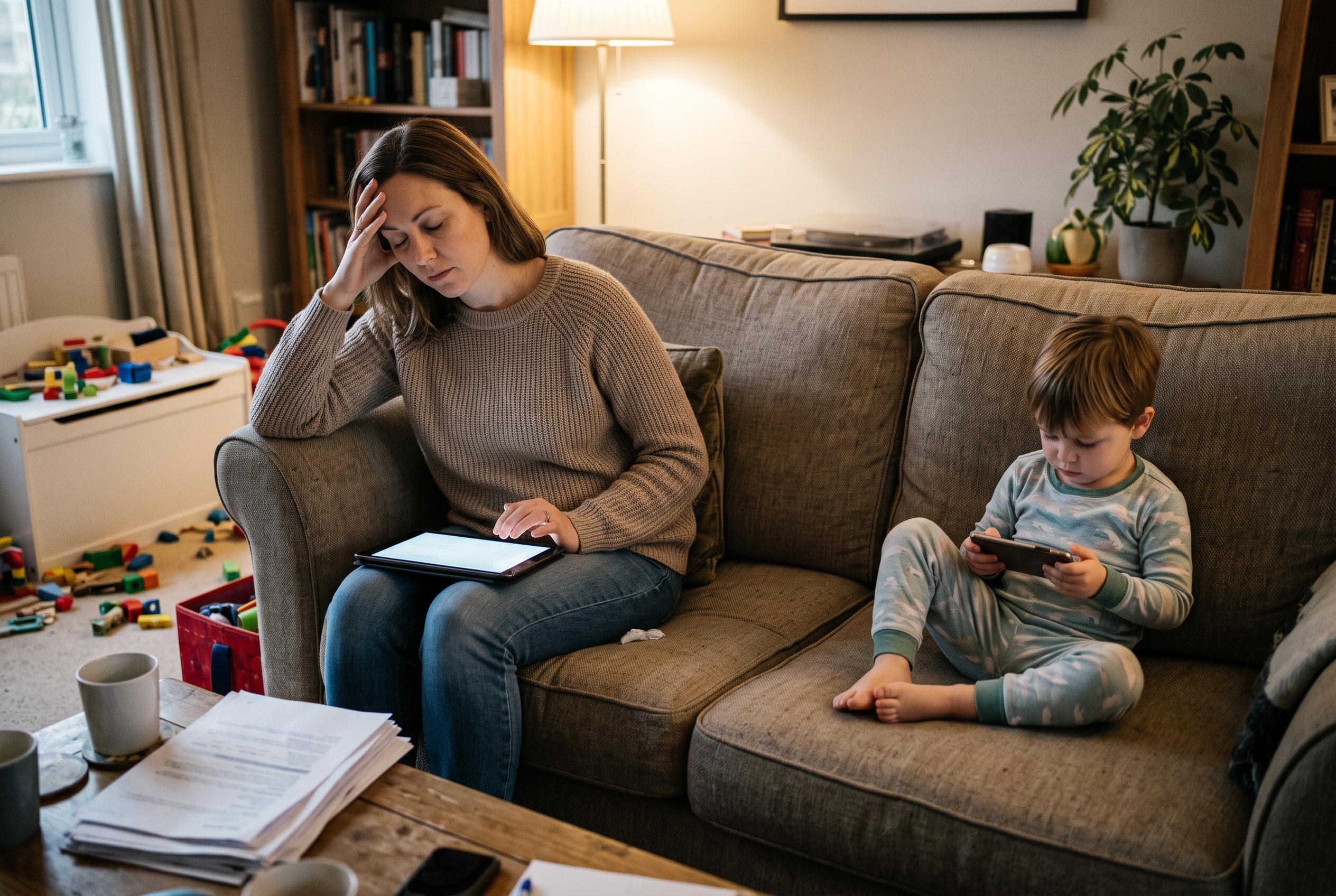

Research indicates that parental stress, rather than child behaviour alone, significantly influences families’ reliance on screens for young children, prompting calls for proactive media planning.
Parents are more likely to turn to tablets and phones in tense moments not simply because their children are difficult, but because stress makes it harder to hold firm on screen limits, according to research published by Florida International University academics and related studies on family screen habits.
The pattern matters because screens have become woven into everyday childhood. Many families rely on them for travel, childcare gaps and a temporary truce at the end of a long day, yet public-health guidance has repeatedly warned that young children should have limited, age-appropriate exposure. In practice, most do not meet those recommendations, and technology use has become one of the most common sources of parental strain.
A nationwide survey of 822 parents of 4- to 8-year-olds found that adults under greater personal stress were less likely to set consistent rules around screen use, even when their children’s behaviour was taken into account. Parents who felt overwhelmed by a child’s temperament or behaviour were also more inclined to hand over a device to prevent a clash or calm one down. By contrast, stress rooted mainly in the parent-child relationship did not appear to make screen use more likely. The researchers said this suggests the issue is not only what a child is doing, but how hard the situation feels to the adult in that moment.
The findings fit a wider body of research linking parental stress with heavier screen use and weaker routines. A study published in BMC Public Health in 2025 found that higher parental stress was associated with less frequent physical activity in children, while earlier research in Early Childhood Research Quarterly reported that both parenting stress and favourable attitudes towards screens were tied to more screen time in young children. Other studies have linked screen-heavy homes with child mental-health concerns and shown that stress rose sharply during the pandemic alongside children’s media use.
The practical advice from researchers is straightforward: do not wait for the 6 p.m. meltdown to decide what to do. Families may do better with a media plan drawn up in calmer moments, with clear rules about screen-free times, dinner-table boundaries and use before bed. Where possible, children should be involved in setting those limits. The aim is not to eliminate screens, but to make them a deliberate part of family life rather than an emergency fix.
Disclaimer: This content is for informational purposes only and is not intended to be a substitute for professional medical judgment, advice, diagnosis, or treatment.