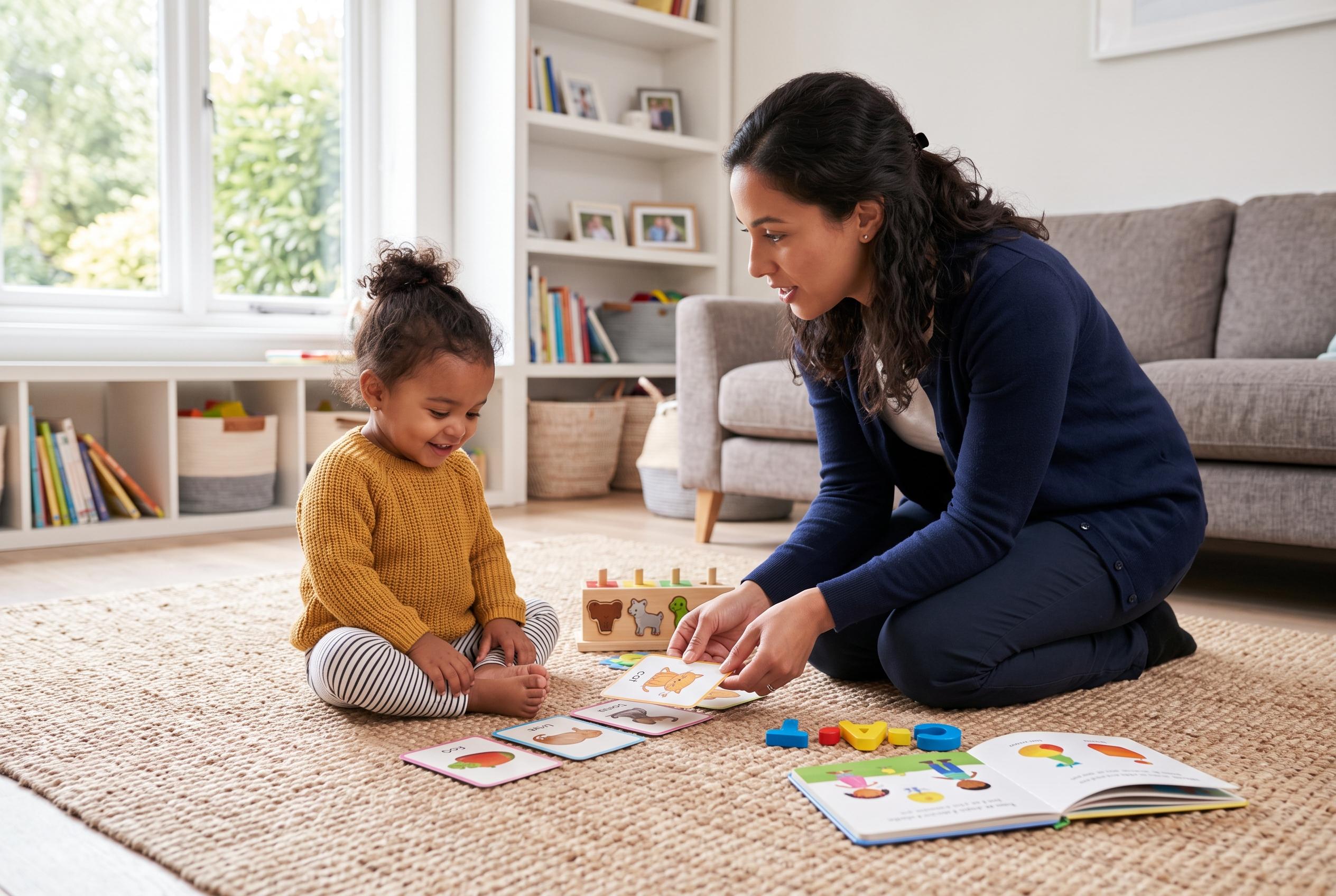

Recognising early warning signs of speech and language difficulties can lead to more effective intervention, with experts emphasising the importance of early assessment and support for children showing developmental delays or communication challenges.
Parents often worry about whether a child is simply developing in their own time or showing signs of a language problem that may need support. Speech therapy can help when difficulties affect everyday communication, from asking for help and following instructions to joining in play or making sounds clearly. The key message from clinicians is that families do not need to wait for certainty before seeking an assessment.
According to the National Institutes of Health, warning signs can include limited word use, trouble producing certain speech sounds and difficulty understanding spoken language. Other guides note that milestones such as babbling by around 12 months, using single words by about 18 months and combining two words by age 2 can help families spot when a child may be falling behind. The most important clue is not one isolated slow day, but a pattern that continues across settings.
Speech clarity is another common concern. A child who is frequently hard to understand, even to familiar adults, may be struggling with the coordination needed for clear speech. Language delays can also show up when a child cannot follow simple directions despite apparently hearing well. That can affect safety at home, confidence in nursery or school and the child’s ability to take part in ordinary routines.
Non-verbal communication matters too. Children usually rely on gestures such as pointing, waving, nodding and showing objects long before speech becomes fluent. Limited gesture use, little eye contact during shared moments or frustration that leads to crying, grabbing or tantrums can all suggest that a child wants to communicate but lacks reliable tools. Therapy can help children replace those behaviours with clearer ways to ask, refuse, choose and request a break.
Play can also offer useful clues. Some children engage in narrow or repetitive play, such as lining up toys without much interaction or pretending very little. Others may repeat phrases without using them to connect with people. Speech-language therapy can support back-and-forth interaction, shared attention and more flexible language through structured activities that feel natural to a child.
Specialists also stress that bilingualism is not a cause for alarm on its own. Children growing up with more than one language may mix words, which is a normal part of learning. Concern is greater when communication difficulties appear across all the languages a child uses. A full evaluation usually looks at speech sounds, vocabulary, understanding, gestures, social interaction and, where needed, feeding or oral-motor skills.
The main lesson from these guides is that early action is often more useful than waiting. If concerns persist, a speech-language evaluation can help separate a temporary delay from a need for support and can point families towards practical goals that fit home and school life. For many children, timely therapy is less about labelling a problem and more about giving them better ways to connect.
Disclaimer: This content is for informational purposes only and is not intended to be a substitute for professional medical judgment, advice, diagnosis, or treatment.