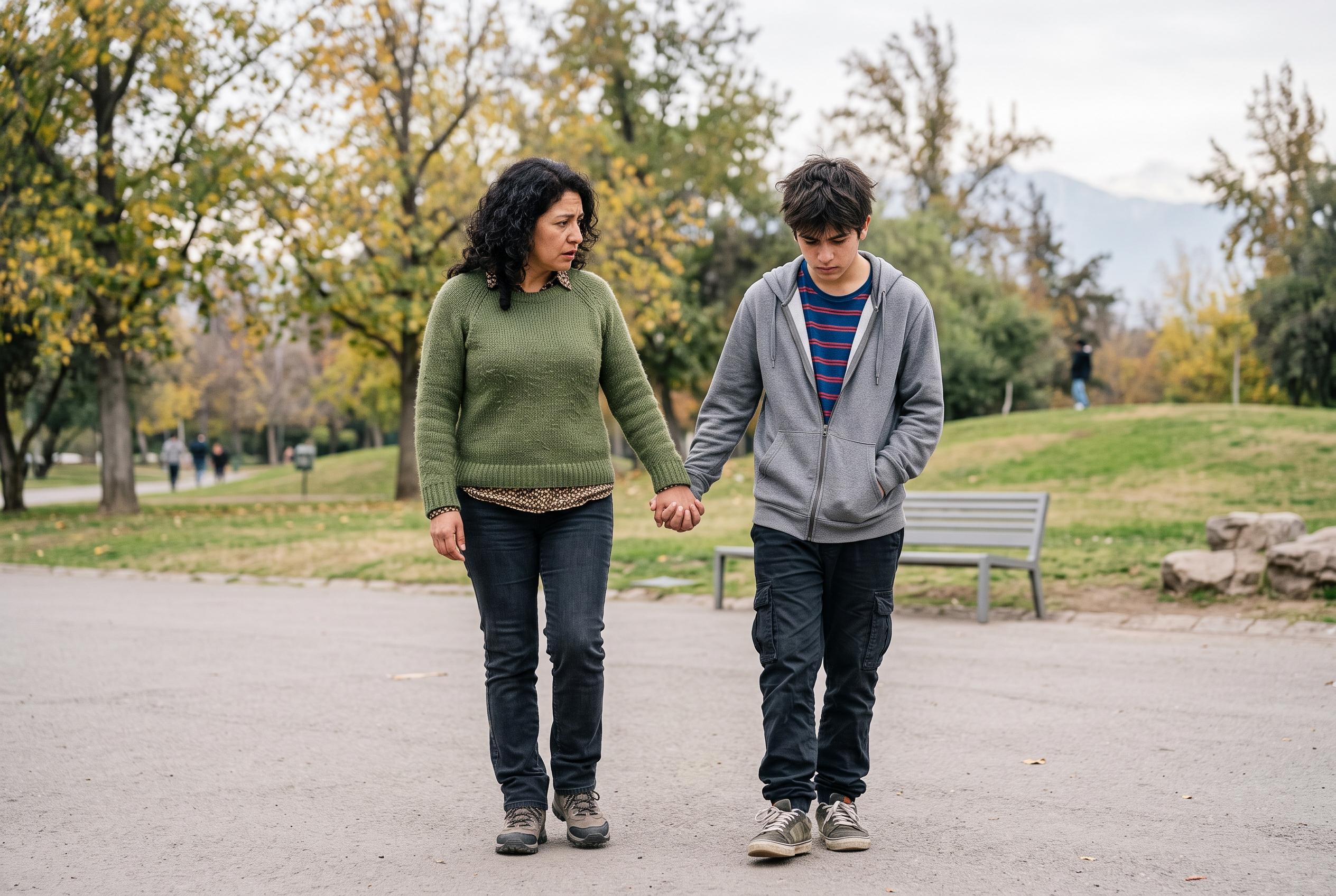

Recent tragic cases involving adolescents have highlighted Chile’s deeper mental health crisis, prompting calls for comprehensive reforms and a civic pact to address root causes and prevent future tragedies.
Victoria Peña argues that Chile is facing a warning it cannot afford to ignore after two recent cases involving adolescents shocked the country: the killing of school inspector María Victoria Reyes in Calama by an 18-year-old student and the alleged murder plot in Loncoche in which a 17-year-old girl is said to have helped arrange the death of Ingrid del Carmen Barrera Rantul with her boyfriend and a schoolmate.
In her column for El Rancaguino, Peña says these are not examples of ordinary street crime or organised violence. Rather, she sees them as symptoms of a deeper crisis marked by mental ill-health, isolation and damaged family relationships. She criticises media coverage that, in her view, blurs the line between these cases and violence linked to narcotics or gang activity, arguing that such treatment obscures the real problem and weakens public debate.
The scale of the issue, she says, is reflected in official data. The National Ombudsperson for Children’s 2024 report found that 52.9% of secondary school students met criteria for at least one mental health problem, including depression, generalised anxiety and problematic substance use. Peña also cites national figures showing depressive symptoms among pupils from seventh grade to third year of secondary school rising from 14% in 2017 to 22% in 2023. The World Health Organisation has said about 20% of children and adolescents worldwide face a mental health condition.
Peña places much of the responsibility on the home environment, while stressing that families should not be blamed simplistically. She says risk is higher where teenagers experience dysfunction, neglect, violence or emotional absence. Schools can help, but they cannot carry the burden alone. The Education Ministry’s “A Convivir se Aprende” programme aims to improve school coexistence and prevent violence, and Peña notes that some cohorts have shown a fall in the perception of school violence from 70% to 54%. Even so, she says those gains will remain limited unless they are matched by deeper work with parents and carers.
She also points to wider policy changes. Chile’s new Law 21.809 on Coexistence, Good Treatment and Wellbeing in Educational Communities, which came into force on July 1, is meant to shift the response from reactive punishment towards prevention. Peña says its value will depend on whether it reaches beyond school gates and supports family dialogue, shared parenting and early intervention. She cites international examples such as Finland’s “Let’s Talk about Children”, the CONSENSUS project and Australia’s “Be You” programme as models that show how schools and families can work together on mental health.
Her central argument is that no single measure will solve the problem. Metal detectors, stronger perimeter security and harsher penalties may all have a place, she writes, but they do not address the roots of the crisis. What is needed, she says, is a broader civic pact: responsible reporting from the media, a national mental health policy with funding and continuity, and better co-ordination among state agencies. The tragedies in Calama and Loncoche, Peña concludes, should be read as early alarms. The question is whether Chile is prepared to answer them before another case forces the issue again.
Disclaimer: This content is for informational purposes only and is not intended to be a substitute for professional medical judgment, advice, diagnosis, or treatment.