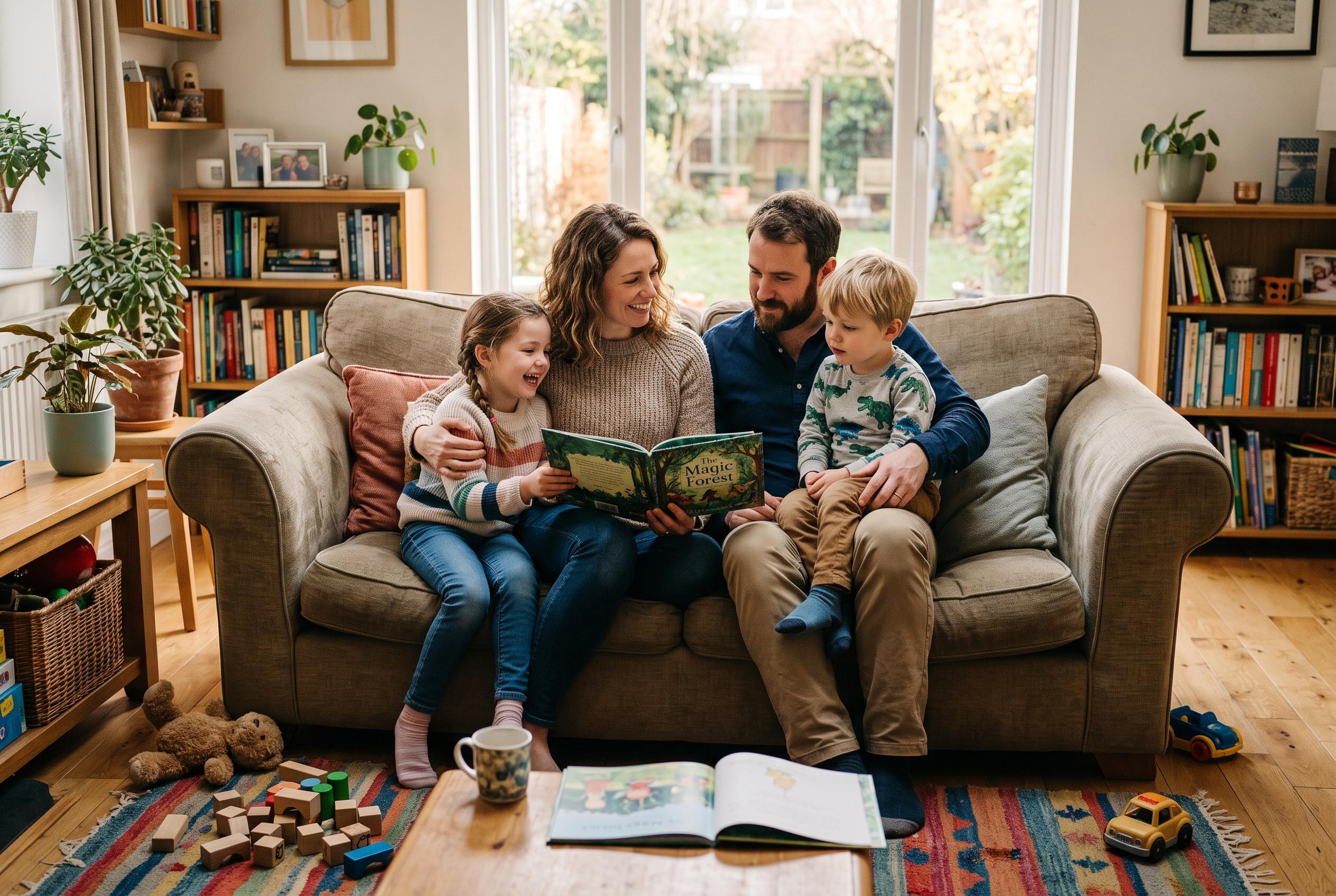

Comprehensive studies reveal that family happiness is shaped more by warmth, conflict and relationship quality than whether children have siblings, challenging stereotypes about the ‘unhappy only child’.
It is an appealing idea: if children are not forced to divide everything from toys to attention, perhaps they look back on childhood with more happiness. Yet the evidence does not support such a neat moral. Research repeatedly shows that only children are not inherently less well adjusted, less sociable or more lonely than children with siblings, and the bigger lesson is that family life is shaped far more by warmth, conflict, resources and attention than by household size alone.
A long line of studies has challenged the old stereotype of the unhappy only child. A major review by Toni Falbo and Denise Polit, published in 1986, examined 115 studies and found that only children were generally similar to first-born children and children from two-child families across achievement, adjustment, intelligence and sociability. A separate synthesis of 157 studies reached much the same conclusion, finding no broad social or emotional deficit that came with growing up without siblings.
The happiness argument is more complicated than the headline suggests. One recent study of 3,744 children in Tokyo found that middle-born children reported the lowest happiness, while only children scored higher on that measure. But the same research also found that only children had the highest overall difficulties score, while last-born children showed the strongest resilience. Because the study was a snapshot rather than a long-term follow-up, it could show only association, not cause, and it pointed to culture, parenting and sibling dynamics as possible influences.
What siblings clearly do change is the way family resources are shared. Researchers often describe this as resource dilution: parental time, money and attention have to be divided when another child arrives. Studies in China have found that children with siblings were less likely than only children to report close relationships with their parents, with the gap widening as family size increased. But family size is never the whole story. Income, parental age, health, relationship stability and family stress all affect how a sibling changes the home, and a brother or sister can mean comfort in one household and pressure in another.
Siblings can also be both teachers and tormentors. Reviews of sibling relationships show that these bonds are often emotionally intense and can help children learn negotiation, repair and self-control. But conflict is not automatically good for development. A United States study of 3,599 children and teenagers found that sibling aggression was linked to greater mental-health distress, a reminder that rivalry is not the same as healthy social learning. That distinction matters when people assume that “having to share” is the hidden cost of being an only child. One longitudinal study in rural China found that only children shared fewer stickers at ages 3 and 4, but that gap disappeared two years later. The evidence suggests practice can speed up sharing, not that sharing itself damages happiness.
The broader conclusion is that family functioning matters more than family shape. A systematic review of 124 studies found that cohesion, communication and the quality of relationships were consistently tied to happiness among children and adolescents. That leaves room for both advantages and strains in either kind of home. An only child may receive more individual attention and material support, but may also bear more pressure alone. A child with siblings may gain companionship and lifelong solidarity, but may also face comparison, noise or aggression. The most honest answer is that neither arrangement guarantees happiness. What matters most is whether children are seen, listened to and treated fairly within the family they have.
Disclaimer: This content is for informational purposes only and is not intended to be a substitute for professional medical judgment, advice, diagnosis, or treatment.