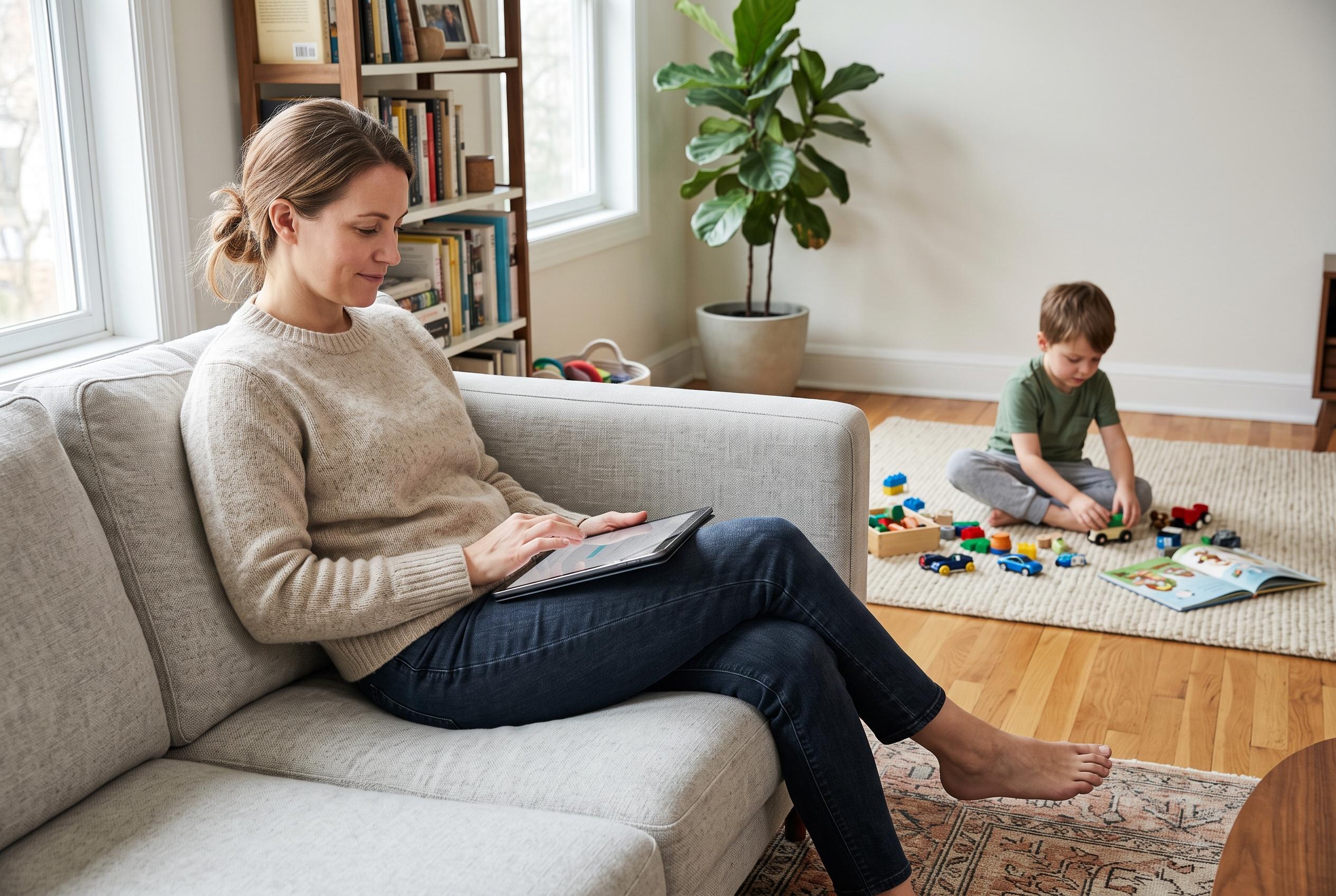

A study from Florida International University indicates that parental stress, rather than children’s behaviour, primarily influences how and when parents resort to screens as a coping mechanism, prompting calls for targeted support strategies.
A new study from Florida International University suggests that parents are often reaching for screens less because of what children are doing and more because of how stressed the adults feel in the moment. The researchers, writing in The Conversation, argue that the familiar scene of a frazzled parent handing over a tablet is driven mainly by the parent’s own coping ability rather than by a child’s behaviour alone.
The article sets the issue against a backdrop of rising concern about children’s device use. Nearly all children in the US use screens daily, and many young children still exceed guidance from paediatric experts, who advise no solo media use for children aged 18 months to 2 years and less than an hour a day for those aged 2 to 5. Pew Research has also found that 66% of parents say raising children is harder now than it was 20 years ago, with technology among the reasons they give.
In a nationwide online survey of 822 parents of children aged 4 to 8, the Florida International University team examined how different forms of parenting stress shaped screen rules and habits. According to the authors, parents facing broad personal stress were less likely to set firm limits on screen use, even after accounting for the child’s behaviour. Those who felt strained by difficult child behaviour were more likely to use screens to manage or head off conflict, while stress tied specifically to the parent-child relationship did not show the same effect. Related research published in 2025 and studies cited by The Bump and JAMA Network Open point in a similar direction, linking parental stress to looser monitoring and greater child screen exposure.
The authors argue that the practical answer is not only to cut children’s screen time, but also to support parents before stress peaks. They recommend family media plans, screen-free zones and agreed limits around meals and bedtime, with children involved where possible. Pew Research’s 2026 report on parental stress and “doomscrolling” similarly suggests that stressed parents are more likely to lean on their own devices, reinforcing the same cycle inside the home.
Disclaimer: This content is for informational purposes only and is not intended to be a substitute for professional medical judgment, advice, diagnosis, or treatment.