
Speed and movement coach Lee Taft advocates for reactive, full-body drills over neat, controlled exercises, emphasising the importance of versatile movement foundations and sport-specific adjustments at different stages of athlete maturity.
Lee Taft argues that the best agility work rarely looks neat. On the Just Fly Performance Podcast, the speed and movement coach said coaches should begin with live, reactive tasks and only then use closed drills to correct what breaks down. That approach, he said, matters because the same basic mechanics can appear across court and field sports, but the intent, space and timing demands are different. A volleyball player, for example, may need short, repeatable bursts in a tight area, while a footballer may have to shift from a shuffle into a full sprint almost instantly.
Taft also warned against pushing young athletes into sport-specific work too early. He said children need a wide movement base first, because variety gives them more room to specialise later without being boxed in by early peaks in performance. His model calls for broad exposure to sprinting, backpedalling, shuffling, cutting and jumping before more advanced sport patterns are layered in, with heavier specialisation held back until the mid-teens, depending on the athlete’s maturity. He linked that caution to growth spurts, when more aggressive change-of-direction and power work can be risky.
One of Taft’s recurring themes is that movement mechanics change with posture and speed. In the acceleration phase, he said a lower heel recovery is appropriate because the athlete is leaning forward and driving longer into the ground. Once the athlete stands more upright at top speed, a higher heel recovery can become more useful because a shorter limb cycle tends to be faster. In other words, he said, coaches should judge the pattern against the phase of running and the demands of the sport rather than forcing a single model on every athlete.
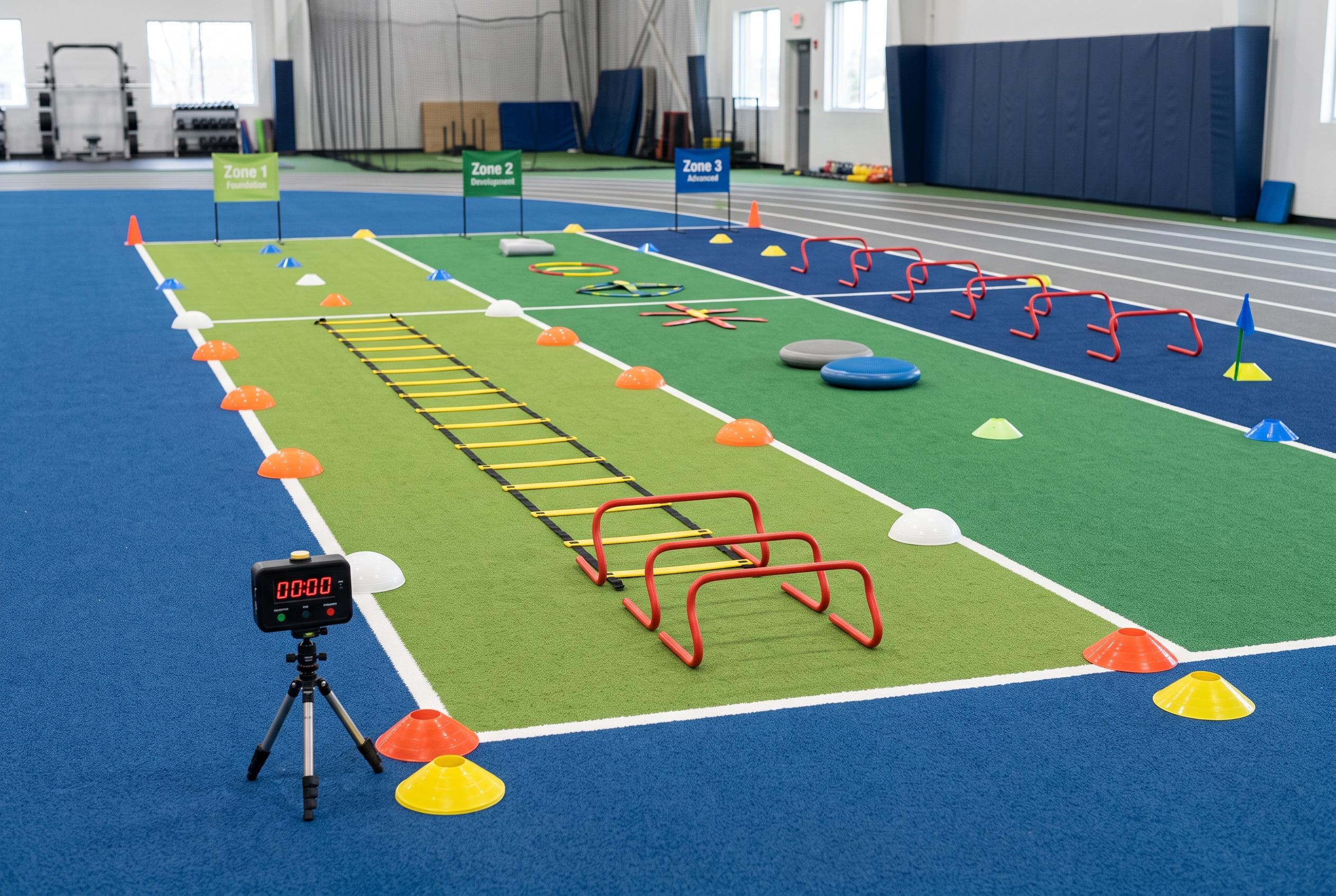
Taft separates reaction from movement itself. The read may sharpen with exposure, but the steps that follow are what coaches can see and improve. He uses reactive drills first, then closes the loop with corrective work when he spots a flaw in acceleration, deceleration or body position. That sequencing mirrors the three-tier Reactive Tier System described by Taft, which progresses from known direction with unknown start time to unknown direction and then to full reactive change of direction. His company also says game-like training can be built with simple tools such as an agility ladder, a low box and resistance bands.
He is especially interested in drills that force athletes to control their mass under pressure. Taft said competition-based tasks such as cone-stack races, partner mirror drills and goalkeeper-style tag games can reveal how an athlete opens the hips, plants and reaccelerates. He also stressed frontal and transverse plane work, saying those are the planes most programmes neglect. In his view, medicine ball fake throws, resisted shuffles and similar exercises create the stiffness and foot control needed to clean up sloppy cuts more effectively than simply adding more strength work.
Disclaimer: This content is for informational purposes only and is not intended to be a substitute for professional medical judgment, advice, diagnosis, or treatment.