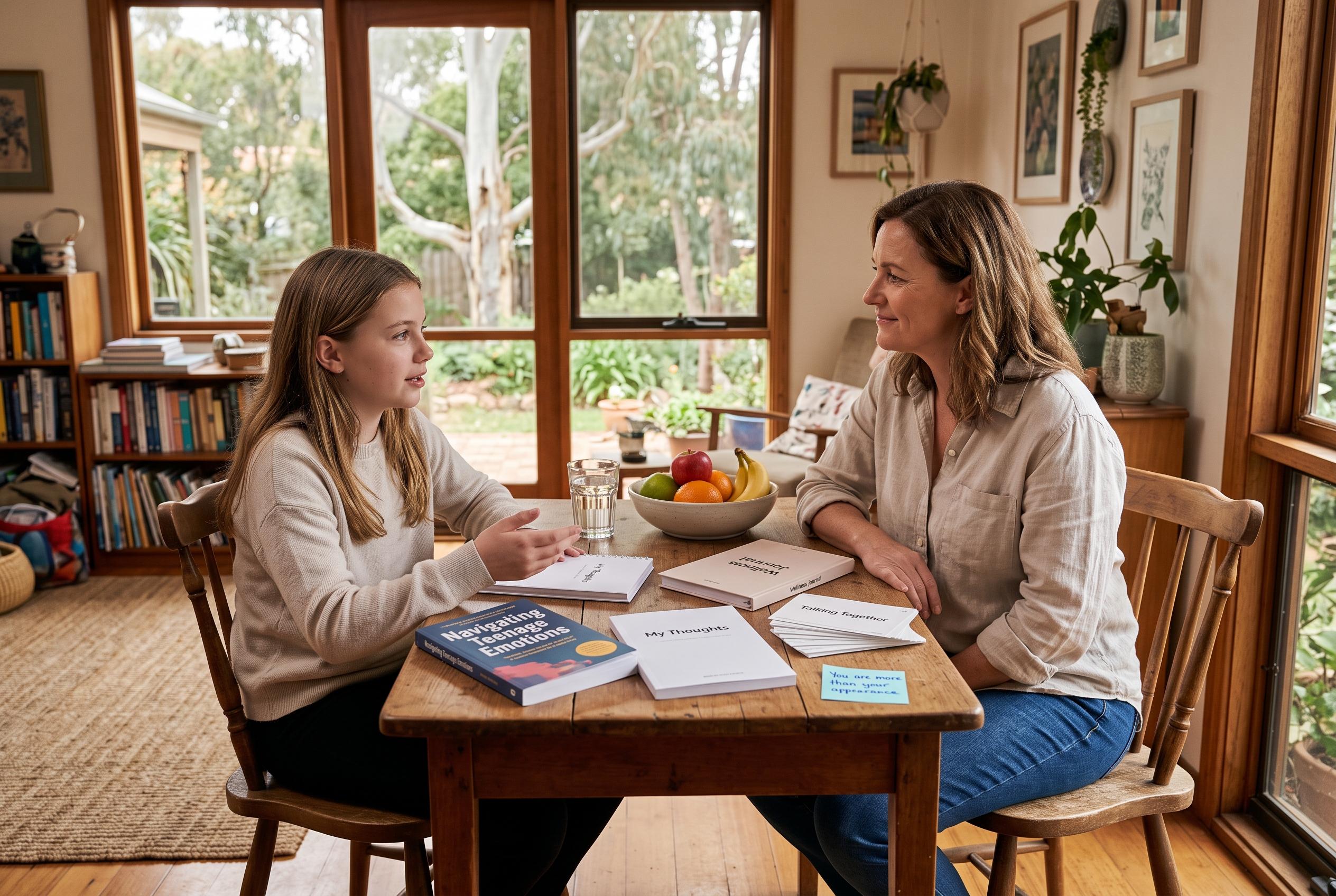

As eating disorders increase among young Australians, health professionals advise parents to adopt careful, honest conversations that emphasise self-worth over appearance, avoiding moralising or body monitoring.
Parents are being urged to speak openly, but carefully, with children about mental health and body image as eating disorders continue to rise among young Australians. The issue was thrown into sharp relief this week after media personality Carrie Bickmore said she was unsure how to discuss videos of Ariana Grande, the American singer whose appearance has prompted concern, with her daughters. Bickmore said she wanted her children to focus on Grande’s talent, not her body, reflecting the awkwardness many families feel when celebrity weight loss becomes a public talking point.
Experts say that discomfort is understandable, but silence is not the answer. Sarah Politt, a family therapist and director of operations and programmes at Eating Disorders Victoria, told NewsWire that parents should stay curious rather than jumping in with assumptions. Her advice is to ask children how they feel about what they have seen, listen first and then respond. For younger children, Dan Auerbach, clinic director at Associated Counsellors and Psychologists Sydney, said the conversation should be brief and factual. With teenagers, he said, parents may need to be ready for pushback, because adolescents often defend either the celebrity or the commentary as a way of testing adult views.
What both specialists caution against is centring the discussion on the body itself. Auerbach said even comments meant to sound caring can teach children that adults monitor bodies closely and judge them. He said it is more helpful to discuss the pressures placed on celebrities and to state plainly that eating disorders are illnesses, not choices or signs of vanity. He also warned that children absorb more from everyday family talk than from any single conversation about a pop star, especially if parents criticise their own appearance or talk about food in moral terms.
The warning comes against a wider backdrop of rising concern. PerthNow reported that eating disorders, including anorexia nervosa and bulimia, affect between 4 per cent and 16 per cent of Australians and have increased steadily over two decades. A 2022 study found disordered eating was most common among young people and adolescents, particularly young women and people in the LGBTQIA+ community. Separate reporting by ABC News in July said roughly 365,000 men in Australia are also living with an eating disorder, underscoring that the problem is no longer seen only as one affecting teenage girls.
Parents are being encouraged to watch for changes in eating habits, secrecy around food, rigid routines and sudden shifts towards intense exercise or heightened focus on weight and appearance. Paul Bird, chief executive of Eating Disorders Victoria, told NewsWire that open conversations, acceptance of different body types and avoiding moral language around food can help protect children. That advice is consistent with guidance from the NHS, UNICEF and other child mental health groups, which recommend calm, blame-free conversations that focus on feelings rather than appearance. The broader message from experts is simple: talk early, talk carefully and make sure children hear that their worth is not measured by body size.
Disclaimer: This content is for informational purposes only and is not intended to be a substitute for professional medical judgment, advice, diagnosis, or treatment.