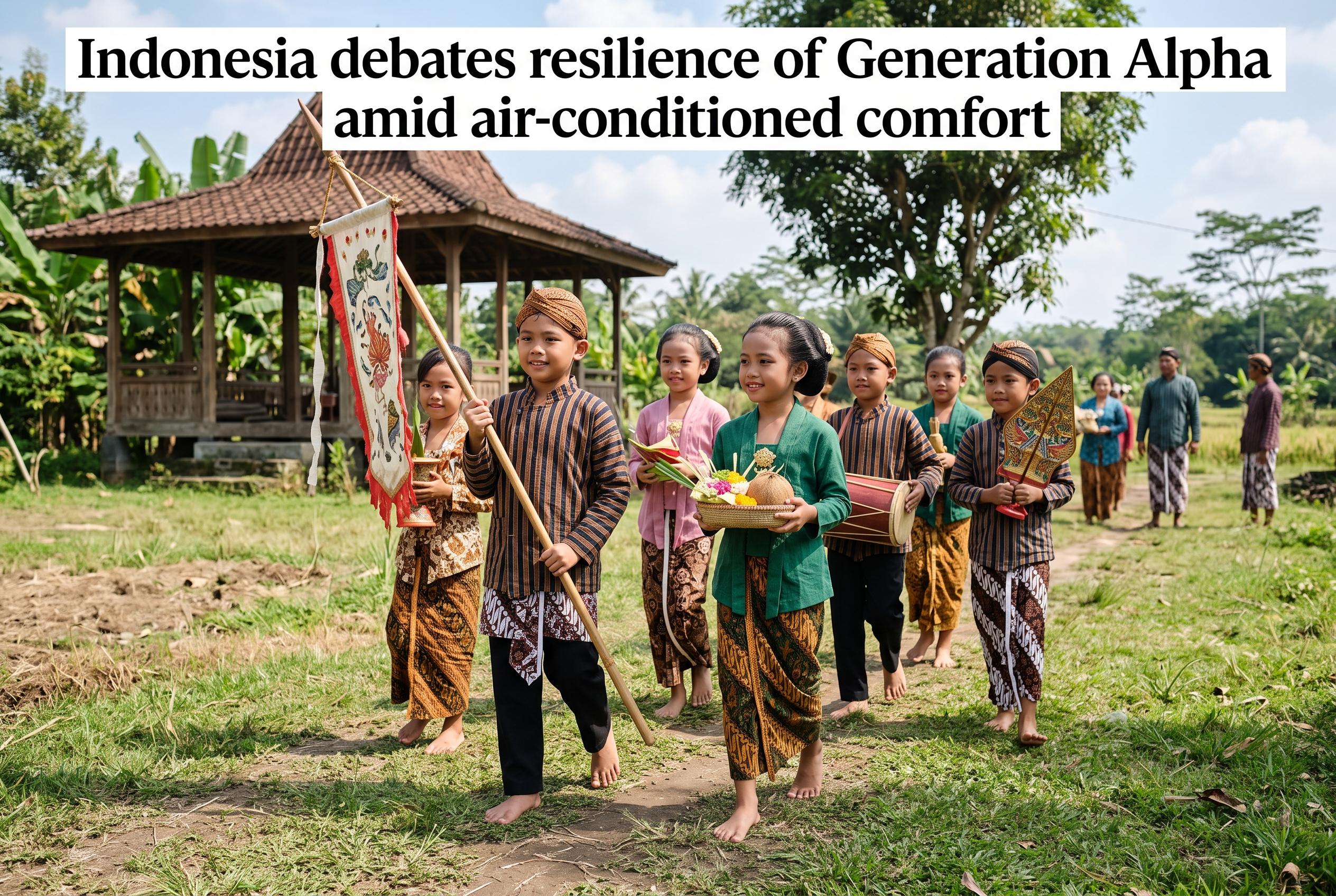

A viral video of children navigating an outdoor ceremony sparks wider discussion in Indonesia on the impact of air-conditioned comfort and digital influences on the resilience of Generation Alpha.
A brief video of children struggling through an outdoor ceremony has set off a wider debate in Indonesia about so-called “anak AC”, or children raised in air-conditioned comfort, and what that says about the resilience of Generation Alpha.
Prof Dwi Hastuti, an expert in parenting and child development at IPB University, said children still need to experience manageable discomfort if they are to grow into adaptable and mentally resilient adults. She argued that Generation Alpha, generally defined as those born from 2010 to 2025, is coming of age in an environment shaped by rapid digitalisation, abundant convenience and constant access to comforts that previous generations did not take for granted.
That broader environment matters, she said, because children absorb habits from the world around them. Social media can intensify comparison, making young people more likely to measure their own experiences against those of peers and influencers. In everyday life, she said, that can also encourage instant responses to discomfort rather than problem-solving, such as reaching immediately for the air conditioner instead of looking for other ways to cool down.
Education and child-development discussions around Generation Alpha have long pointed to the same tension: the generation is growing up with more technology, but also faces fresh risks if that technology replaces patience, independence and sustained attention. Articles from Alodokter, Kompas and academic research published by Unpad all note that digital tools can support learning and creativity, but only if they are balanced with guidance, physical activity and age-appropriate limits. Research cited in the material also suggests that excessive device use can affect concentration and language development, underscoring the concern that ease can sometimes come at the expense of perseverance.
Disclaimer: This content is for informational purposes only and is not intended to be a substitute for professional medical judgment, advice, diagnosis, or treatment.