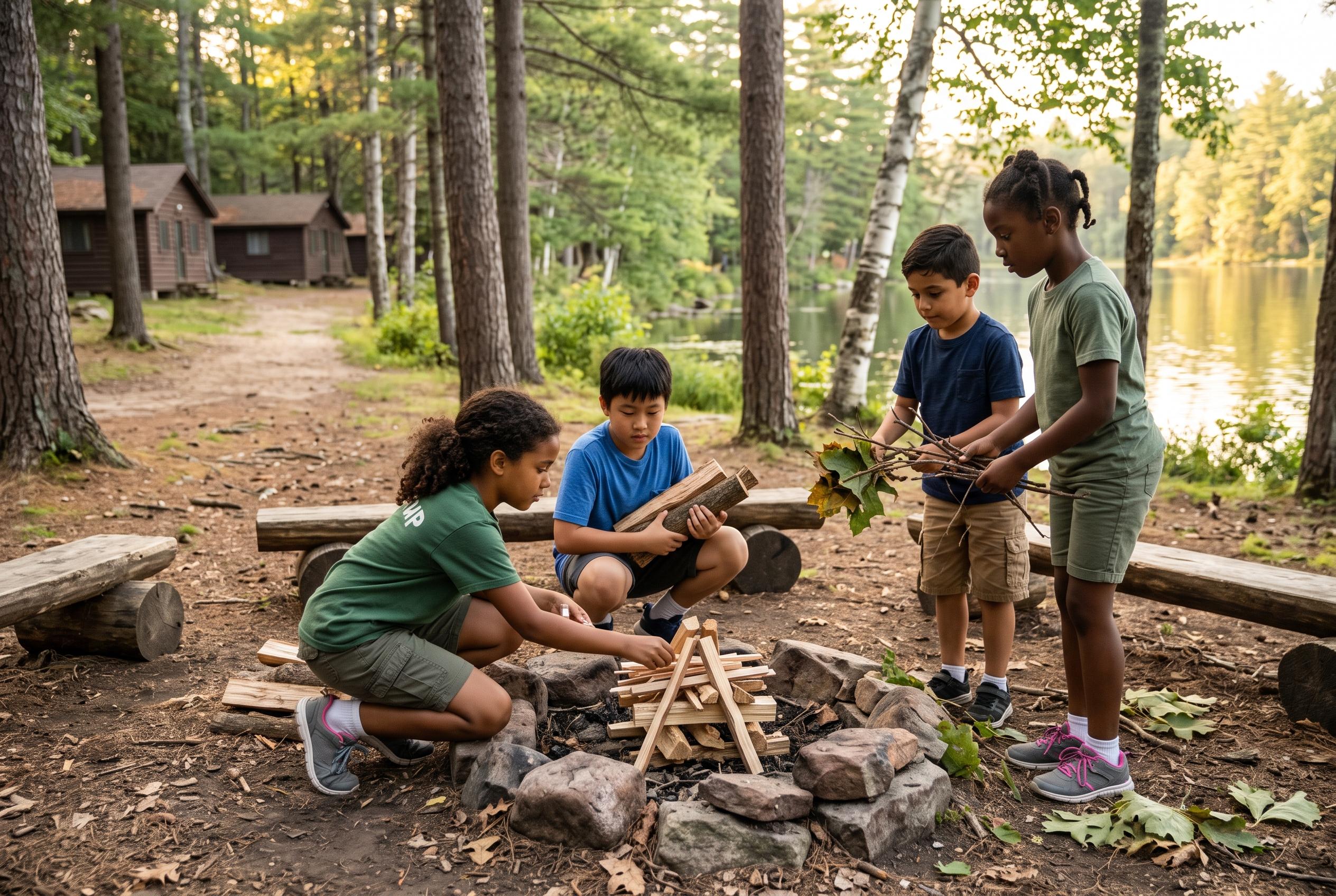

In the United States, traditional residential summer camps increasingly promote screen-free environments to foster face-to-face interaction and independence, even as their high costs limit accessibility for many families.
For many American families, the appeal of summer camp now has as much to do with what children leave behind as what they do there. In a country where residential camps have long been part of the cultural fabric, the modern selling point is increasingly simple: no phones, no tablets and no internet. Camps such as Quinebarge in New Hampshire, Waziyatah in Maine and Tyler Hill in Pennsylvania all promote a fully screen-free summer, arguing that unplugging helps children talk face to face, build confidence and settle into a more independent routine.
That message has taken hold even as the experience remains expensive. The lead article notes that full-season residential camps can cost between $8,000 and $16,000 per child, putting them well beyond the reach of many households. By contrast, day camps run by local authorities or groups such as the YMCA are a more affordable option, though they do not offer the same away-from-home immersion. The article also says that more than 21 million campers attend over 20,000 summer camps across North America each year, with the highest concentration still in the north-east.
The camps themselves vary widely. Some, such as Camp Highlander in North Carolina, have kept a no-electronics policy for decades and use the absence of devices to steer children towards hands-on activities such as archery, pottery and hiking. Others, including Chewonki in Maine, frame the device-free summer as a way to sharpen conflict resolution and social skills. French Woods Sports and Arts Centre in New York takes a broader approach, combining sports, arts and technology in a structured setting for teenagers, showing that not every camp market is built around the same idea of rustic isolation.
Even so, the defining feature of the traditional residential camp remains the same: a long stretch of time in a managed, communal environment, often in wooded surroundings and far from parents. The lead article describes children writing letters, making occasional phone calls and returning each summer for the friendships and rituals they form there. For some families, the attraction is heritage; for others, it is the promise that, for a few weeks, children can be children without constant digital interruption.
Disclaimer: This content is for informational purposes only and is not intended to be a substitute for professional medical judgment, advice, diagnosis, or treatment.