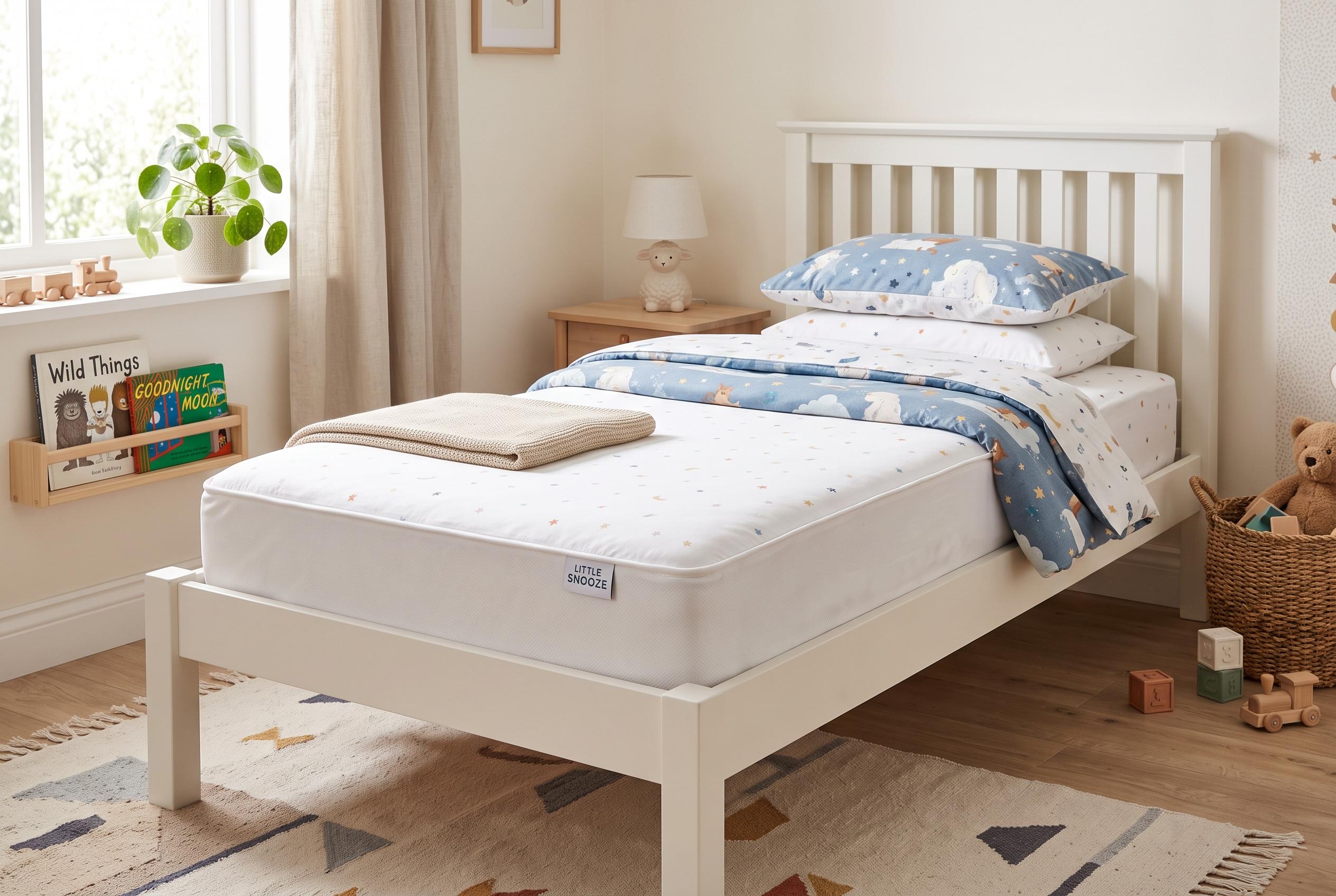

Investing in the right mattress can significantly impact children’s sleep quality and overall health, with support, comfort, and durability being key considerations for parents seeking restorative rest for their kids.
Parents often invest heavily in bedtime routines, from story time to strict lights-out schedules and limits on screens, yet the mattress beneath a child can be the difference between a settled night and broken sleep. The American Academy of Pediatrics’ HealthyChildren.org says inadequate sleep can affect attention, behaviour and mood, while also interfering with learning, memory and normal development. That makes the sleep surface more than a comfort choice; it is part of a child’s health setup.
The first issue is support. A child’s body is still growing, so a mattress needs to keep the spine in a neutral position rather than letting it sink into an awkward curve. Guidance from mattress specialists and consumer safety groups consistently leans towards firmer support for younger children, with some flexibility as children get older. Proper alignment can reduce pressure on the hips and shoulders and help avoid the kind of discomfort that leads to tossing, turning and lighter sleep.
Comfort matters for the same reason. Tom’s Guide notes that a better mattress can improve sleep continuity and support deeper rest, which is often reflected the next morning in better energy and focus. For children, fewer interruptions during the night can mean more time spent in restorative sleep stages, something that has a direct bearing on mood and concentration the following day.
Material choice is also important. Health and parenting sources increasingly stress the value of hypoallergenic, breathable construction, especially for children with allergies or asthma. A mattress that resists dust mites and helps regulate temperature can reduce night-time irritation, overheating and sweating, all of which can disturb sleep without fully waking a child. Consumer Reports also recommends paying close attention to safety and construction standards, particularly for infants and young children.
Durability should not be overlooked either. A child’s mattress has to hold its shape as weight, height and sleep needs change, and sagging can undermine support long before the bed looks worn out. Forbes advises parents to check materials carefully, avoid questionable components and think about when a child will outgrow both the size and the firmness level. The practical rule is simple: if a mattress is sagging, no longer comfortable or harder to keep hygienic, it is probably time to replace it.
Disclaimer: This content is for informational purposes only and is not intended to be a substitute for professional medical judgment, advice, diagnosis, or treatment.