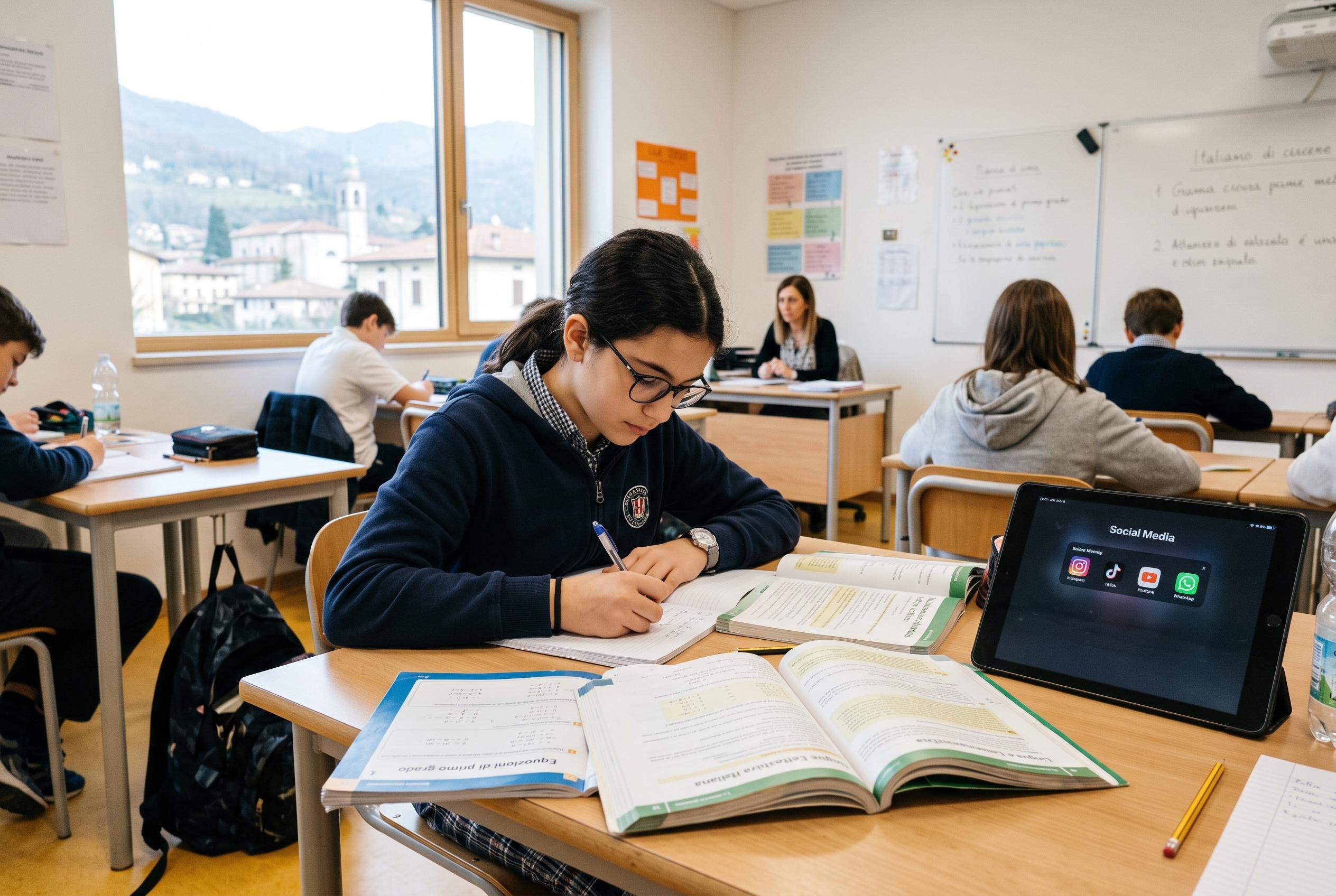

A new study of over 5,000 pupils in northern Italy reveals that children who start using social media at an earlier age tend to perform worse in subjects like mathematics and Italian, prompting calls for stricter guidelines on minors’ online access.
A recent study has added fresh evidence to a widening debate over when children should be allowed onto social media, suggesting that earlier use is linked with weaker results in some school subjects. Researchers analysing data from more than 5,000 pupils in northern Italy found that students who opened social media accounts at a younger age tended to score lower in mathematics and Italian than classmates who waited longer.
The findings, published in Nature Human Behaviour, drew on questionnaire responses about digital habits and standardised test results from pupils aged 7 to 16. The analysis covered students in the second, fifth, eighth and tenth grades, with the clearest pattern emerging among 13- and 14-year-olds in the eighth grade. Those who had begun using social platforms at 11 or 12 generally performed worse in mathematics and Italian than peers who had delayed access.
The effect was not confined to one point in a child’s schooling. Researchers said the same broad pattern was visible again in the tenth grade, when pupils were 15 or 16, and in some cases the gap was even more pronounced, particularly in mathematics and among children exposed to social media before turning 13. At the same time, the study did not find the same relationship for English, which puzzled the authors.
One possible explanation, the researchers said, is that much of the content children encounter on social platforms is in English, creating an informal exposure to the language that may offset some of the negative effects seen elsewhere. They stressed, however, that their work shows association rather than direct causation. Other studies have also linked heavier screen use with poorer school outcomes, including research in children aged 8 to 12 and a longitudinal study that found more than two hours of daily television viewing predicted lower reading scores. A broader review of 34 studies likewise reported a negative association between off-task smartphone and social media use and academic achievement.
The authors called for stronger digital literacy teaching in schools, tighter rules around minors’ use of social media and policies that could delay access to these platforms. Their recommendations come as governments and institutions around the world continue to argue over whether the answer lies in age limits or in making services safer for children without imposing blanket bans.
Disclaimer: This content is for informational purposes only and is not intended to be a substitute for professional medical judgment, advice, diagnosis, or treatment.