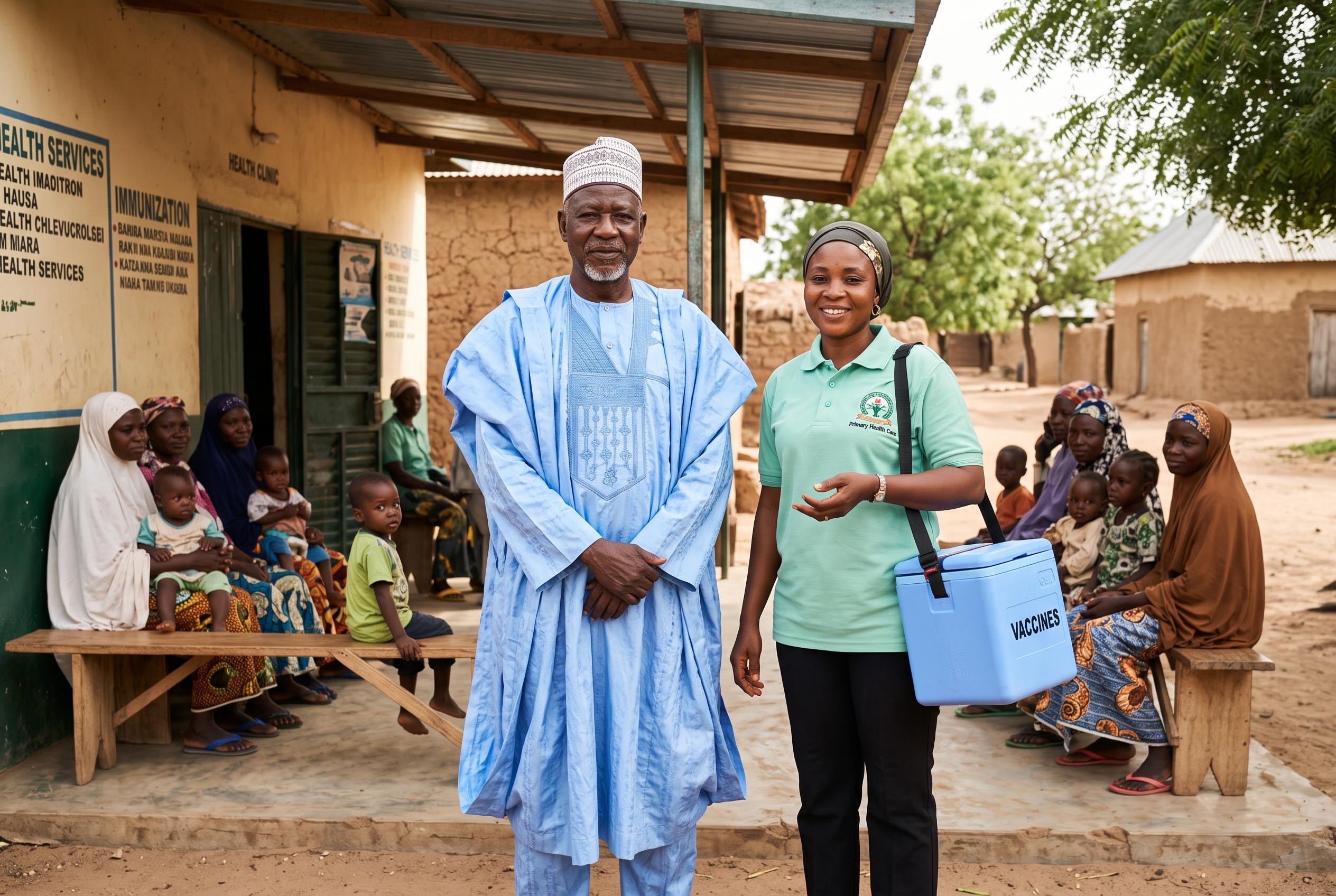

In northern Nigeria, traditional leaders play a pivotal role in restoring trust and increasing immunisation rates amid persistent challenges of insecurity, misinformation, and coverage gaps.
In northern Nigeria, public health workers are leaning on an old but powerful tool: trust. At a review meeting in Abuja, traditional leaders, government officials and immunisation partners said community influence remains crucial to persuading hesitant parents to vaccinate their children and to closing gaps in routine coverage.
The meeting followed a familiar pattern seen across the region. In Kebbi state, according to UNICEF, one community leader only accepted polio vaccination for his children after a health worker addressed his concerns, later becoming an advocate for immunisation. Gavi has also reported from Sokoto state that traditional forums known as “majalisa” are being used to bring elders into conversations about routine vaccination, helping turn lessons from polio campaigns into broader public health gains.
Nigeria still has a long way to go. Government and partner figures cited at the Abuja meeting put routine immunisation coverage among children aged 12 to 23 months at about 57% nationwide and 41.5% in the north, with roughly 2.1 million children missing all routine vaccines. The problem is most acute in remote, insecure or underserved areas, where distance, poverty, conflict and misinformation all make it harder for families to reach services.
Health authorities also warned that surveillance remains patchy. The National Primary Health Care Development Agency said cases of circulating variant poliovirus type 2 had fallen from 48 to 39 by July 2026, but it also recorded seven cases of variant poliovirus type 3. Most detections are concentrated in Sokoto, Kebbi and Zamfara, while some wards are still classed as silent, meaning suspected cases are not being picked up or reported.
Dr Pavel Ursu of the World Health Organisation said traditional leaders are often the bridge between vaccine teams and families that might otherwise stay away. Alhaji Samaila Mera, who chairs the Northern Traditional Leaders Committee, said insecurity should not be used as a reason to leave vulnerable communities behind. Health minister Muhammad Ali Pate said a $615 million financing plan for 2026 to 2030, including support from Gavi and Nigerian counterpart funding, should help strengthen cold-chain systems, frontline services and access to routine doses.
Disclaimer: This content is for informational purposes only and is not intended to be a substitute for professional medical judgment, advice, diagnosis, or treatment.