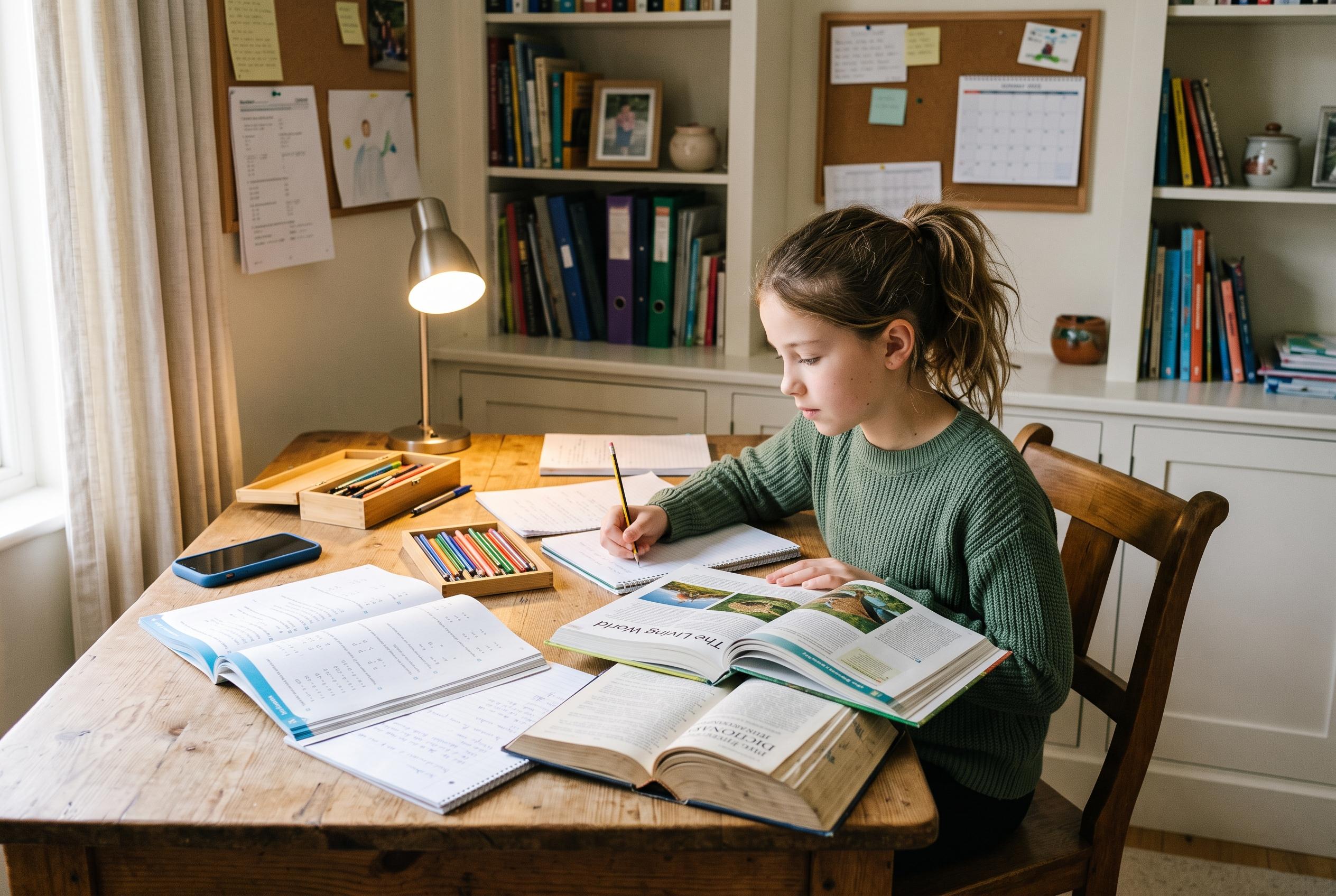

A large Italian study reveals that children who access social media before the age of 14 experience a measurable and lasting impact on their academic achievement, highlighting the importance of delaying digital engagement during critical developmental years.
A large Italian study published in Nature Human Behaviour suggests that children who enter the social media world before the age of 14 tend to see a lasting drop in school performance, particularly in Italian and mathematics. The research, led by Marco Gui of the University of Milano-Bicocca, followed more than 5,000 students from ages 7 to 16 and linked their digital habits with national test results. According to Il Fatto Quotidiano, the findings point to a gap of almost six months of learning compared with classmates who delayed social media use until later adolescence.
The study tried to strip out other influences, including family background and earlier cognitive ability, by comparing pupils who opened their first accounts on platforms such as TikTok, Instagram or WhatsApp in the first years of lower secondary school with those who waited until secondary school. Gui said the aim was to isolate what happens to learning at the moment a child begins to use social platforms independently.
Researchers said the main problem is not simply screen time, but the repeated interruption of attention. Constant checking of notifications and frequent unlocking of the phone break concentration during homework and in class, while evening device use also harms sleep quality. Other research points in the same direction: a Belgian longitudinal study published in New Media & Society found that heavier smartphone use was associated with lower exam scores and fewer passes, though a separate Psychological Science study warned that some apparent effects may be overstated because other factors also matter. A broader review in Acta Psychologica described the relationship between phone use and academic performance as complex, not uniformly negative.
The Italian findings add to a growing body of evidence that timing matters as much as volume when it comes to digital exposure. Other recent work in Computers in Human Behavior found that mobile learning can aid performance and that poor sleep can mediate the damage caused by some app use, suggesting that not every form of smartphone activity carries the same risk. Still, Gui argued that delaying independent access to smartphones and social media is not anti-technology, but a way to protect concentration, rest and learning while children are still developing the habits they need for school.
Disclaimer: This content is for informational purposes only and is not intended to be a substitute for professional medical judgment, advice, diagnosis, or treatment.