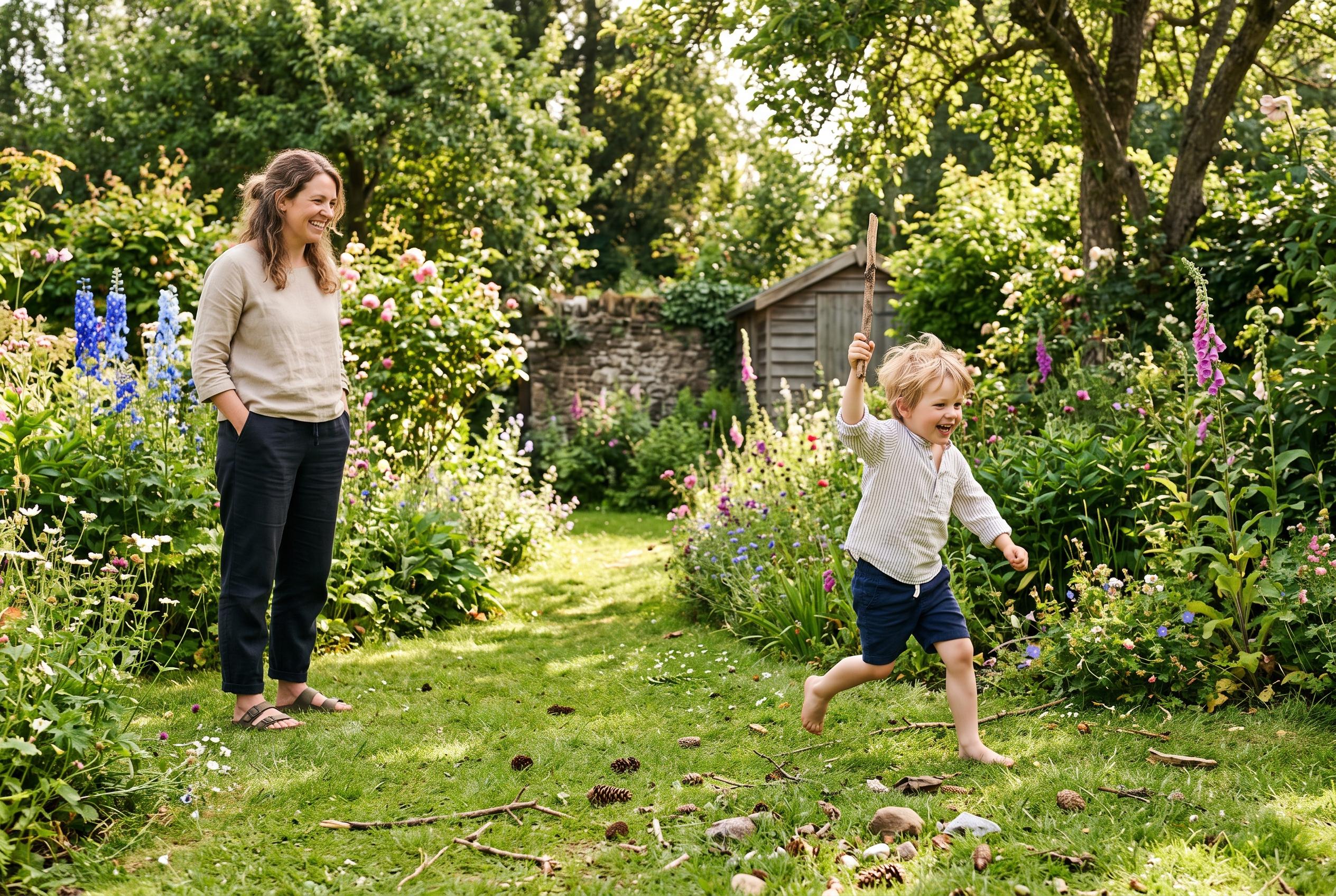

Actress and parent Ellie Kemper emphasises the importance of free, imaginative play for children’s growth and well-being, advocating for a summer balanced between screen time and outdoor activities to foster resilience, creativity, and emotional intelligence.
Ellie Kemper says she is trying to protect the remaining stretch of summer from disappearing into screens and over-scheduling. In an as-told-to essay for Business Insider, the actor said her children, aged 6 and 9, still have plenty of days to fill before school starts and that she is making a deliberate effort to keep their days loose and full of room for play.
Kemper said a recent trip to St. Louis, where she grew up and where her parents and brother still live, gave her children the chance to spend time with cousins and to swim, a pastime she remembers fondly from her own childhood. Her instinct, she said, is to head for a pool as soon as one is available. Child development experts have long said that unstructured play can support social, emotional and cognitive growth, helping children build resilience, creativity and confidence.
She also framed free time as something valuable not just for children but for adults who work creatively. Kemper said having room to think and imagine is essential for artists, even if that becomes harder once parenthood compresses the day. That idea is echoed by paediatric and psychology groups, which say self-directed play helps children make up their own rules, solve problems and learn to engage with others on their own terms.
This summer, Kemper partnered with Pirate’s Booty on Captain Bob’s Summer Quest, a set of low-lift imaginative activities designed to let children take the lead. She said that kind of setup works best because it gives her children something to do without requiring constant adult direction. The approach fits with guidance from the American Academy of Pediatrics, which says undirected play helps children develop new skills, imagination and confidence.
Kemper said she enjoys imaginative play in small doses, especially because her job already gives her a chance to dress up and enter invented worlds. That, she said, helps her meet her children where they are when they are creating their own games. She also said parenthood has taught her to pause before reacting, especially during tantrums or bursts of frustration, and to use humour as a pressure valve. Her husband’s sense of humour helps, she said, and being able to laugh at themselves has been useful.
On a deeper level, Kemper said she tries to teach her children that success is not just about the end result but also about effort, relationships and purpose. She said she talks to them about those ideas in simpler terms, praising the process rather than only the outcome. That emphasis on process aligns with research showing that play can strengthen problem-solving, emotional intelligence and social competence while helping children feel more capable and connected.
Disclaimer: This content is for informational purposes only and is not intended to be a substitute for professional medical judgment, advice, diagnosis, or treatment.