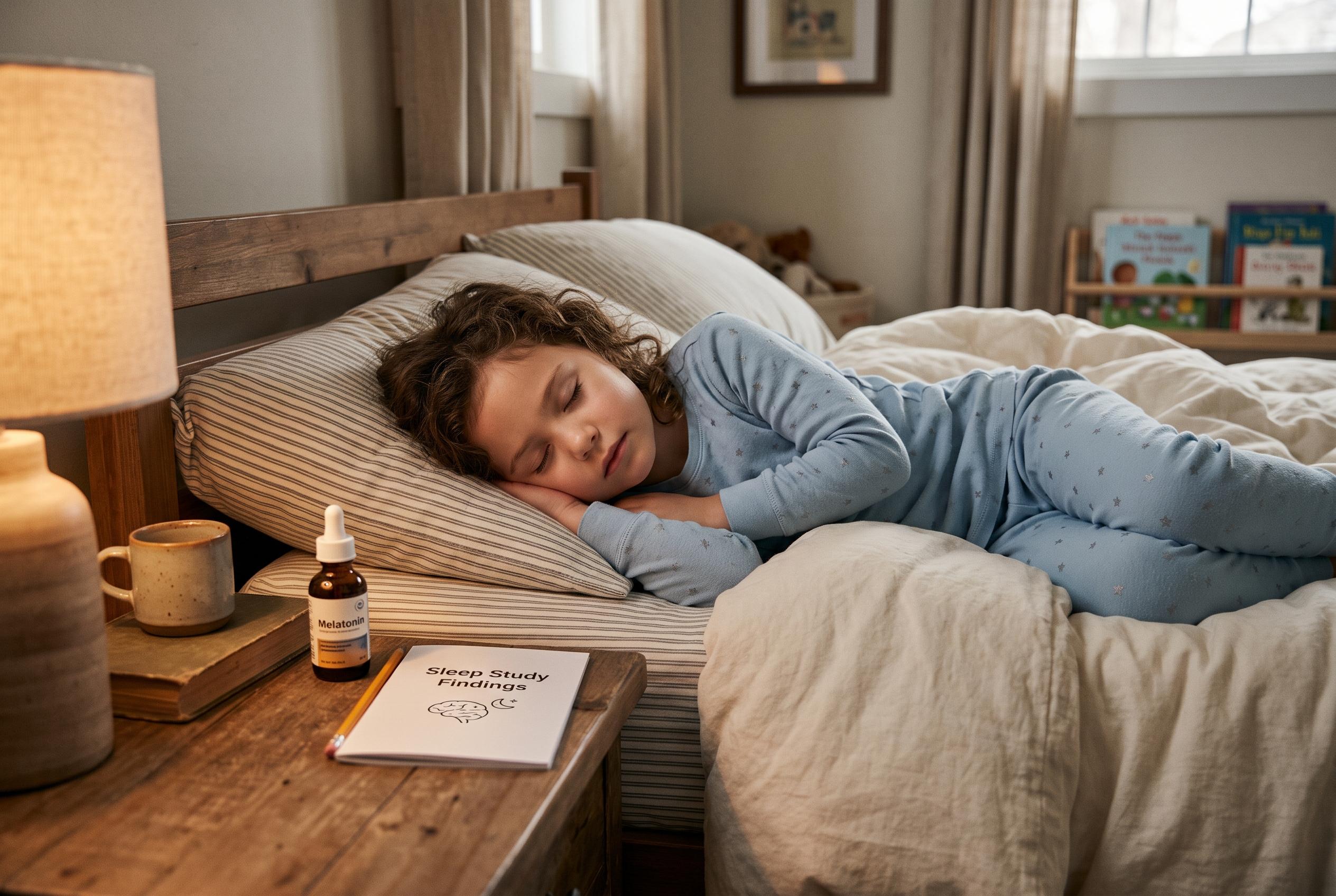

A new study published in JAMA Network Open indicates that melatonin use outside hospital settings results in only slight alterations in children’s sleep patterns, chiefly a modest reduction in REM sleep, with no major impacts observed overall.
A new study in JAMA Network Open suggests that children who take melatonin outside hospital settings do not show major differences in measured sleep structure compared with similar non-users, aside from a modest drop in the proportion of rapid eye movement, or REM, sleep.
The research team analysed de-identified polysomnography, a laboratory sleep test that records brain activity, breathing, movements and oxygen levels, alongside electronic health records from an academic paediatric sleep centre between 2017 and 2019. The full sample included 3,392 children with a mean age of 8, of whom 346 had used melatonin. To reduce bias from why a child might have been prescribed or given the supplement, the investigators used propensity score matching, a statistical method that pairs similar patients according to factors such as age, sex, body mass index percentile, overall medical burden, obstructive sleep apnoea and epilepsy.
After matching, the analysis compared 342 melatonin users with 342 non-users. The melatonin group had a lower median REM sleep share, but there were no significant differences in total sleep time, sleep efficiency, non-REM stages, breathing measures, arousal patterns, periodic limb movements or oxygen desaturation. The REM finding remained when the researchers adjusted the balance of users and non-users, though the effect weakened after accounting for common psychiatric conditions such as attention deficit hyperactivity disorder, anxiety and depression, which points to possible residual confounding rather than a clear biological effect.
The findings sit alongside earlier JAMA reports showing that melatonin can help children fall asleep faster and can be useful in some cases of circadian rhythm disruption, while older paediatric research has also suggested possible benefits in selected groups. But those studies, like this one, have not established a complete picture of how the hormone affects the sleeping brain over time. The authors of the latest paper say prospective studies are needed to determine whether melatonin directly alters REM sleep in children.
Disclaimer: This content is for informational purposes only and is not intended to be a substitute for professional medical judgment, advice, diagnosis, or treatment.