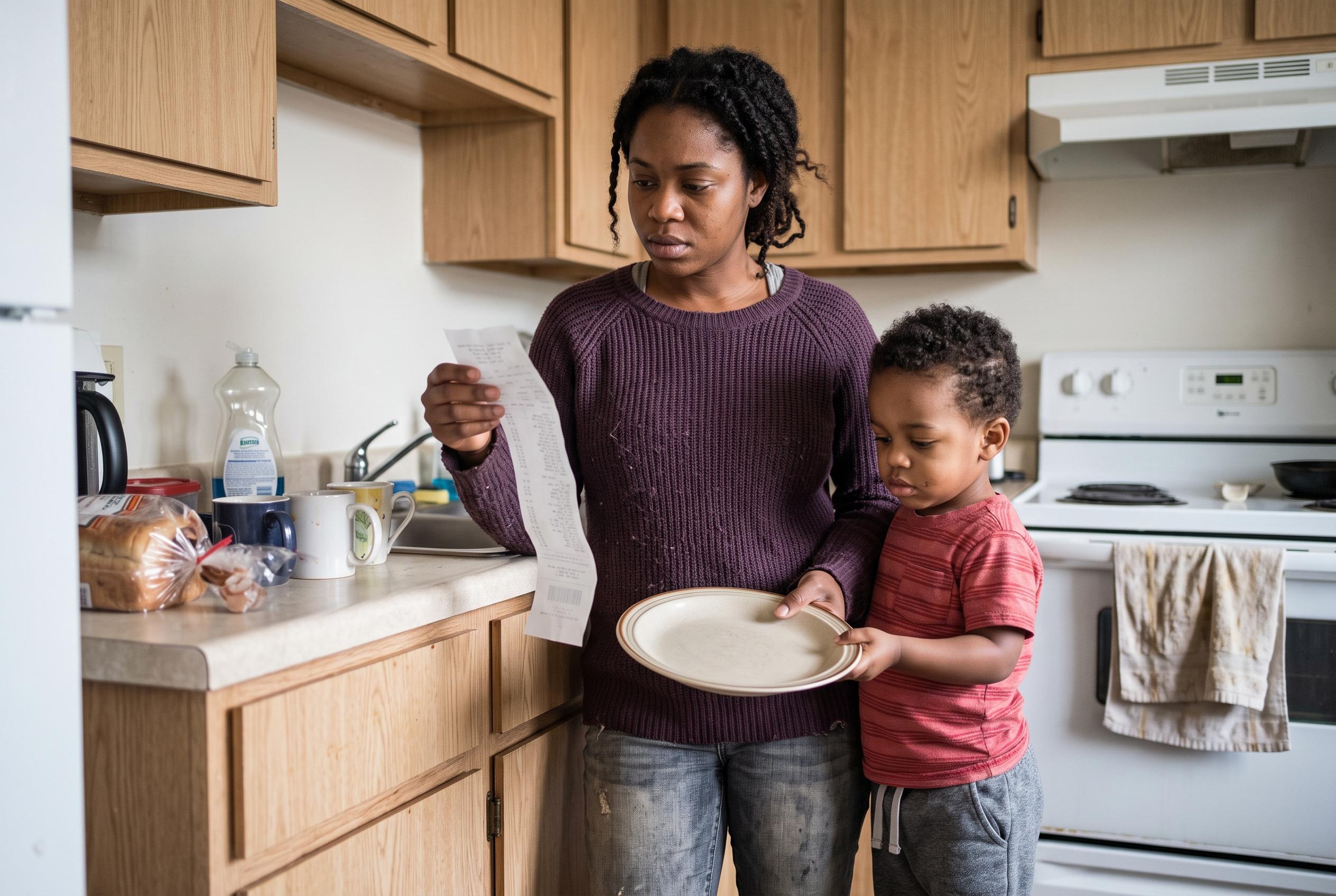

Nearly a quarter of families with children under five are living in food poverty, highlighting gaps in government support for pre-school children amid ongoing efforts to expand free school meals.
Nearly a quarter of families with children under 5 are living with food poverty, according to research from the Education Policy Institute, a finding that has sharpened concern that policy has focused too heavily on older children while leaving the early years behind. The EPI says the problem is even more acute for single-parent households, where the rate reaches 50%, and for households that include an adult with a disability, where it rises to 39%. In contrast, 19% of households with children aged 5 to 17 are affected.
Dr Kerris Cooper, the EPI’s associate director of early years and inequalities, said the data showed that younger children face a markedly higher risk and that the pressure becomes greater when other disadvantages are added. The study defines food poverty as going without meals, eating less than needed or losing weight because there is not enough money for food. Cooper said there had been significant progress for school-age children, particularly with the expansion of free school meals for children in households receiving Universal Credit, but argued that support remains uneven across age groups.
That argument lands as ministers prepare to widen free school meals further. Government guidance says that from the 2026 to 2027 academic year all children in households receiving Universal Credit will be entitled to free school meals, regardless of household earnings. The official application guidance says the same change will apply across the system, while local authority pages show that younger children can already qualify in some maintained nursery settings or through early years funding streams.
The EPI says that patchwork system leaves too many pre-school children without help. It is calling for free meals to be extended to all disadvantaged pre-school children, regardless of whether they attend maintained, private, voluntary or independent nursery settings. It also wants the Healthy Start scheme widened to include 4-year-olds and non-British children in households with no recourse to public funds, alongside a review of wider safety-net policies to make sure families can afford essentials.
Other child poverty campaigners say the issue goes beyond school meals alone. Sophie Livingstone, chief executive of Little Village UK and chair of the End Child Poverty Coalition, said families need enough income to cover basics and urged the government to put reducing child poverty at the centre of its 10-year plan for Britain. Helen Stewart of the Royal College of Paediatrics and Child Health warned that poor nutrition in early childhood can harm growth and development, while also increasing the risk of obesity and dental decay. Paul Whiteman, general secretary of the NAHT school leaders’ union, said extending support into pre-school settings would help children arrive at school ready to learn.
A government spokeswoman said ministers were determined to cut child poverty after what she described as years of rising hardship. She pointed to the removal of the two-child limit, the increase in the national living wage and more than £1 billion set aside to extend free school meals to families on Universal Credit. She also said the government is consulting on getting more funding directly to nurseries and childminders that support families on the lowest incomes, including help with food costs, with the consultation due to close on September 14.
Disclaimer: This content is for informational purposes only and is not intended to be a substitute for professional medical judgment, advice, diagnosis, or treatment.