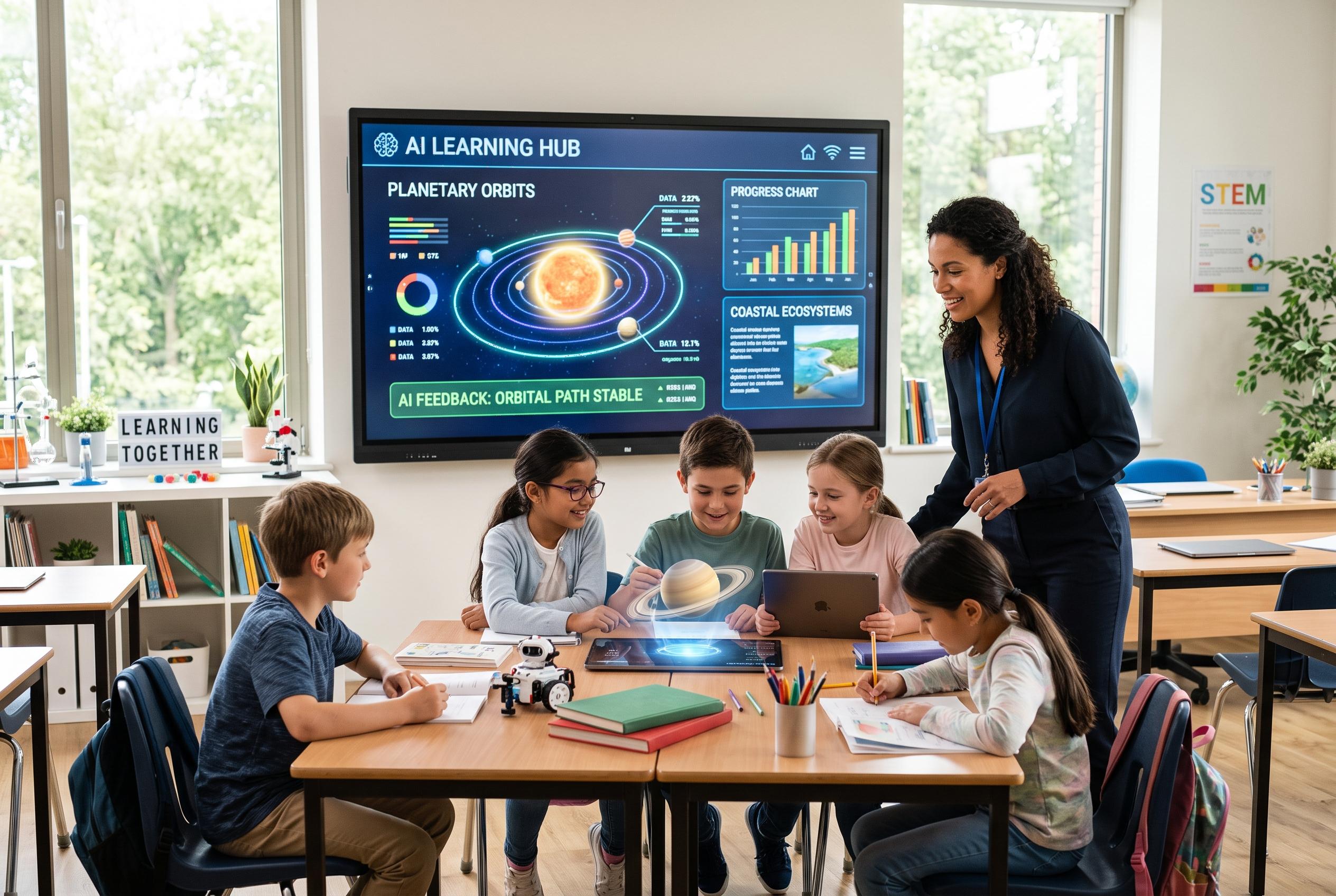

Alpha School, an AI-focused private school network, is rapidly expanding across the US, challenging traditional education models and prompting questions about the effectiveness and transparency of AI-led learning approaches.
Alpha School is moving from a niche curiosity to a national talking point as the AI-driven private school network expands rapidly across the United States. Founded in Austin in 2014 by software entrepreneur Joe Liemandt and co-founder MacKenzie Price, the company says it is taking its model into 27 cities this school year, with new campuses planned in Boston, Atlanta, Chicago, Denver, Nashville and Raleigh, as well as across North Texas. The pitch is bold: use artificial intelligence to handle core academics in as little as two hours a day, then devote the rest of the schedule to life skills, projects and personal development.
That promise is a far cry from the way most schools are approaching AI. A May Gallup study cited by Axios found that only 18% of public school teachers had received formal guidance on using AI tools, underlining how slowly the technology is being adopted in mainstream education. Alpha has tried to turn that gap into an advantage, presenting itself as a live experiment in what schooling might look like if AI were not an add-on but the organising principle. Price has said the company is among the most talked about schools in the country.
Sceptics, however, say the claims run ahead of the evidence. Educators quoted by Axios, including Gerald LeTendre of Penn State, warn that AI-based classrooms can blur the line between teaching and tutoring. Critics also point out that Alpha’s performance data remain largely internal. According to one review of the school’s claims, the methodology behind its headline results has not been opened to independent scrutiny, leaving questions about how much progress can be attributed to the model itself and how much to the students and families it attracts.
The school’s supporters see a leaner, more focused version of education. Students work on laptops, use headsets and, in some settings, virtual reality, while so-called human guides support rather than direct instruction. The company says the approach reduces screen time rather than increasing it, because digital work is tightly limited to the morning’s academic block. Its defenders argue that traditional schools have either overused AI or banned it altogether, leaving room for a model that uses software more deliberately.
Yet Alpha’s expansion also sharpens a larger debate about what schools are for. The model treats academic study as something to be compressed, with the freed-up time redirected towards entrepreneurship, communication, fitness and other practical skills. That may appeal to families dissatisfied with conventional schooling, but it also raises a familiar question: whether efficiency in digital learning is the same as deep and lasting understanding. For now, Alpha’s growth is real. What remains unproven is whether its formula can deliver more than a compelling sales pitch.
Disclaimer: This content is for informational purposes only and is not intended to be a substitute for professional medical judgment, advice, diagnosis, or treatment.