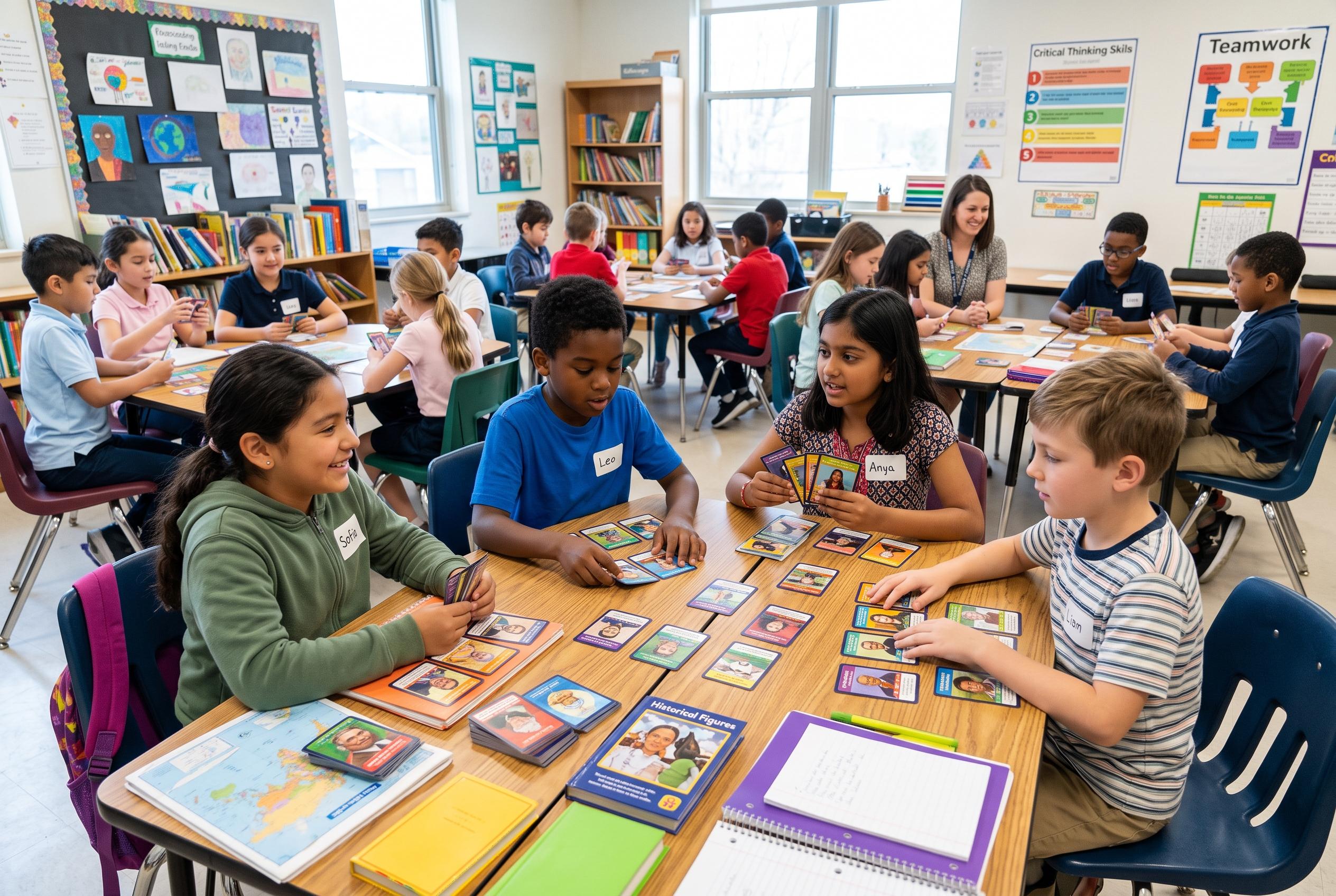

Research and real-world programmes suggest that integrating trading cards into classrooms enhances student engagement, critical thinking, and social development, positioning them as valuable educational resources.
Trading cards have survived more than 100 years of changing tastes because they do more than entertain: they reward curiosity, collecting and repeated engagement. In schools, that same pull is increasingly being framed as an advantage rather than a distraction, with educators arguing that card-based activities can help students build the habits needed for modern learning.
Tisha Lewis Ellison, an associate professor at the University of Georgia, argues that trading cards can strengthen executive function by pushing children to plan, organise and make choices with limited resources. She also says they naturally create openings for reading, number work and discussion, while offering a bridge between physical play and the digital habits that shape students’ attention.
Her case is supported by research on gamified learning. A study in the journal Education and Information Technologies found that fifth-grade students who received in-game trading cards as rewards were more motivated to use the learning system and posted better outcomes after a six-week trial. A separate review of card-based learning tools says such materials can improve retention and post-assessment scores compared with traditional study methods.
That matters because schools are trying to respond to students raised on screens, where instant feedback can make sustained effort harder to teach. Ellison contends that card activities encourage patience, collaboration and critical thinking, qualities she says are especially important in STEAM classrooms, where pupils must connect ideas across science, technology, engineering, arts and mathematics.
Examples are already emerging outside the theory stage. The Chicago Sun-Times commentary points to after-school programmes in Hartford, Connecticut, where students learn to judge card values and market behaviour, and in Michigan, where card clubs have expanded to nearly 50 participants. Those settings suggest the hobby can also support social development and entrepreneurial thinking, not just subject knowledge.
Ellison’s broader argument is that schools should treat trading cards as serious learning tools rather than nostalgia. She says they can fit into clubs, summer programmes and lesson plans, especially when educators want students to connect with material in a form that feels familiar, physical and engaging. For her, the lesson is simple: the best classroom tools do not always look academic at first glance.
Disclaimer: This content is for informational purposes only and is not intended to be a substitute for professional medical judgment, advice, diagnosis, or treatment.