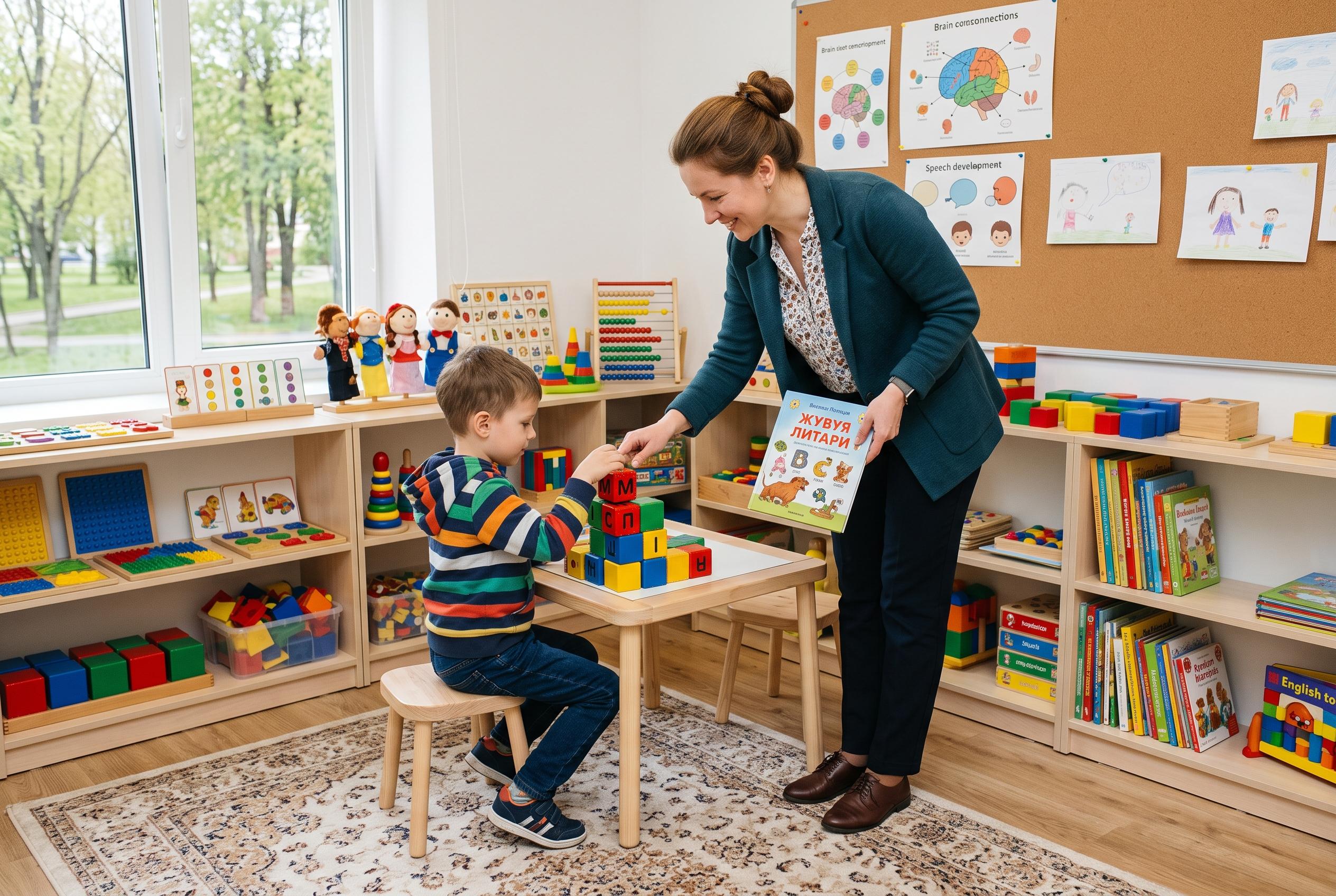

A Belarusian neuropsychologist has debunked common misconceptions about brain development, emphasising ongoing neuroplasticity, the potential for learning in autistic children, and the broader implications of speech delays for cognitive growth.
A Belarusian neuropsychologist has challenged three persistent assumptions about the brain, saying it remains capable of change well beyond childhood, that autistic children can learn and socialise with the right support and that speech delays often have wider implications for development.
The expert said the idea that the brain stops developing after adolescence is wrong. “That is not true. The brain continues to develop throughout life. New neural connections are constantly formed because people keep learning new things, even in everyday life. Of course, brain tissue changes with age, and the speed of learning and processing information declines. Nevertheless, change remains possible,” she said. Her comments echo research from the Harvard Centre on the Developing Child and Mayo Clinic Press, both of which describe brain development as a lifelong process shaped by neuroplasticity, the brain’s ability to adapt and rewire itself.
She also rejected the notion that children with autism spectrum disorders cannot learn or build relationships. “I cannot agree with that. Children with autism spectrum disorders can learn, but specific approaches should be used, such as vivid images and visual materials that help establish interaction. It is also very important that the knowledge we provide to a child with autism is well structured,” she said. The specialist added that adults should not wait passively for interaction but should take the initiative and help develop emotional skills, which she said supports socialisation.
On speech delay, she said slower language development is often linked to slower thinking. “Speech development and thinking develop in parallel. If speech is delayed, logical thinking is usually delayed as well. Thinking may remain at a visual and figurative level, meaning the person primarily thinks in images. Cases where delayed speech development has no impact on cognitive development are quite rare,” the neuropsychologist said.
Disclaimer: This content is for informational purposes only and is not intended to be a substitute for professional medical judgment, advice, diagnosis, or treatment.