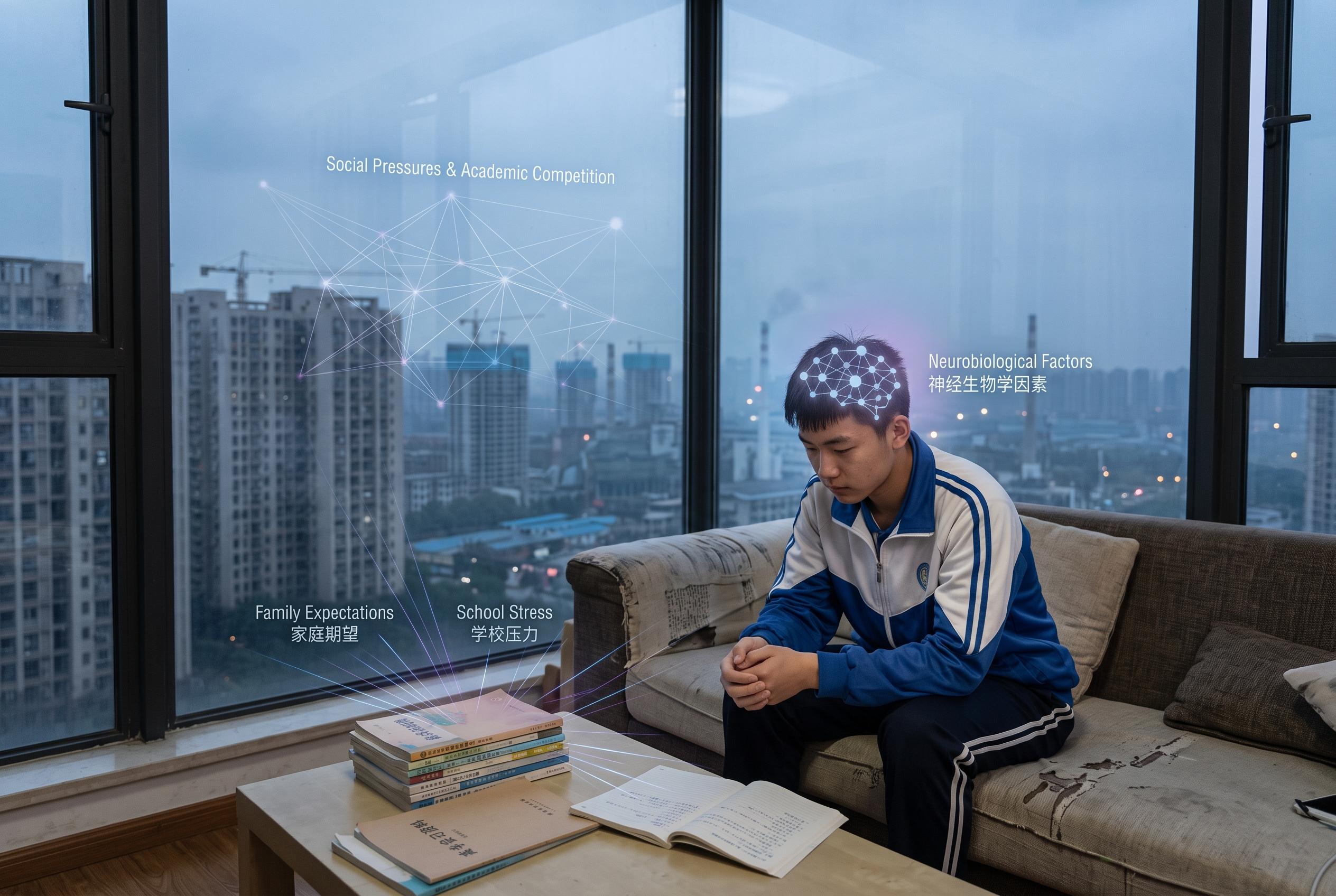

A comprehensive review underscores the urgency of addressing adolescent depression in China, emphasising complex biological, social, and diagnostic challenges exacerbated by rapid urbanisation and industrialisation, and advocates for more precise, multidisciplinary intervention strategies.
A Frontiers in Psychology review says major depressive disorder is an urgent public health problem for adolescents and a growing concern in China, where rapid urbanisation and industrialisation appear to be adding to the burden. The authors argue that depression in this age group is often under-recognised and can persist into adulthood if it is not treated early.
The review says the disorder among Chinese adolescents should be understood as more than a simple mood problem. It links rising depression rates to broader psychosocial pressures and notes that associated behaviours can include gaming addiction, self-harm and suicidal behaviour. It also says that onset is often subtle, comorbidity is common and diagnosis can be difficult because symptoms may overlap with other mental health conditions.
The article also looks at the biology of adolescent depression, including the brain regions and neural pathways that may be involved. A separate study published on PubMed says traditional statistical methods may miss the complex interactions behind depression risk and suggests machine learning could help build better predictive models. That research points to traits such as neuroticism and lower levels of proactive growth behaviour as factors that may increase vulnerability.
On treatment, the review calls for earlier recognition of risk factors and more precise identification of underlying causes so that care can be better targeted. It says effective responses should combine psychological, drug-based and physical therapies rather than rely on a single approach. A protocol in BMJ Open and another study from the post-COVID period both underline how variable prevalence estimates can be and how urgently more consistent assessment and intervention strategies are needed for Chinese adolescents.
Disclaimer: This content is for informational purposes only and is not intended to be a substitute for professional medical judgment, advice, diagnosis, or treatment.