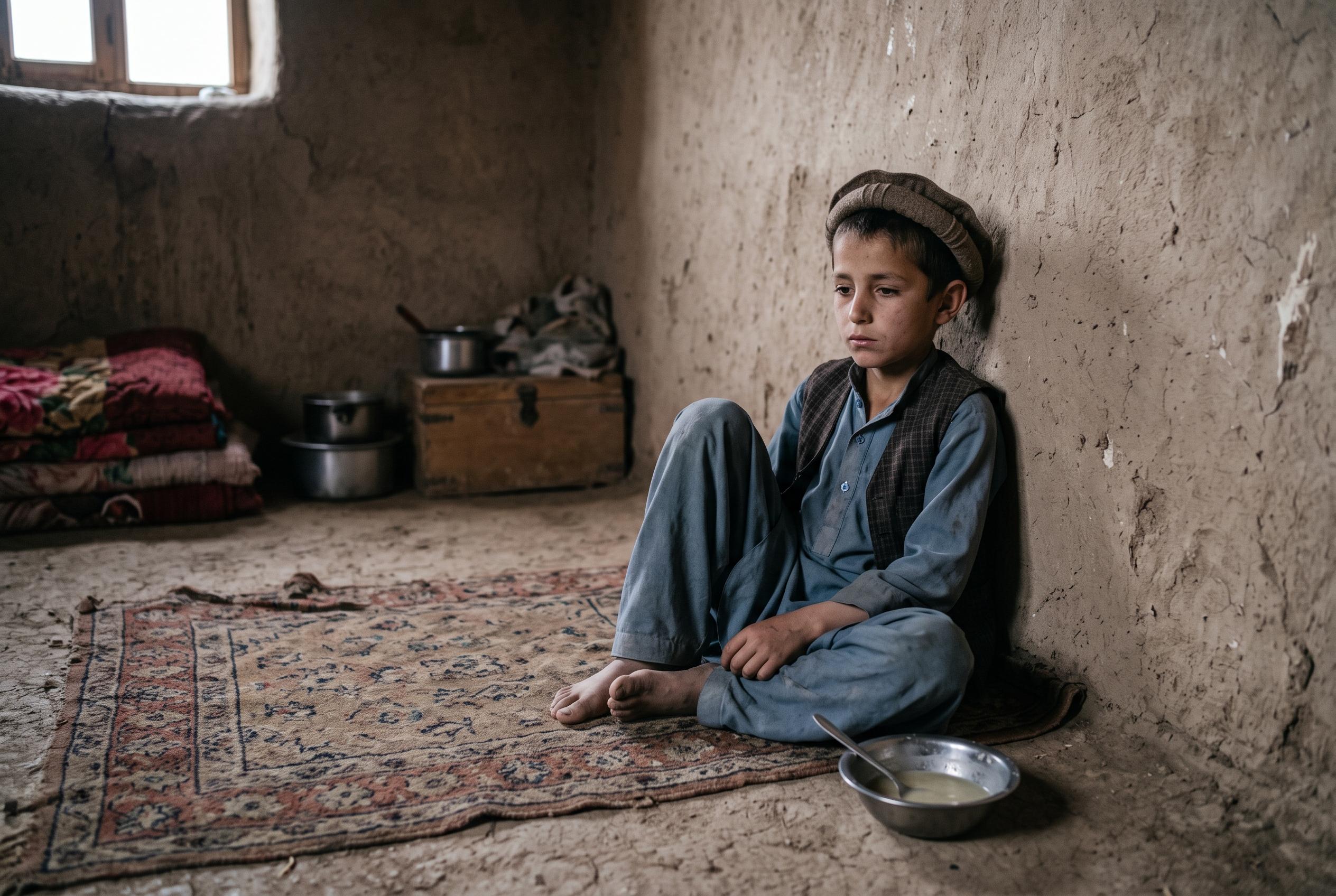

The UN warns that Afghanistan’s child malnutrition has reached its worst level on record, with aid shortages and regional conflicts intensifying the crisis amid UN appeals for urgent funding.
The United Nations World Food Programme has warned that Afghanistan’s child malnutrition crisis has reached its worst level on record, with 12 of the country’s 34 provinces now classified as critical under the international system used to gauge famine risk. The agency says it can currently treat only a fraction of those in need, leaving six in seven acutely malnourished women and children without help as funding shortfalls bite, according to reporting by The Associated Press.
The shortage comes as humanitarian agencies face a widening emergency. The AP reported that 142 health centres closed in 2025 because of aid cuts, stripping nutrition treatment from 13,000 children, while nearly 3.7 million children and 1.2 million pregnant and breastfeeding women are expected to face acute malnutrition this year. UNICEF has separately warned that 3.7 million children are at heightened risk, with children under 2 bearing a disproportionate share of the crisis.
WFP says the situation is being driven not only by shrinking aid budgets but also by economic shocks that have pushed food beyond the reach of many families. In Afghanistan, the closure of the Pakistan border, the wider regional conflict and rising trade disruptions have helped lift prices for staple goods, while unemployment, disease and poor water and sanitation have deepened the crisis. The agency says it needs about $540 million to keep emergency food and nutrition operations going through the most dangerous months.
The humanitarian strain has been intensified by mass returns from neighbouring countries. WFP says forced expulsions from Pakistan and Iran have removed a vital source of remittance income for Afghan households, while also increasing the number of people competing for scarce food, work and shelter inside the country. UNICEF’s 2026 appeal, which seeks $950 million, says 21.9 million people in Afghanistan will need humanitarian assistance this year, including 11.6 million children.
Aid workers warn that the timing is especially alarming because Afghanistan is entering the peak wasting season. UNICEF representative Tajudeen Oyewale said young children are being pushed closer to malnutrition before the season has even begun, while WFP says it has been forced to suspend preventive distributions and focus only on the most severe cases it can still reach. With winter ahead and funding still far below needs, the agencies say more children are likely to be turned away from clinics untreated.
Disclaimer: This content is for informational purposes only and is not intended to be a substitute for professional medical judgment, advice, diagnosis, or treatment.