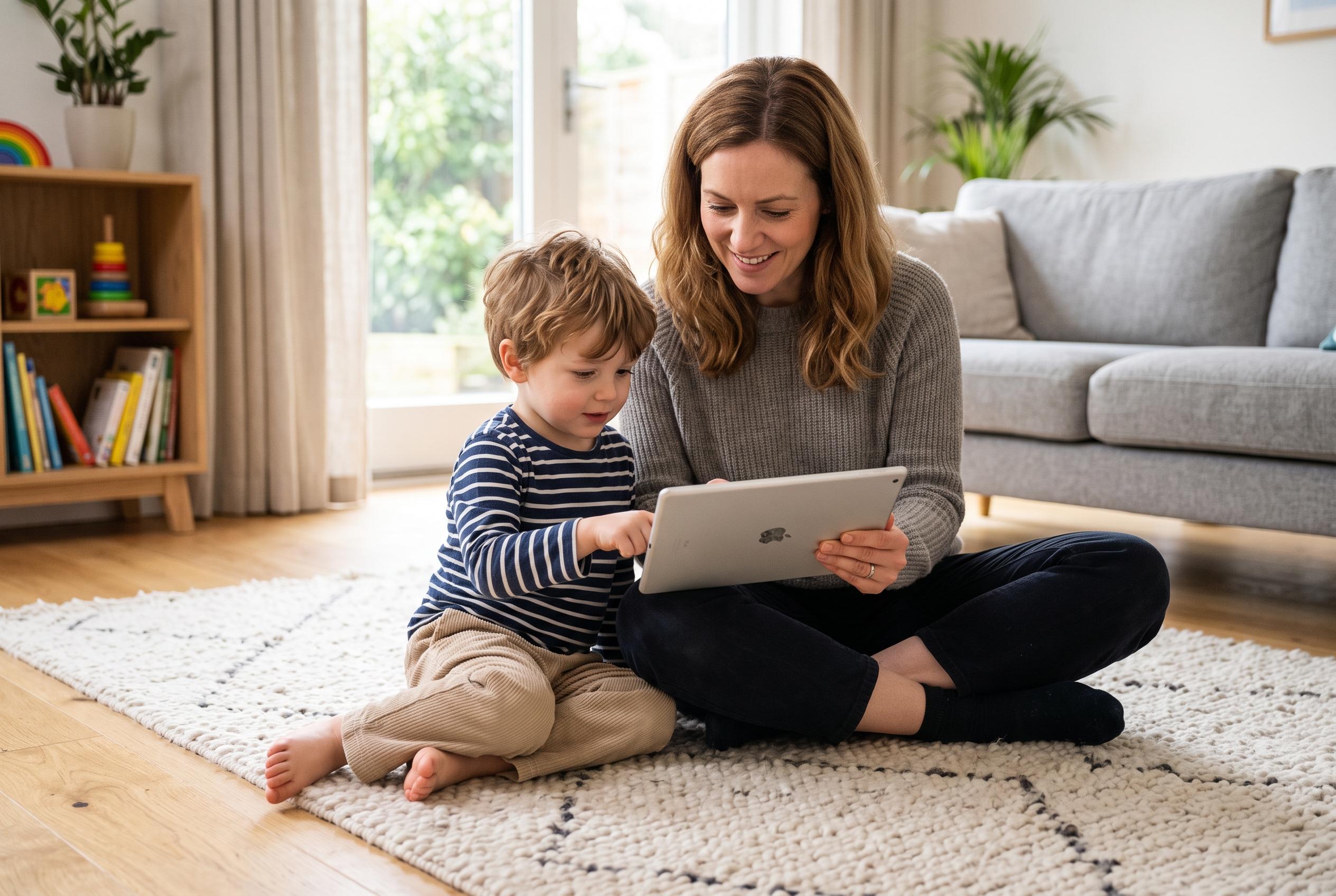

Research from Florida International University reveals that parental stress affects children’s media routines, emphasising the need for quality over quantity in screen media as families navigate digital habits amidst emotional pressures.
A new study from researchers at Florida International University suggests that parents under pressure are more likely to reach for screens as a short-term coping tool, while also struggling to keep media rules consistent. The findings, published in the journal Family Relations, point to a broader message: families may benefit more from better screen habits than from simply trying to reduce the amount of time children spend in front of a device.
The study surveyed 822 caregivers in the United States who had children aged 4 to 8. According to the research team, parents experiencing emotional strain were less likely to enforce screen limits consistently, while those who felt overwhelmed by a child’s behaviour were more inclined to use screens to help manage difficult moments. Enid Moreira, the study’s lead author and a doctoral student in psychology at FIU, said the results highlight how much caregivers’ own stress shapes children’s media routines.
Rather than treating screen time as purely a problem of duration, the researchers argue that quality matters just as much. They recommend choosing media that is age-appropriate, engaging and meaningful, and that fits the child’s developmental stage. Moreira compared the approach to nutrition, saying digital content can be more or less healthy depending on what is chosen and how it is used.
The advice is broadly in line with guidance from the American Academy of Pediatrics, which encourages families to look beyond minutes spent on a screen and consider context, content and developmental impact. For younger children, the academy recommends avoiding screen media altogether for those under 18 months except for video chatting, co-viewing high-quality programmes for children aged 18 months to 2 years, and limiting children aged 2 to 5 to about an hour a day of high-quality content. For older children, it recommends a Family Media Plan tailored to the household.
Shayl Griffith, an assistant professor in FIU’s Department of Counseling, Recreation and School Psychology and the study’s senior author, said parents should not feel they have to solve the problem alone. The researchers say support for caregivers is key, especially for families juggling stress, work and child care. FIU’s Centre for Children and Families offers mental health services in person and by telehealth in English and Spanish, while its parenting workshops include guidance on building realistic technology routines.
Disclaimer: This content is for informational purposes only and is not intended to be a substitute for professional medical judgment, advice, diagnosis, or treatment.