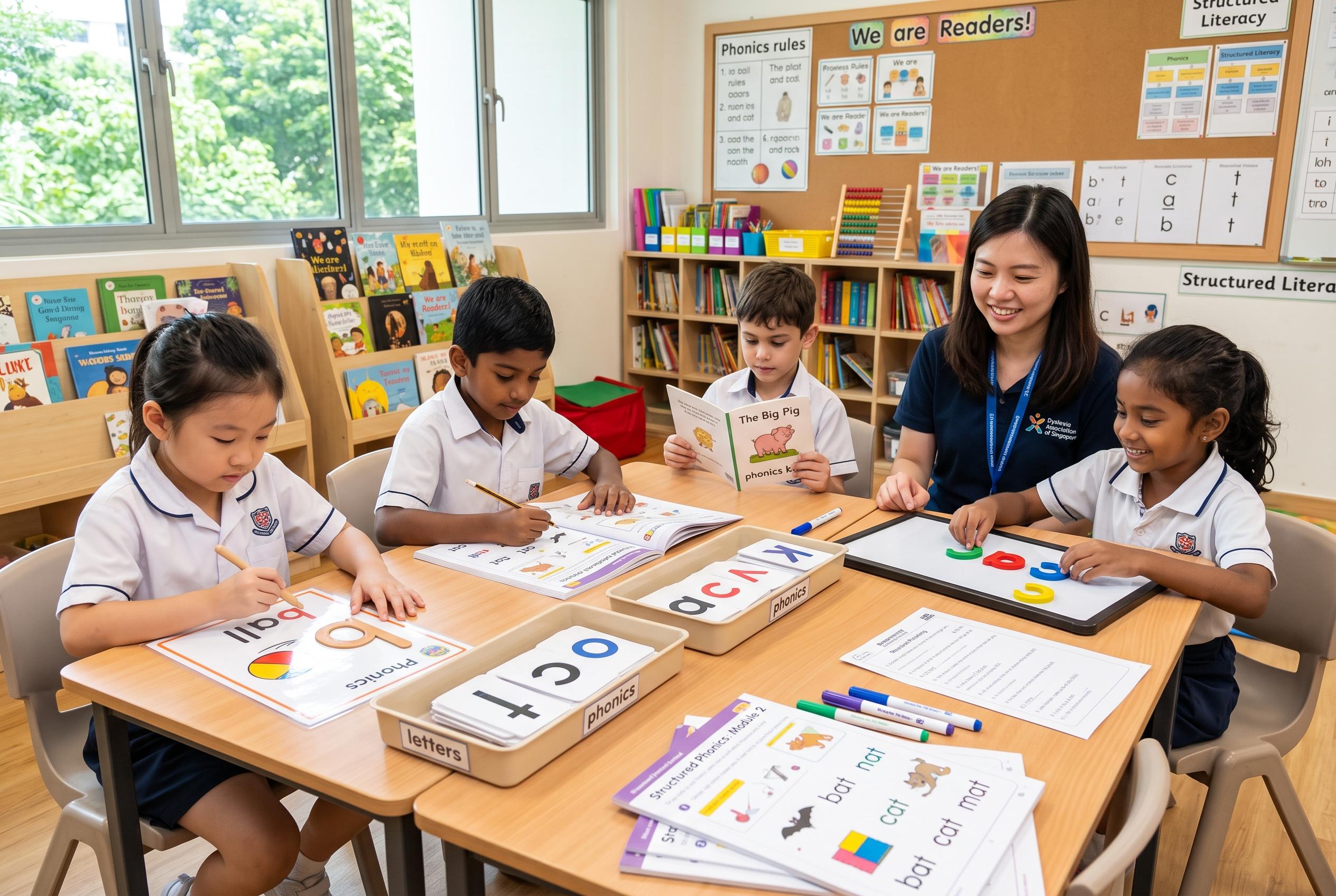

Emerging programmes in Singapore are offering more effective, structured strategies for children with dyslexia, emphasising early intervention and neurodevelopmental understanding to improve literacy outcomes.
Many parents first hear it from a teacher: a child who can talk brilliantly, think quickly and answer questions with ease may still struggle when the page is in front of them. That mismatch is often what brings dyslexia into focus. As Total Communication describes it, children with dyslexia are not less intelligent or less capable; they simply process written language differently.
The condition affects how the brain handles reading, spelling and decoding. The International Dyslexia Association says the core difficulties involve accurate and fluent word recognition, spelling and decoding, even when a child has normal intelligence and appropriate teaching. In other words, reading is not a single skill but a chain of abilities that includes hearing sounds in words, matching those sounds to letters and building fluency over time.
The signs are often visible well before a formal diagnosis. A child may read slowly, guess words rather than sound them out, confuse similar letters, struggle with spelling or avoid reading aloud because it feels exhausting. The Dyslexia Association of Singapore says support should begin when these difficulties persist, rather than waiting for a child to simply outgrow them. Earlier help gives children more time to strengthen the foundations of literacy.
For many families, the hardest part is not the learning difficulty itself but the guilt that follows it. Parents often wonder whether they missed something or did something wrong. But dyslexia is understood as a neurodevelopmental difference, and the pattern often runs in families. That means the right response is not blame, but assessment, support and a better understanding of how the child learns.
Effective intervention is usually structured and highly targeted. The Dyslexia Association of Singapore says its literacy programmes focus on phonemic awareness, phonics, fluency, comprehension, vocabulary and writing, using a multi-sensory and highly structured approach. Other services in Singapore also use Orton-Gillingham-based methods, while programmes such as iReaCH™ place added emphasis on comprehension, vocabulary and confidence in school tasks. The common thread is that support builds skills step by step, instead of relying on more of the same practice.
Disclaimer: This content is for informational purposes only and is not intended to be a substitute for professional medical judgment, advice, diagnosis, or treatment.