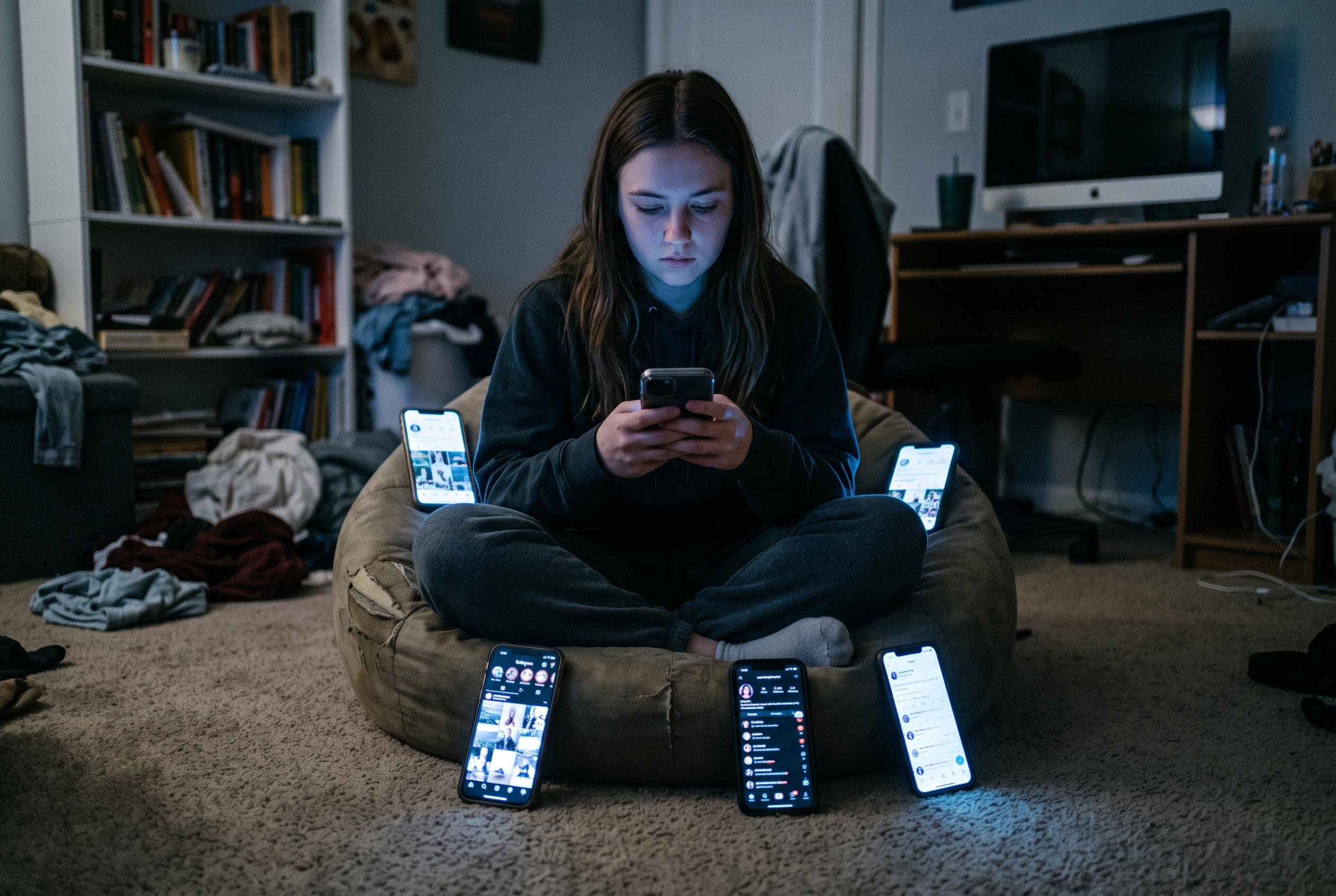

Despite appearing connected online, many young people experience profound emotional isolation, highlighting the need for genuine support networks and a shift in how loneliness is addressed as a public health issue.
Many young people who seem to live in a blur of messages, posts and constant social activity are still carrying a private sense of isolation, according to new research into involuntary loneliness. The study suggests that feeling connected online is not the same as feeling emotionally supported, and that visible busyness can mask deep distress.
Researchers at Åbo Akademi University in Finland published the findings in the European Journal of Psychology Open after interviewing 11 people, including adolescents and emerging adults aged 16 to 26 and three mothers of young people who had experienced loneliness. Associate professor Jessica Hemberg said the experience is “more than simply being alone”, arguing that it is shaped by personal, relational and wider social pressures.
The researchers used reflexive thematic analysis to identify six main themes and 14 subthemes. Participants described anxiety, sadness, shame and hopelessness, with social media emerging as a double-edged force: it can offer contact, but it can also intensify comparison. Some said platforms such as Instagram and TikTok created the impression that everyone else had close friendships, even when their own relationships felt thin or performative.
The study also points to shallow friendships, fear of gossip and major life changes as important triggers. Moving away for university, changing schools, family pressures and health problems could all weaken support networks. The findings fit with earlier research showing that school connectedness and friend contact matter for adolescent loneliness, and with a later systematic review linking heavier social media use, especially passive scrolling, with higher loneliness in young people.
The wider picture is borne out by other recent research. A Hopelab and Data for Progress survey reported that 61% of US respondents aged 13 to 24 said loneliness affects their mental health at least somewhat, while 35% said it disrupts daily life. The Mental Health Foundation has also warned that loneliness rose sharply during the pandemic, when many young people spent long periods cut off from friends, teachers and community life. The Finnish study suggests that what helps most is not simply more contact, but better contact: trusted adults, genuine friendships, family support, youth centres and school staff who can spot trouble early.
The authors argue that loneliness should be treated as a public health issue rather than a personal failing. Hemberg said the problem cannot be solved simply by telling young people to socialise more, and the study calls for support that feels less clinical and less stigmatised, with schools, families and communities sharing the responsibility.
Disclaimer: This content is for informational purposes only and is not intended to be a substitute for professional medical judgment, advice, diagnosis, or treatment.