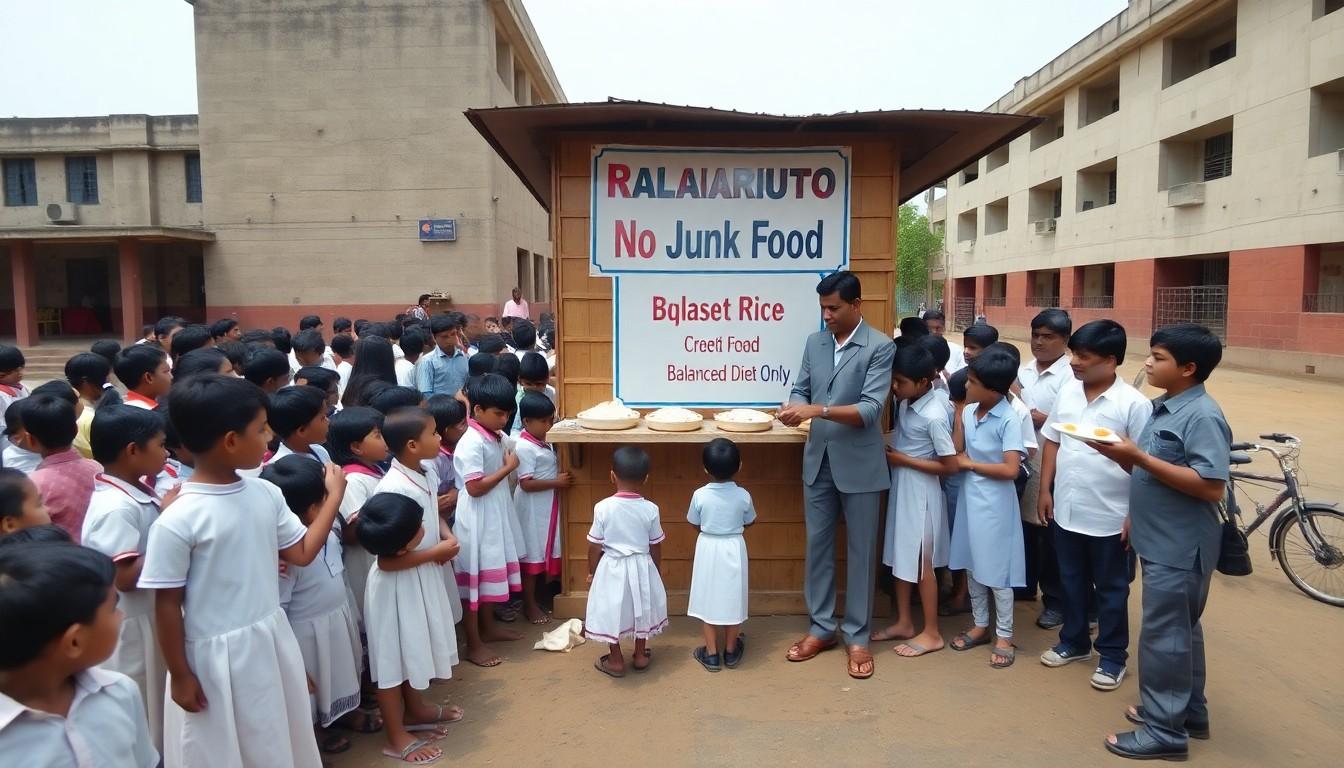

Maharashtra has introduced comprehensive rules requiring schools to serve balanced food and prohibit sale of high fat, sugar, and salt products on campus, aiming to combat childhood obesity and improve health standards.
Maharashtra has ordered every school in the state to serve safe, balanced food and to bar the sale or display of high fat, sugar and salt products on campus, in a move the Food and Drug Administration says is aimed at making healthier diets part of everyday school life. The directive, issued by Food Safety Commissioner Tukaram Mundhe, applies to government, aided and private schools across state, CBSE and ICSE systems, as well as residential schools, hostels, canteens and food suppliers, though it does not cover creches or day-care centres for children up to 22 months.
The order says school meals and snacks should follow the National Institute of Nutrition’s dietary guidance, with an emphasis on fruit, vegetables, whole grains, pulses and dairy. It also requires schools to ensure drinking water is safe, while prohibiting the sale and display of chips, fried snacks and sugary drinks inside school premises. Managements must hold the main responsibility for compliance, including securing the necessary FSSAI licence or registration, meeting hygiene standards under Schedule 4, appointing a trained health and wellness ambassador or nodal officer, and placing warning boards at entrances.
According to the state order, schools must also keep watch over the area within 50 metres of their gates and alert food safety officers and local authorities if unauthorised vendors are selling prohibited items nearby. The School Education Department will act as the implementing agency for government and aided schools, including the registration of PM POSHAN suppliers, joint training and annual compliance reporting by March 31. State boards, along with CBSE and ICSE, have been told to make adherence to the school food rules compulsory for affiliation and renewal.
Enforcement will rest with food safety officers, who are to inspect schools at least twice a year and collect food samples annually. District-level supervision will sit with assistant commissioners or designated officers, while municipal bodies and panchayats are expected to help prevent the sale of unhealthy food close to schools. Violations can trigger improvement notices, seizure, suspension or cancellation of licences, prosecution and other penalties under the Food Safety and Standards Rules, 2011.
Mundhe said the measure goes beyond legal compliance and reflects children’s right to safe and balanced food, calling that a wider moral duty of society. The initiative is being rolled out under the slogan “safe food – healthy childhood – capable Maharashtra”, and the FDA says 4,919 teachers from 3,567 schools have already been trained through 42 awareness workshops. The department has asked schools, parents, education boards, local bodies and food businesses to join the campaign, as it links poor diets and aggressive marketing of packaged snacks to childhood obesity, anaemia, micronutrient deficiencies and later-life lifestyle disease.
Disclaimer: This content is for informational purposes only and is not intended to be a substitute for professional medical judgment, advice, diagnosis, or treatment.