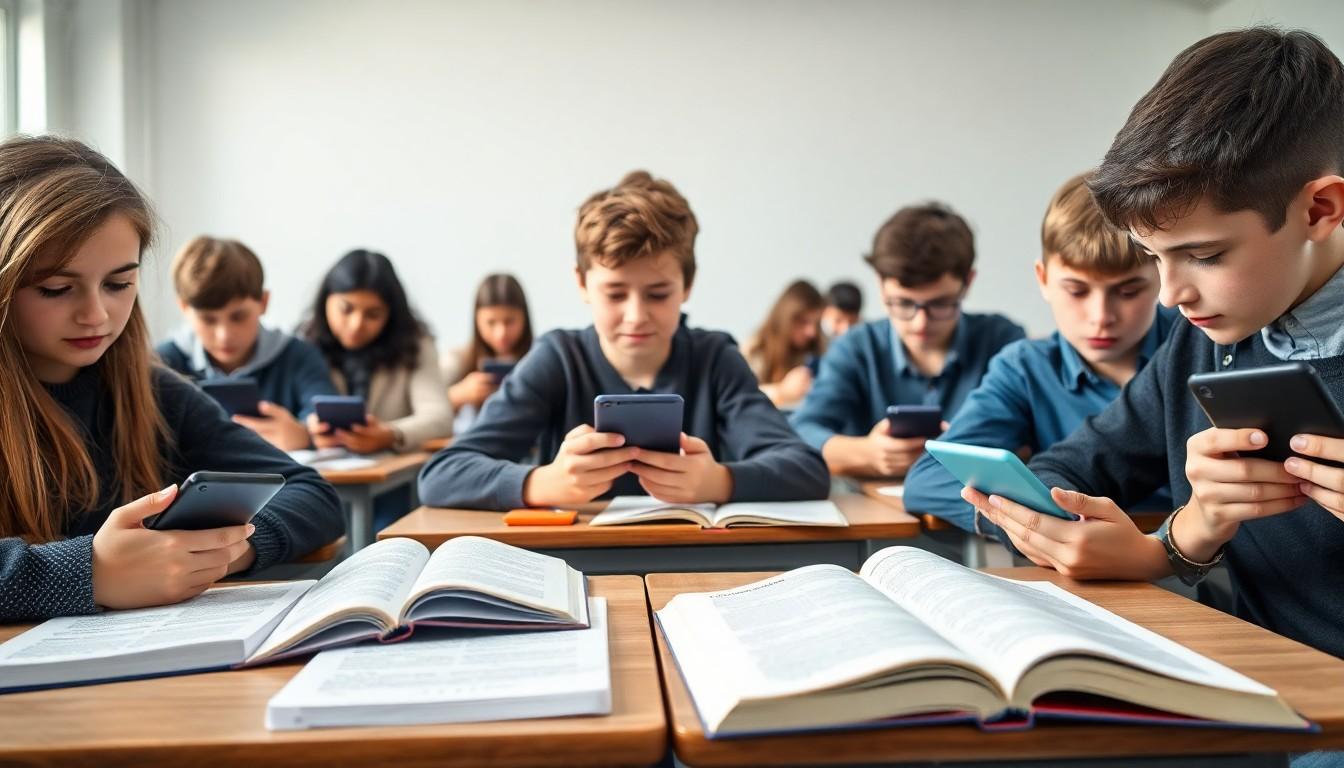

Research indicates that children who start using social platforms at 11 or 12 perform worse in Italian and maths by adolescence, raising concerns over digital habits and the need for better regulation and digital literacy in schools.
A new study has added weight to the argument that starting social media use early can be associated with poorer academic results later in childhood and adolescence. Research published in Nature Human Behaviour and based on more than 5,000 pupils in northern Italy found that those who began using social platforms at 11 or 12 tended to perform worse in Italian and maths than peers who joined later, with the gap becoming more pronounced by age 15 or 16. The paper linked much of the effect to smartphone distraction during key parts of the school day.
The study drew on questionnaire data about digital habits alongside standardised test scores collected in grades 2, 5, 8 and 10. While the negative pattern was clear in Italian and mathematics, the researchers did not see the same result in English, which they suggested may be because social media exposes young users to a large amount of English-language content that can reinforce informal learning. The authors said the findings strengthen the case for digital literacy teaching in schools and for rules that reduce the appeal of engagement-driven platform features for minors.
The results fit with a wider body of research suggesting that heavier screen use in childhood can be linked to weaker school performance. A longitudinal study in PLOS ONE found that children aged eight to nine who watched more than two hours of television a day went on to score lower in reading, while those who spent more than an hour a day on a computer also did worse in numeracy a year or two later. Other research has likewise pointed to a relationship between frequent internet use, entertainment-focused habits and lower grades, particularly in households with fewer resources.
The timing of the Italian findings matters because policymakers across Europe are increasingly debating whether children should face tighter limits on social media access. Australia has already introduced a ban for users under 16, French lawmakers have backed a prohibition for under-15s, and similar measures are under discussion in Spain and the UK. At EU level, European Commission President Ursula von der Leyen has said the evidence points towards a minimum age for access, though the Commission has stopped short of endorsing a full ban and instead favours a safer-by-design model that places more responsibility on platforms. In Italy, Prime Minister Giorgia Meloni has argued that an outright prohibition would be easy to bypass.
Disclaimer: This content is for informational purposes only and is not intended to be a substitute for professional medical judgment, advice, diagnosis, or treatment.