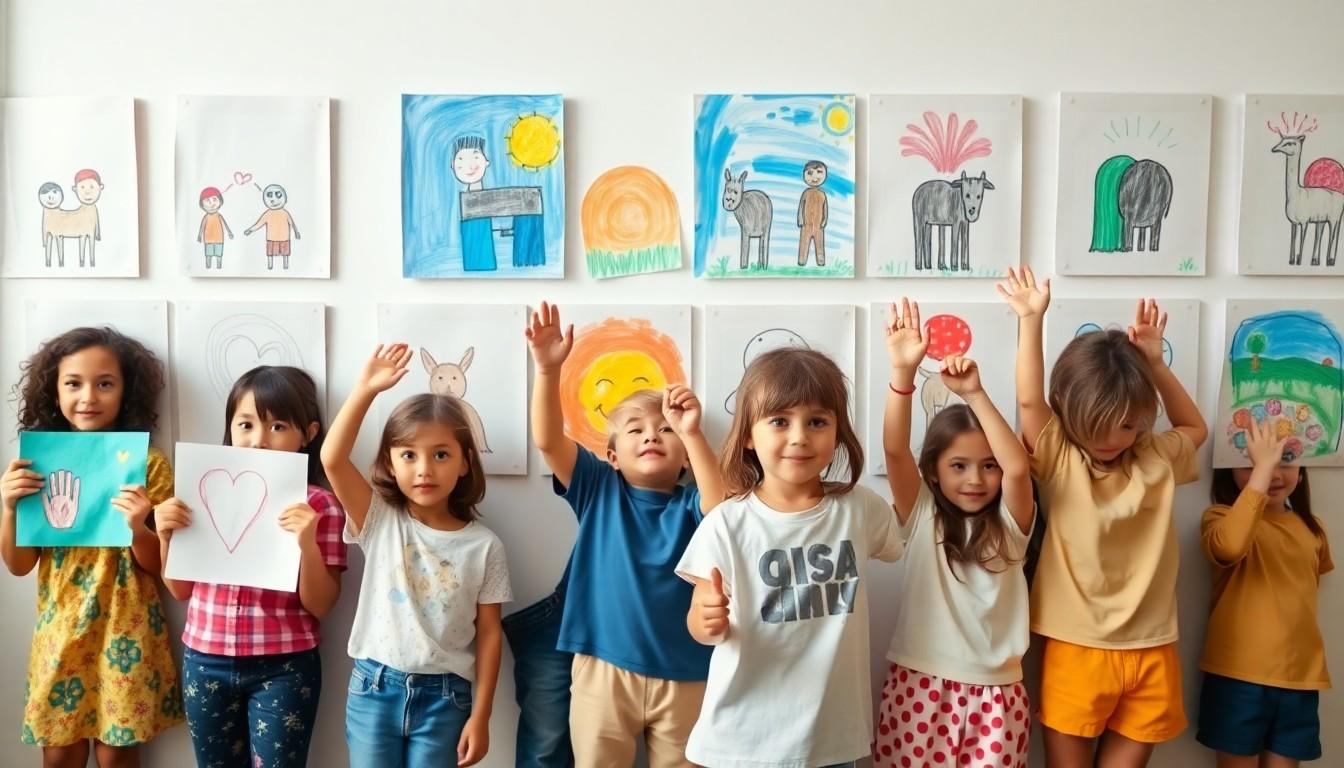

Encouraging children to embrace their artistic imperfections enhances their confidence, resilience, and independence, challenging adults to resist the urge to correct every mistake in the creative process.
At the family art table, the temptation to tidy a child’s drawing can be almost irresistible. A crooked house, a sun in an unexpected corner or a figure with one leg may feel like small errors begging for correction. Yet the more important lesson, as the lead article argues, is usually not in making the picture better but in resisting the reflex to take control.
That instinct to intervene is often framed as help, but it can quietly tell a child that their own choices are not quite good enough. Montessori educators have long described the value of “control of error”: the idea that children learn more deeply when they are allowed to notice, and correct, their own mistakes. On that view, a misshapen drawing is not a problem to erase but a chance to build judgement, confidence and independence.
Research on child development points in the same direction. The American Psychological Association and other education researchers have repeatedly found that children benefit when adults offer structure without taking over, giving guidance while still leaving room for initiative. PBS Parents has also argued that mistakes are not only inevitable but useful, helping children develop resilience, self-compassion and a more realistic sense of what they can do.
That matters especially in art, where the point is not accuracy so much as exploration. PBS has noted that creative activity supports fine motor skills, thinking and emotional expression, while open-ended projects can help children become more comfortable with imperfection. A purple sun or a mismatched house may look wrong to an adult, but to a child it may be the first step towards inventiveness.
The harder work, then, belongs to the grown-up. It means tolerating discomfort, stepping back from the urge to perfect and accepting that a child’s picture is not a referendum on parental taste. When adults can leave the wrong-coloured sky alone, they do more than preserve a drawing. They give a child space to keep making, keep thinking and keep becoming.
Disclaimer: This content is for informational purposes only and is not intended to be a substitute for professional medical judgment, advice, diagnosis, or treatment.