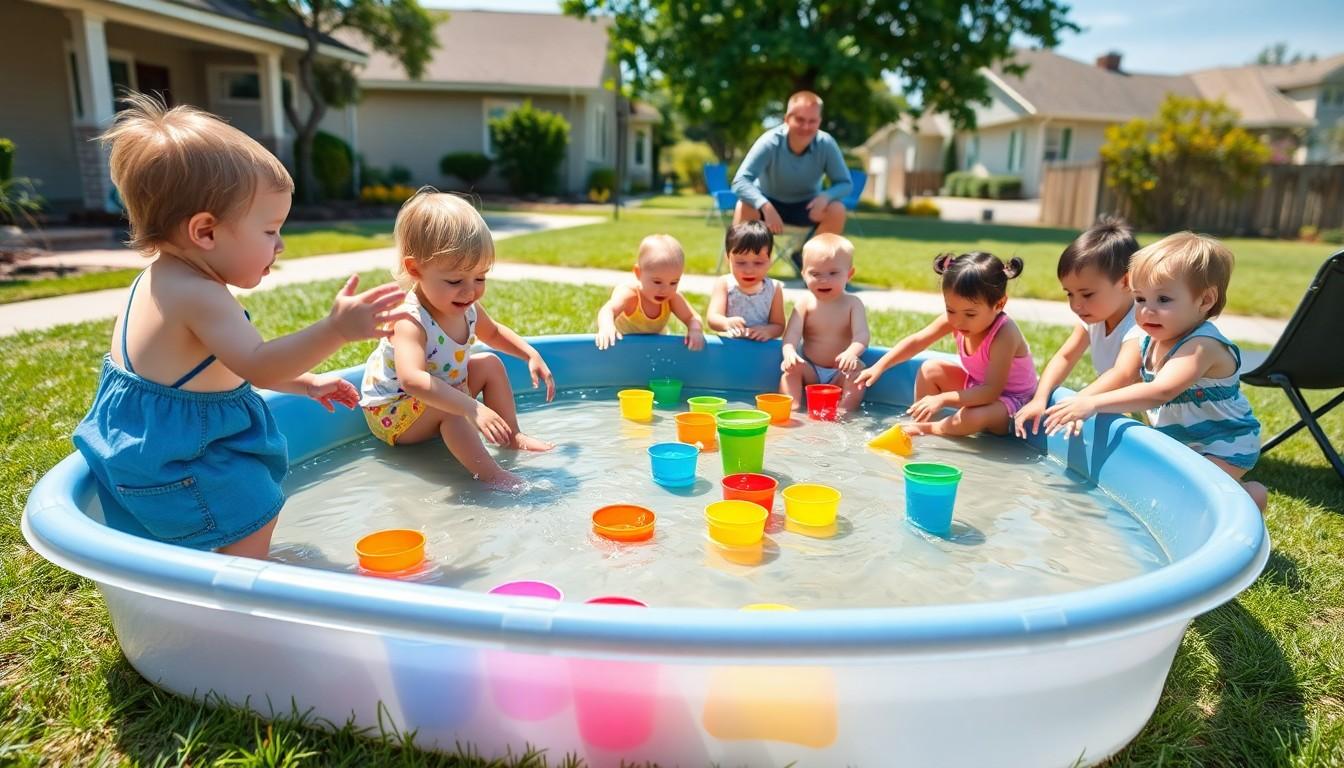

As children spend more time in front of screens, engaging in sensory activities such as finger painting and water play remains crucial for cognitive, motor, and emotional development, supporting healthy brain wiring in early childhood.
As children spend more time in front of screens, activities that invite them to touch, pour, mould and explore remain vital to healthy development. Sensory play – from finger painting and sand play to water, clay and textured materials – gives young children a way to learn through direct experience rather than passive observation. The Cleveland Clinic says such play can support brain connections, attention and memory, while also helping with motor, language and social development.
The appeal of sensory play is easy to trace through Jean Piaget’s theory of cognitive development. In the sensorimotor stage, infants and toddlers build understanding by acting on the world around them, gradually forming schemas that help them organise new experiences. Educational sources on Piaget note that children do not simply receive information; they construct knowledge through interaction, which is why piling blocks, sorting objects or experimenting with water can be so instructive.
Modern neuroscience offers a similar explanation. Early childhood is a period of intense neuroplasticity, when repeated experiences help shape the brain’s wiring. Sensory activities activate networks linked to attention, movement and memory, and repeated practice strengthens those pathways. Research summaries cited in the source material also suggest that multi-sensory experiences may help children process information more deeply than single-sense tasks, because they engage several memory routes at once.
Sensory play also fits neatly with information-processing ideas, which liken the mind to a system that must notice, store and retrieve what matters. A child searching for a hidden toy, for instance, has to pay attention, compare possible options and remember where they have already looked. That kind of play exercises problem-solving as well as memory. Babylist says these activities can also nurture curiosity and creativity, while helping children regulate emotions and settle themselves.
Kolb’s experiential learning model provides another useful frame: children experience, reflect, form ideas and try again. A toddler who mixes colours with their fingers is not merely making a mess; they are testing cause and effect, observing change and turning sensation into understanding. That is why sensory play should be seen as more than a pleasant extra. It supports cognition, coordination and emotional regulation, and it remains a cornerstone of early learning even in a digital age.
Disclaimer: This content is for informational purposes only and is not intended to be a substitute for professional medical judgment, advice, diagnosis, or treatment.