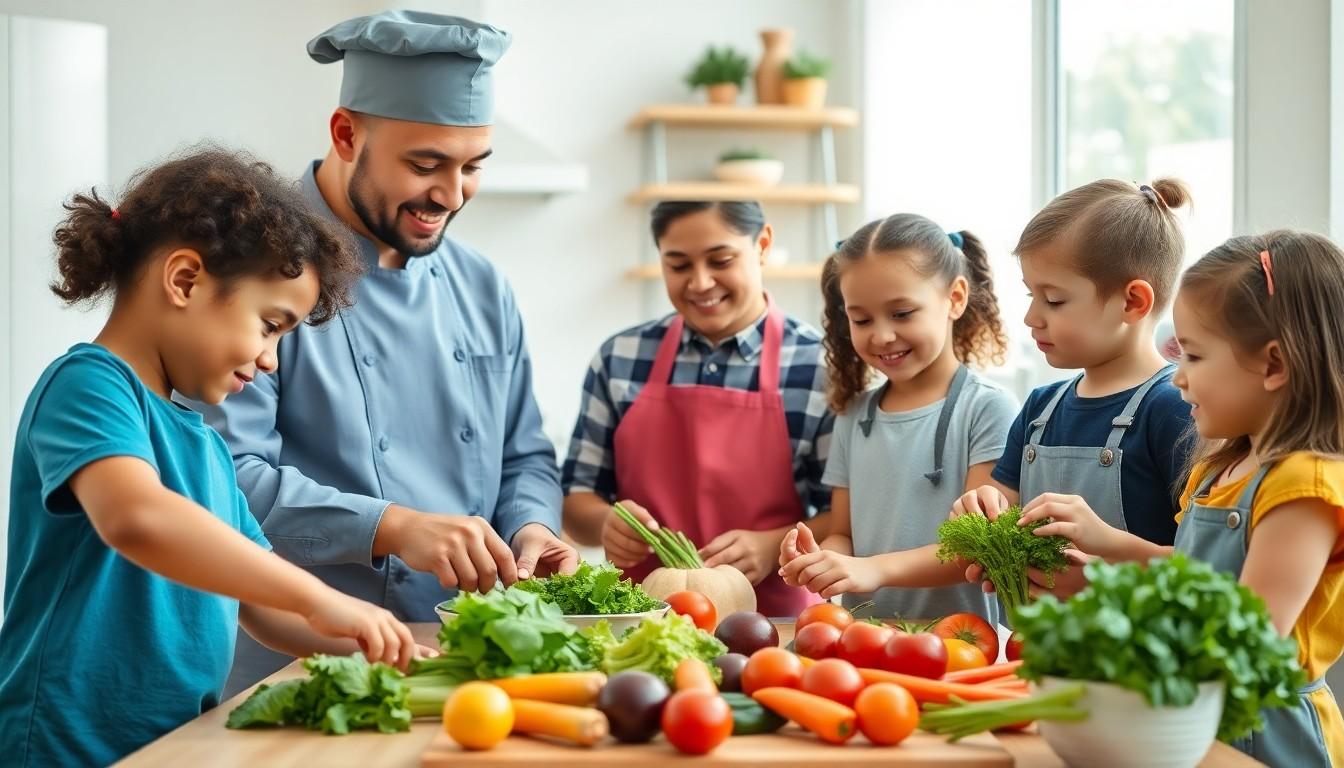

Encouraging kids to help prepare family meals not only makes dining less chaotic but also cultivates a greater appreciation for vegetables and independence in the kitchen, leading to broader positive impacts on their eating habits and confidence.
At first glance, putting children in charge of dinner can sound like an invitation to chaos, sticky counters and extra washing-up. Yet the experience described here suggests the opposite can also be true: a child given an apron, a knife suitable for small hands and a sense of responsibility may approach the task with remarkable seriousness, and even more remarkable enthusiasm.
In this case, a Saturday cooking experiment became a vegetable-heavy Chinese-inspired meal of rice noodles with broccoli, peppers, mushrooms, bean sprouts and bamboo shoots, finished with soy and hoisin sauces. The result was not just a family meal, but a small shift in attitude at the table. What children help prepare, they are often far more willing to taste. Mayo Clinic notes that involving children in cooking can also turn mealtimes into lessons in maths, science and creativity, while helping them build practical confidence.
Pediatric guidance from HealthyChildren.org says cooking with children supports fine motor skills, executive functioning and food knowledge, while also creating space for family traditions and food safety lessons. That matters because the gains are not confined to the kitchen. Children who stir, chop, weigh and portion begin to understand ingredients as something they have shaped, rather than something simply placed in front of them. According to children’s health specialists in Colorado, this sense of ownership can make even unfamiliar vegetables seem less threatening.
Research cited by Nestlé has found that children who help prepare meals eat more vegetables than those who do not. That is perhaps why a child’s proud declaration of “my broccoli” can carry more persuasive power than any parent’s plea to clear the plate. For families willing to tolerate a slower, messier dinner process, the payoff may be broader than a single meal: a stronger appetite for new foods, greater independence and a kitchen that becomes less of a battleground and more of a classroom.
Disclaimer: This content is for informational purposes only and is not intended to be a substitute for professional medical judgment, advice, diagnosis, or treatment.