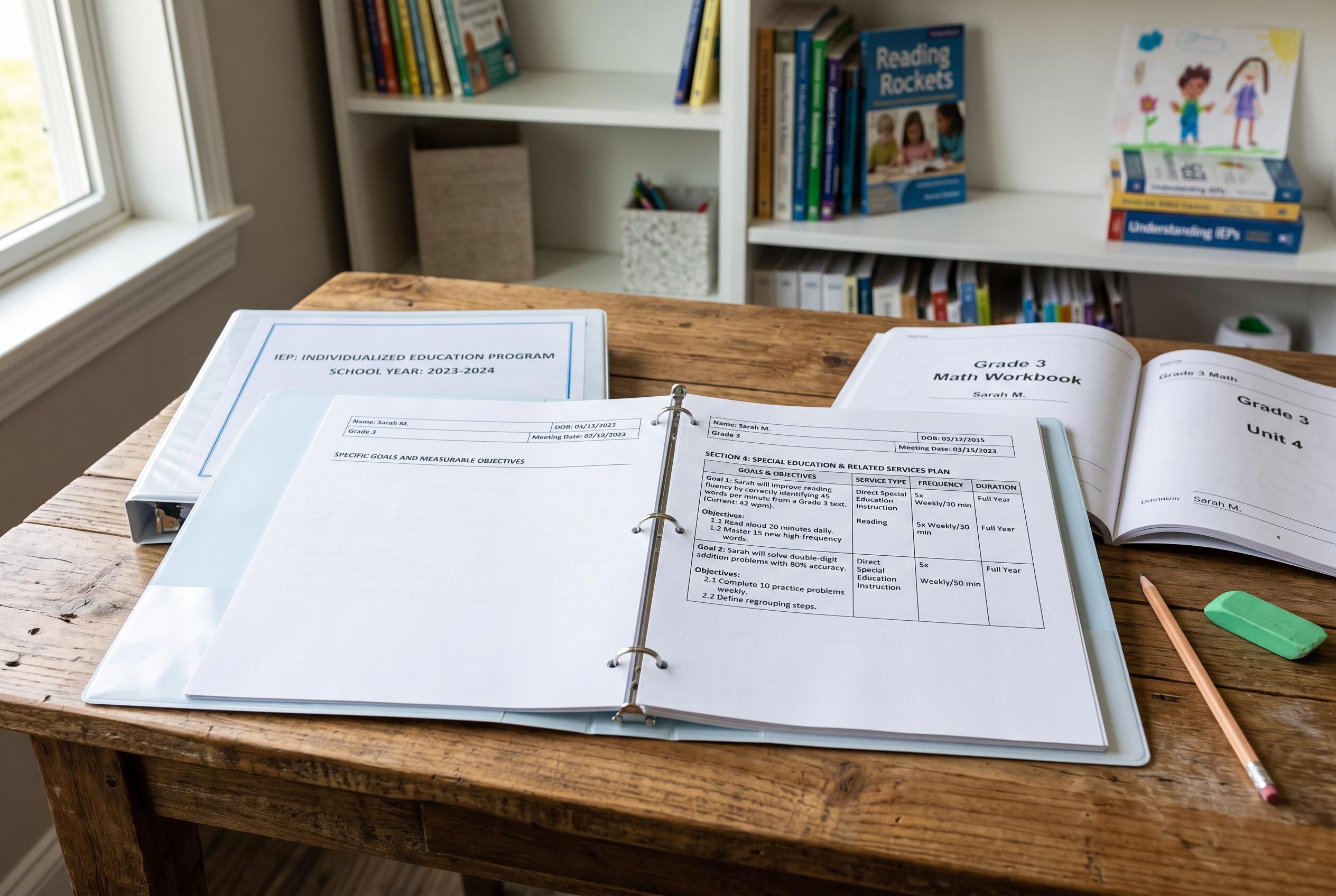

Special education attorneys emphasise the importance of precise service plans in IEP documents, ensuring they align with individualised student needs and support meaningful progress, rather than relying on vague or standard provisions.
Parents reviewing an Individualised Education Programme often fixate on one section first: the services page. That is where the school sets out what direct support the child will receive, how often it will happen, how long each session will last and where it will be delivered. But as special education attorney Frances Shefter notes, the key question is not whether a service looks generous on paper. It is whether the plan is matched to the child’s individual needs and supports meaningful educational progress.
According to Shefter’s guide, the right starting point is always the same: the child’s present levels and annual goals. Present levels describe strengths and needs; goals set out what the child is expected to learn over the year. Services should then supply the specially designed instruction needed to reach those goals. A reading goal, for example, should be paired with specific reading instruction. An executive functioning goal should be tied to direct teaching of organisation, planning and task completion. A social skills goal should make clear when and where those skills will be taught.
Shefter also stresses that special education is not simply extra help. It is individualised instruction designed around the disability-related needs identified in the programme. That distinction matters because general classroom supports, such as small-group work available to all pupils, are not automatically the same as special education. Parents should be able to tell from the document what is being taught, by whom and in what setting. Vague language such as “support in the general education classroom” may leave too much unanswered.
The details of service delivery matter as much as the amount. Frequency tells parents how often the service will be provided. Duration sets out how long each session will last. Location shows where the instruction will take place. As guidance from Texas Education Agency materials and district special education handbooks confirms, those elements should be clearly documented so the level of commitment is obvious to families and staff. A monthly total may be acceptable in some cases, but only if the IEP explains how that time will actually be delivered in practice.
Shefter warns that service decisions should not be driven by a school’s existing programme or staffing patterns. In her view, the team should begin with the child’s needs and then decide what support is required, rather than fitting the child into whatever schedule or model already exists. That distinction becomes especially important when schools say that all children in a placement receive the same level of support. Two pupils with the same diagnosis can need very different services, and the IEP has to reflect that difference.
There is also a practical trade-off that parents should not overlook: what instruction or activities will the child miss while receiving services? A pupil may need speech therapy, counselling, occupational therapy or targeted academic intervention, but pulling that child out of class can have consequences. Shefter describes how that issue became personal in her own family, when her daughter’s speech services were later shifted to a consultative model so she would not keep missing other instruction. The point, she says, is that the right service model depends on the child at that moment, not on a rule of thumb.
When the services section is unclear, Shefter says parents should press for specifics: which goal the service addresses, who will provide it, whether it will be one-to-one or in a group, how the amount was chosen and whether it reflects the child’s needs rather than the programme’s usual package. A service page should do more than list minutes. It should show how the school intends to deliver the instruction and support that will help the child move forward.
Disclaimer: This content is for informational purposes only and is not intended to be a substitute for professional medical judgment, advice, diagnosis, or treatment.