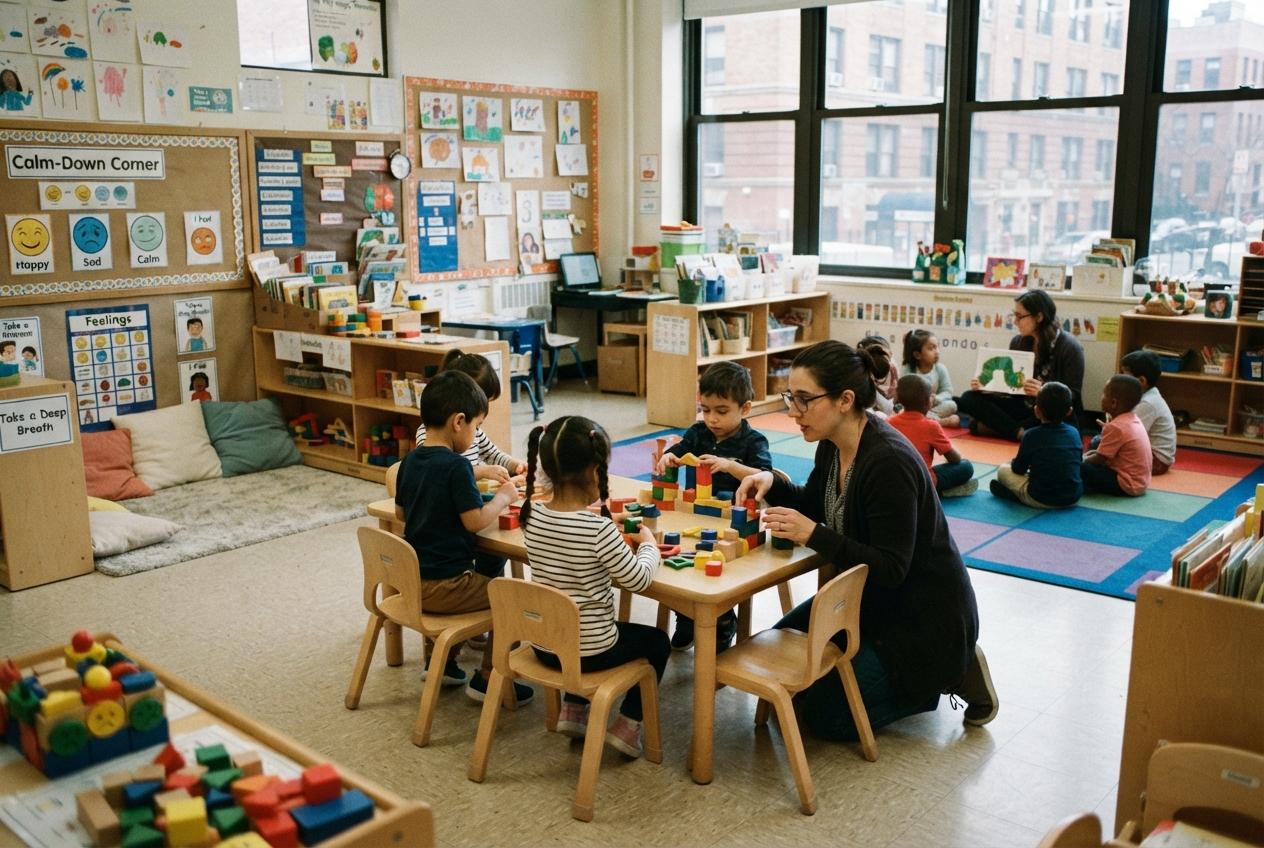

A broader understanding of kindergarten readiness emphasises social, emotional, and developmental growth, calling for schools to meet children where they are rather than focus solely on early academic skills, according to Natasha Kile and the National Association for the Education of Young Children.
Kindergarten readiness is too often reduced to a shopping list of early academic feats: writing a name, reciting letters, counting to 20. But as Natasha Kile argues for the Arkansas Early Childhood Association, that version of readiness misses the point. The real question is not whether a child can perform a narrow set of tasks, but whether schools are prepared to meet children where they are.
That broader view is strongly supported by the National Association for the Education of Young Children, which says readiness encompasses social and emotional development as well as academic knowledge. Its guidance for families stresses familiar routines, school visits and conversations about what to expect, all of which can ease anxiety and help children settle into the change. NAEYC’s transition resources make the same point: children enter school more successfully when adults focus on relationships, communication and emotional security, not just early literacy drills.
The organisation also points to practical ways that adults can make the move into kindergarten less daunting. Educators and parents can talk through feelings about the transition, read books about starting school, build class books about kindergarten and invite teachers to preschool settings so children can ask questions before the first day arrives. For multilingual children, NAEYC recommends attention to language, culture and family partnerships, alongside a clear understanding of school expectations and available support services.
The underlying message is that school readiness should be understood as developmental, not mechanical. NAEYC’s publication on developmentally appropriate kindergarten describes classrooms as caring, equitable communities in which children build confidence, competence and meaningful relationships. Its journal work on children with disabilities reaches a similar conclusion, arguing that a successful transition depends on coordinated support from families, educators, administrators and special education staff. In that context, Kile’s challenge lands with force: if readiness is a shared responsibility, then schools must ask whether kindergarten is ready for the child.
Disclaimer: This content is for informational purposes only and is not intended to be a substitute for professional medical judgment, advice, diagnosis, or treatment.