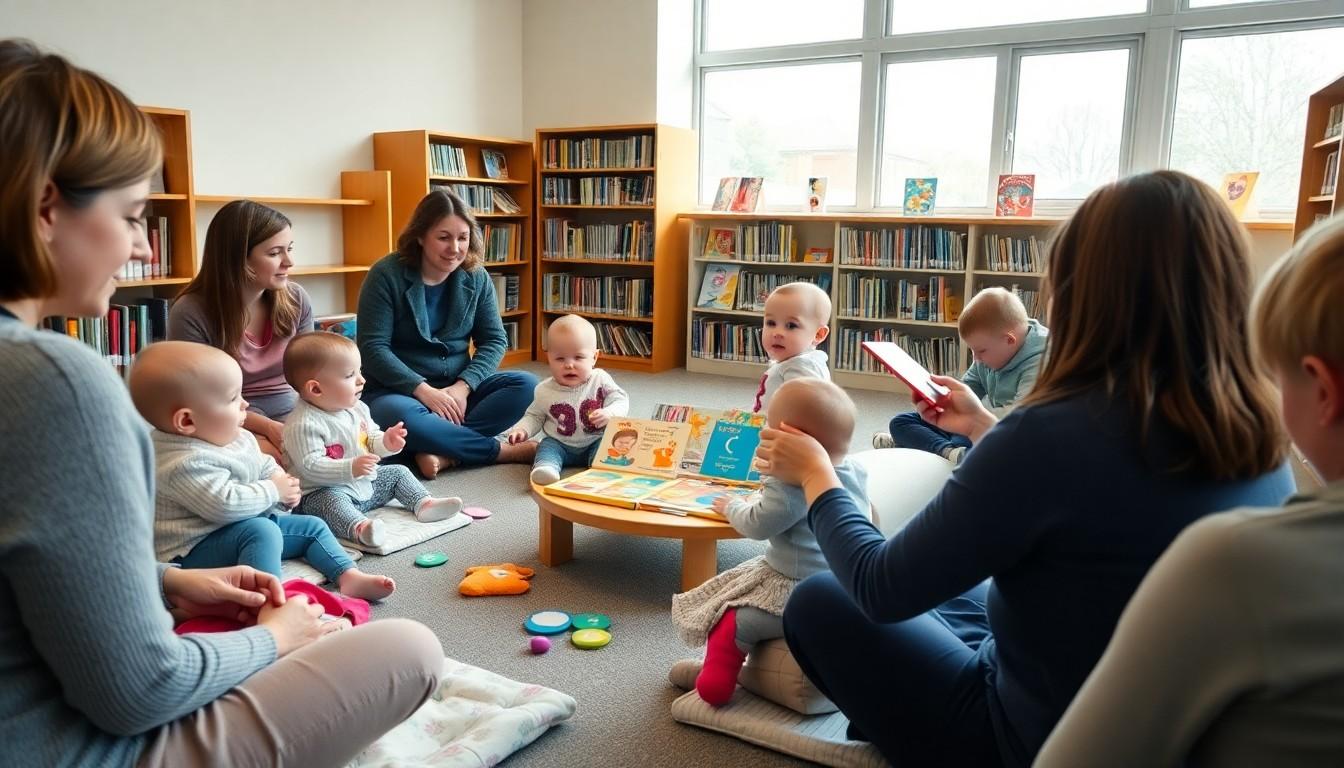

Understanding how infants experience the world is transforming library programmes for babies, emphasising tailored songtime, sensory cues, and gentle handling of books to support early development.
For libraries working with babies and their caregivers, an understanding of early sensory development can sharpen everything from storytime design to the choice of books and materials. The basic point is that infants are not taking in the world in the same way older children or adults do: their senses develop at different speeds, and those differences shape how they respond to voices, textures, smells and images. Child health guidance from ColumbiaDoctors and Stanford Medicine Children’s Health both notes that touch, hearing, smell and taste are already functional at birth, while vision is the least mature sense in the earliest weeks.
That matters in a library setting because programmes for the very young are often built around repetition, closeness and gentle stimulation. Babies can hear before birth and are strongly responsive to human voices, so songs and spoken interaction are useful not only for engagement but for language development. ColumbiaDoctors says newborns are sensitive to sound and recognise familiar voices, while Stanford Medicine Children’s Health describes hearing as fully developed from birth. That helps explain why librarian-led singing, rhymes and conversational read-alouds can be so effective with this age group.
The same research also points to practical environmental choices. Smell and taste develop quickly, and newborns are especially attuned to scent and flavour preferences, with a tendency towards sweetness and an aversion to harsher tastes. That makes it sensible to avoid overpowering perfumes, strong cleaning scents or food odours during baby sessions, particularly when the goal is to keep the room calm and welcoming. Sensory-development overviews also stress that infants learn through repeated experiences, building neurological pathways as they interact with the world, which gives further weight to hands-on, low-pressure programming.
Sight, by contrast, develops more slowly. Babies can see from birth, but their focus is limited and their ability to distinguish detail and depth improves only gradually over the first months. This is one reason high-contrast board books have become a staple of infant programming: they are easier for young eyes to process. It also supports a broader library practice of letting caregivers and babies handle sturdy books without expecting a full reading from start to finish. As early childhood education research from UMass Global suggests, the aim at this stage is less formal instruction than creating rich, supportive experiences that help children begin to understand books as part of daily life.
Disclaimer: This content is for informational purposes only and is not intended to be a substitute for professional medical judgment, advice, diagnosis, or treatment.