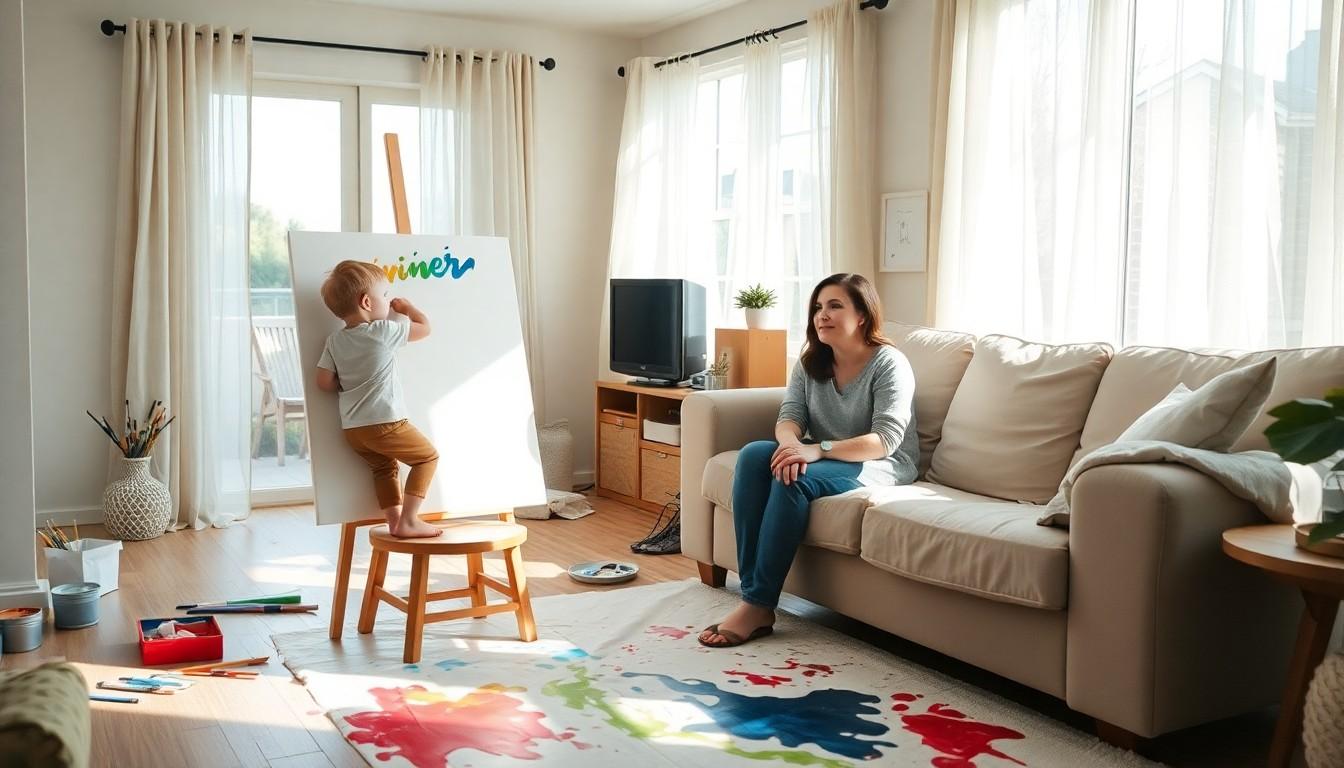

Research indicates that brief, well-timed parental support during children’s creative activities enhances engagement, well-being, and self-esteem, highlighting the importance of stepping back to let children lead.
Parents helping children with art often fall into the same trap: they narrate too much. A child busy with glue, paint or crayons does not need a live commentary on every decision. What feels supportive to an adult can, in practice, interrupt the child’s own concentration and turn a self-directed activity into an exercise in following instructions.
That is not because children are incapable of understanding language. It is because attention is limited, especially for very young children. Guidance from the Centres for Disease Control and Prevention has long stressed that toddlers do best with one instruction at a time. In the middle of a craft session, a stream of suggestions can easily outrun what a child can hold in mind while their hands are already occupied.
Research on play supports the same broad principle. A 2022 study in Frontiers in Education found that, in parent-child outdoor play, the most effective support often came at moments when a child was genuinely stuck, rather than through continuous direction. The parents who helped most were usually the ones who stepped in briefly and specifically, then left the child room to continue independently.
That does not mean parents should become silent observers. It means timing matters. A single prompt, offered when a child pauses, is usually more useful than several options delivered mid-task. The same applies to praise: constant commentary can be just as intrusive as constant instruction. A brief, well-timed remark allows the child to stay inside the activity instead of being pulled out of it every few seconds.
There is also a wider case for this quieter approach. A systematic review from the University of Dundee found that shared visual art activities between parents and children aged zero to five can strengthen attachment and well-being. Earlier research on children’s extracurricular activities similarly suggested that parental support, when it is experienced as encouraging rather than pressurising, is linked with better engagement and more positive feelings. Other studies of arts participation have pointed in the same direction, with regular shared activity associated with higher self-esteem. The message is not that parents should withdraw from art time, but that their presence works best when it leaves space for the child’s own ideas to unfold. According to the art education literature, that balance is central to making creative time both enjoyable and meaningful.
Disclaimer: This content is for informational purposes only and is not intended to be a substitute for professional medical judgment, advice, diagnosis, or treatment.