
A recent focus on integrating maths into daily activities highlights its vital role in early learning, social development, and long-term academic achievement for preschool children.
In a Lewiston after-school programme for preschool children, a small scene captured a larger truth about learning: a four-year-old counted the Goldfish crackers on his plate, then noticed that a friend had fewer. The reply came quickly: “But I already ate some.” In that exchange, children were not only practising counting. They were comparing quantities, beginning to understand subtraction and, just as importantly, building language, curiosity, confidence and social connection.
Jayashree Sonti, co-founder and executive director of the Early Math and Language Initiative, argues that such moments show why early mathematics deserves far more attention. Research widely cited by education groups and policy analysts suggests that early numeracy is among the strongest predictors of later academic success, with children who enter school with firmer number skills tending to do better in mathematics throughout their schooling and, in some studies, to have stronger long-term outcomes more broadly.
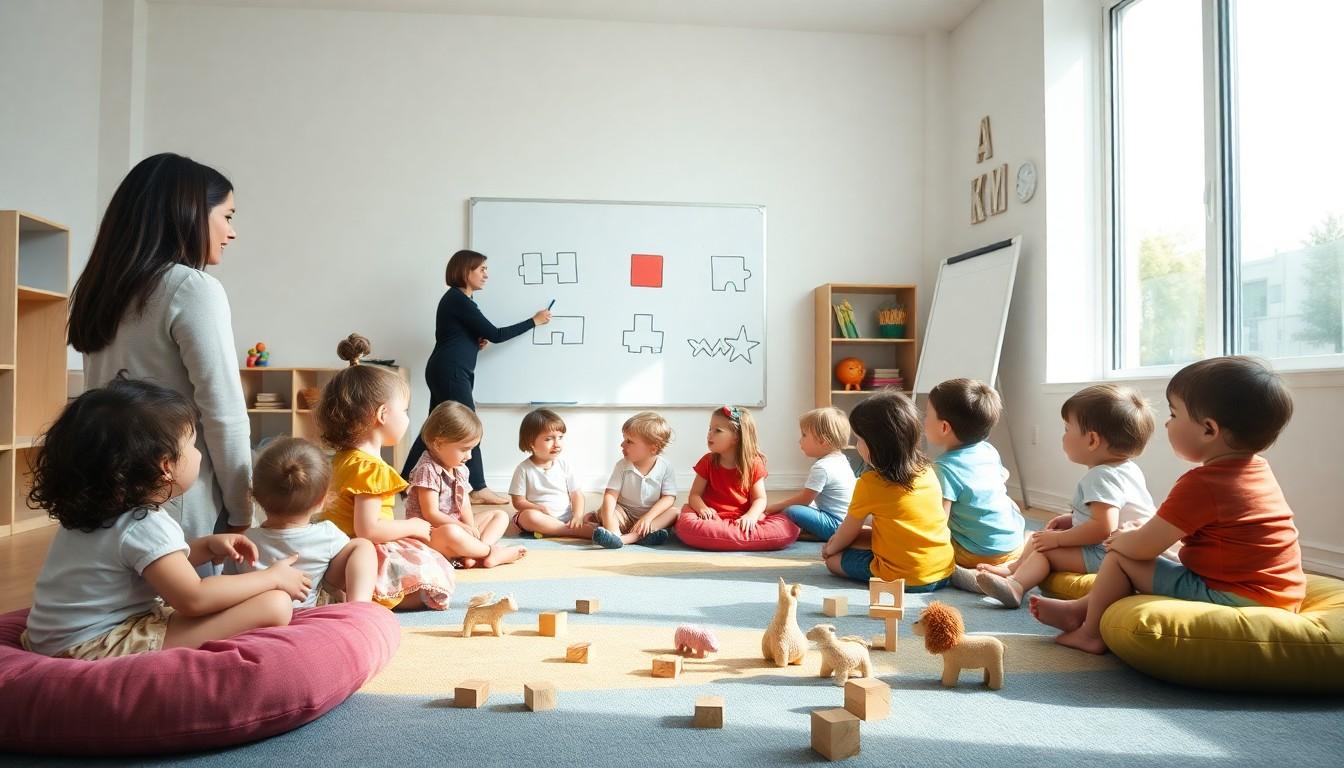
That evidence base also points to a simple lesson: preschool maths does not need to be taught as a separate, formal lesson to be effective. A review on early numeracy in preschool children found that skills such as counting and number identification are closely linked to later mathematical achievement, while studies of classroom practice suggest that the best gains often come when maths is embedded in ordinary activities. Sorting blocks, comparing snacks, recognising shapes, noticing patterns and discussing size or position can all build the foundations for more advanced reasoning.
Sonti’s case is that this everyday approach matters because children already meet maths constantly, whether they are folding laundry, shopping for groceries or playing in the park. Early maths, she writes, also connects naturally with language and social-emotional development, helping children explain what they see, solve problems and make sense of the world. That broader view is echoed in research reviews showing that preschool maths can support confidence in analytical thinking and reasoning, especially when lessons are tied to children’s interests and routines.
There is, however, a persistent gap between the evidence and what children actually experience. Advocates for early learning say reading still tends to receive the greater share of attention, while maths is often treated as something that can wait. Yet education researchers and early childhood policy specialists warn that leaving numeracy to later years may be a missed opportunity. By encouraging simple “math talk” at home and in nursery settings, supporters of early maths say adults can help children develop not just skills, but a healthier relationship with the subject itself.
Disclaimer: This content is for informational purposes only and is not intended to be a substitute for professional medical judgment, advice, diagnosis, or treatment.