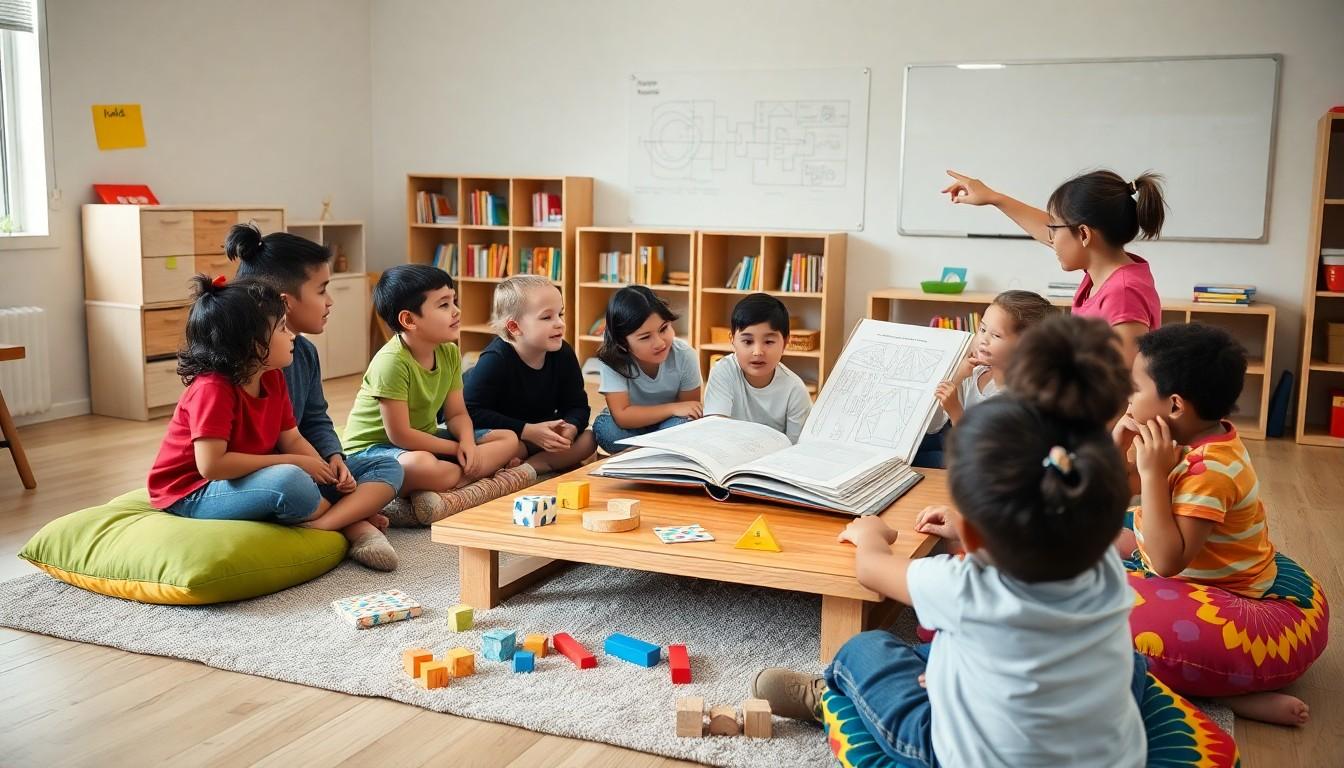

Research from Harvard, Cornell, and Berkeley highlights how nurturing children’s natural curiosity through questions can boost deep learning, problem-solving, and confidence, transforming classrooms and playtime into gateways for discovery.
Children are often at their most intelligent when they are asking “why”. According to a Harvard Graduate School of Education piece on curiosity and learning, that instinct to probe the world does more than satisfy a passing interest: it helps children observe, connect ideas and remember what they learn. The simple act of questioning is often the first step from noticing to understanding.
That is why curiosity matters so much in classrooms and at home. Research and teaching guidance from Cornell University and the University of California, Berkeley, both stress that well-placed questions can reveal what a child already understands, prompt discussion and push them towards deeper thinking. Questions do not just test knowledge; they help build it.
A recent review in Nature described curiosity as a force that directs attention and supports knowledge development across childhood. In practice, that means a child who wonders why a toy tower keeps collapsing, or how birds stay aloft, is already practising the habits that later underpin problem-solving, creativity and scientific thinking. In that sense, curiosity is not a distraction from learning; it is the engine of it.
The wider benefits are just as important. Questioning gives children confidence to admit what they do not know, and it encourages them to treat information with care. As the educational resources from Cornell, Berkeley and a peer-reviewed article hosted by the National Institutes of Health all suggest, asking better questions can strengthen critical thinking, improve classroom dialogue and help children distinguish evidence from opinion.
Parents and teachers can help by welcoming questions rather than rushing to answer them all at once. Harvard’s education researchers note that curiosity can be nurtured, while HealthyChildren.org argues that outdoor play is one of the best ways to feed it, alongside creativity and critical thinking. Museums, books, science experiments and even everyday conversations can all become opportunities for children to explore. For young minds, every question is a small act of discovery, and every answer can open the door to another.
Disclaimer: This content is for informational purposes only and is not intended to be a substitute for professional medical judgment, advice, diagnosis, or treatment.