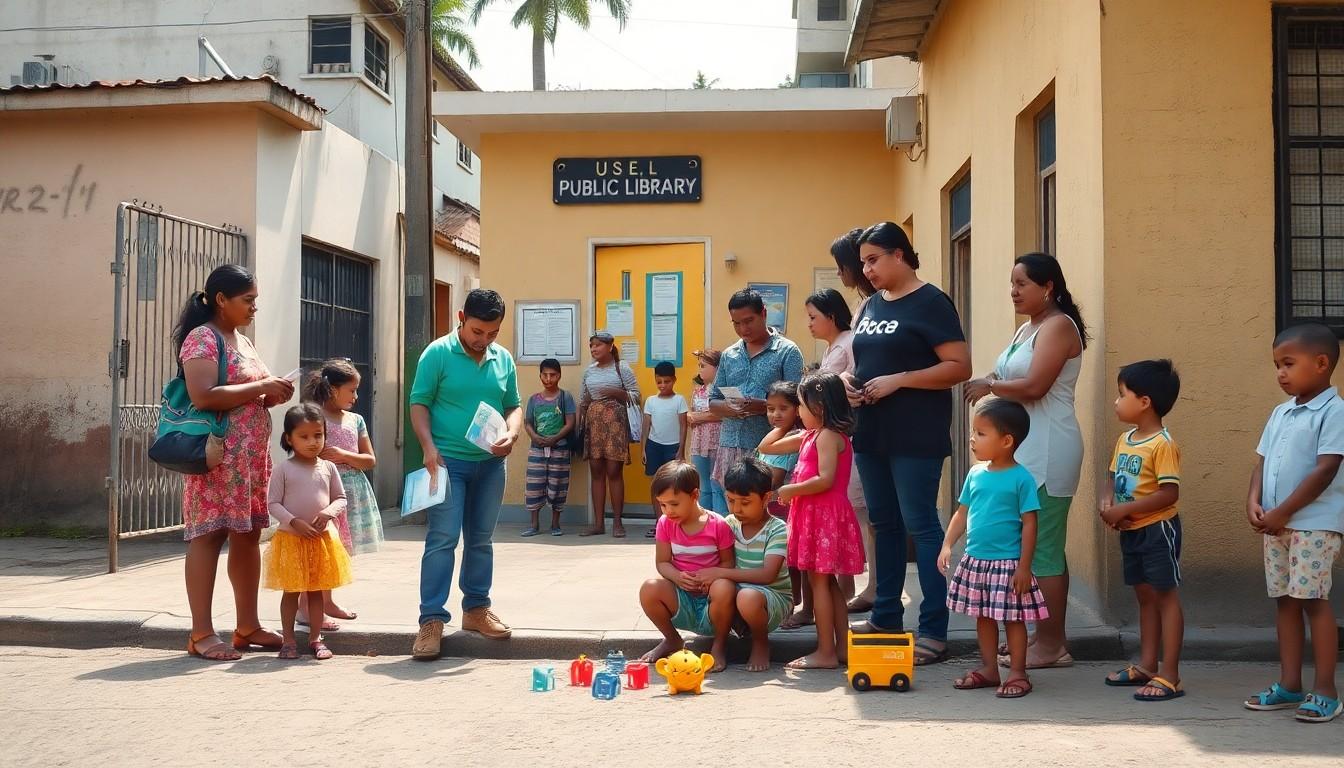

Investment in early childhood education and family engagement is crucial to prevent lifelong struggles with functional illiteracy, a hidden barrier to human and societal development.
Functional illiteracy is often misunderstood as a simple lack of schooling, but the concept is far broader. According to the United Nations Economic and Social Commission for Western Asia, it describes a person who cannot use reading, writing and calculation skills well enough to participate effectively in community life or support personal development. In practical terms, someone may have attended school and learned the basics, yet still struggle with forms, instructions, official documents or everyday information that requires comprehension and application.
That gap between basic literacy and usable literacy matters because modern life demands much more than recognising words on a page. The Arabic Psychology website notes that functional illiteracy is shaped by a mixture of educational, social and economic factors, and that its effects can be seen in employment, health, civic participation and digital safety. In an era of online services and rapid technological change, the consequences can be especially severe: people with limited functional skills may find it harder to navigate digital platforms, judge information critically or protect themselves from misinformation and cyber risks.
The article by researcher Haifa Mufeed Mohammed Matahneh argues that the roots of the problem can begin long before adulthood. Her central point is that early childhood is where language, thinking, visual discrimination, social skills and first concepts are formed, making it a decisive stage for later learning. If children are not given enough opportunities for conversation, reading, play and purposeful interaction, the difficulties may not be obvious immediately, but they can emerge later as weak comprehension, limited reasoning and poor application of knowledge.
That view is consistent with wider discussion of functional illiteracy as a hidden obstacle to human development. Almaalomah describes it as a condition in which a person may technically read and write but cannot truly understand, analyse or produce coherent text. The concern is not merely academic. It affects a child’s readiness for school, a young person’s chances in the labour market, and an adult’s ability to deal confidently with administrative, financial and digital tasks. In organisational settings, related ideas such as the Peter Principle and “I am my job” thinking, discussed by MindTools and Pyxis Doceo, point to a broader truth: limited learning can leave people trapped in narrow roles and unable to adapt when circumstances change.
The lesson from all of this is that prevention has to start early. Matahneh argues for stronger investment in kindergartens and the first years of schooling, alongside better training for teachers and a more active role for families in creating rich learning environments. That approach treats early childhood not only as a period of academic preparation, but as a preventive stage that can reduce the likelihood of functional illiteracy later in life. If children build strong foundations in language, reasoning and everyday problem-solving from the outset, they are far better placed to turn knowledge into action rather than merely recite it.
Disclaimer: This content is for informational purposes only and is not intended to be a substitute for professional medical judgment, advice, diagnosis, or treatment.