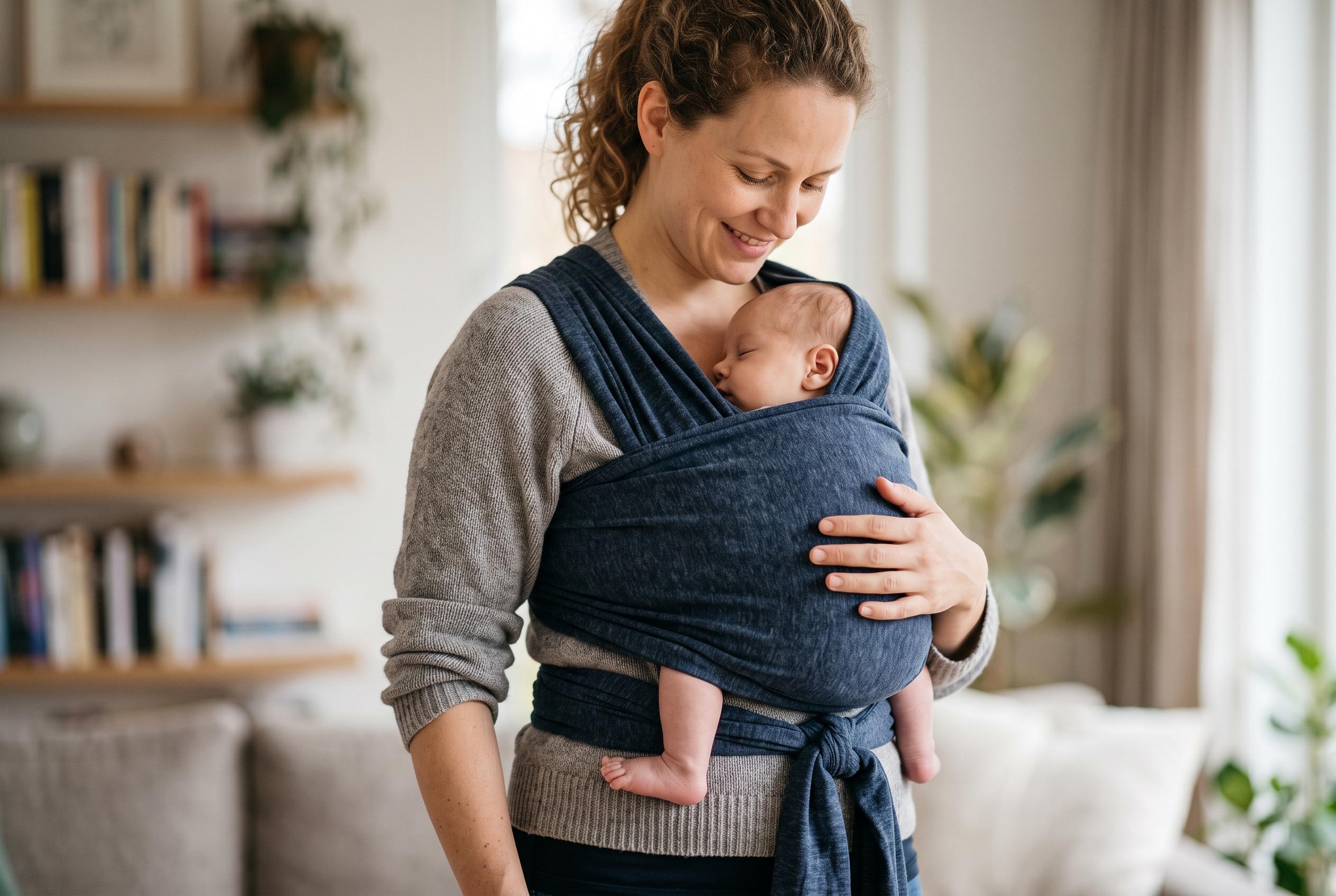

Proper babywearing practices, emphasising safety and support, can ease early parenthood transitions, strengthen bonds, and aid recovery during the critical first 12 weeks after birth.
The first 12 weeks after birth are often called the fourth trimester, a phrase popularised by paediatrician Harvey Karp to describe the difficult and intimate transition from womb to world. HealthyChildren.org, the parenting resource from the American Academy of Pediatrics, notes that this stretch is when babies are still adjusting to life outside the uterus and parents are learning a new routine at the same time. That adjustment is physical as well as emotional: newborns need help with temperature control, feeding, digestion and sleep, while caregivers are recovering from birth and coping with broken rest.
For many families, skin-to-skin contact and close carrying can make that period more manageable. The CDC recommends skin-to-skin care after birth and rooming-in, which keeps parent and baby together around the clock during the hospital stay. HealthyChildren.org says babywearing can support attachment and may help soothe crying before it starts, while Hospital for Special Surgery notes that carrying a baby inward-facing and high on the chest can help keep the infant settled and secure. The aim is not simply convenience for adults, but a setup that supports early bonding and gives the baby steady contact and reassurance.
Safety remains central. The Baby Carrier Industry Alliance says a baby should sit high enough to be kissed easily, with the carrier held snugly and the chin kept off the chest so the airway stays open. Its guidance, along with advice from other paediatric and maternity sources, stresses the TICKS approach: tight, in view at all times, close enough to kiss, chin off the chest and back supported. Hospital for Special Surgery also recommends the inward-facing position and an “M” shape for the legs, with the knees higher than the hips, to support developing joints. That matters because newborn hips are still forming and need proper support rather than dangling weight.
Parents also need to think about their own recovery. Postpartum bodies are still healing, and loose ligaments can make strain more likely. A well-fitted carrier spreads weight across the torso instead of loading the lower back, and experts generally advise starting with short sessions and building up gradually. Practical details help, too: dress the baby lightly, check the chest or neck rather than the hands or feet to judge temperature, and balance time in the carrier with floor play and tummy time when the baby is awake and content. Used carefully, babywearing can turn an exhausting early stage into one with more movement, more closeness and a little more breathing room for everyone.
Disclaimer: This content is for informational purposes only and is not intended to be a substitute for professional medical judgment, advice, diagnosis, or treatment.