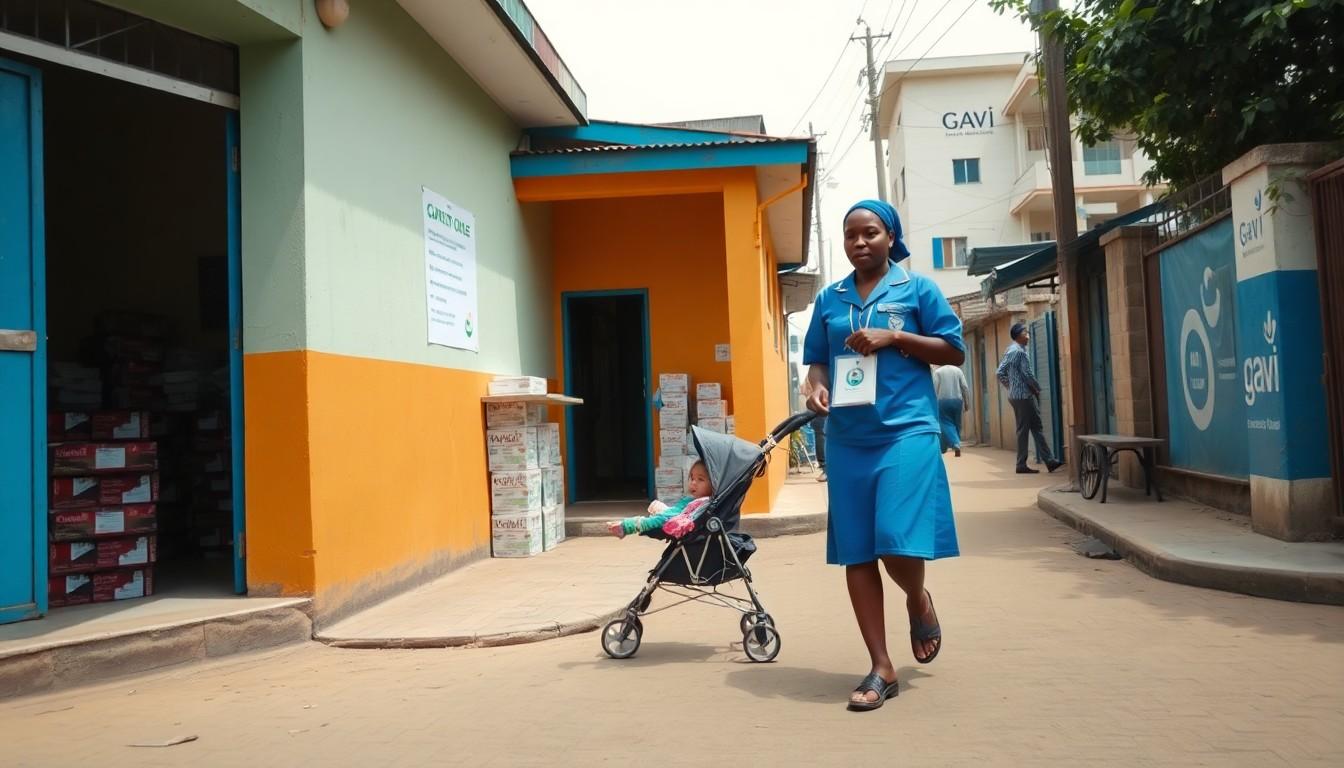

The United States has reinstated $600 million in funding for Gavi, reversing earlier withholding decisions, with conditions to phase out mercury-based thimerosal in vaccines and navigate ongoing legal and diplomatic challenges surrounding vaccine policies.
The United States has restored $600 million in previously withheld support for Gavi, the Vaccine Alliance, reversing a decision announced by Health and Human Services Secretary Robert F. Kennedy Jr. in June 2025. In a joint statement with the State Department, HHS said the money covers congressional appropriations for fiscal 2025 and fiscal 2026, after the administration secured a set of commitments from the global vaccine partnership.
The release comes after months of pressure from Senate appropriators, including Republican chair Susan Collins and Democrat Patty Murray, who urged the State Department to use the funds Congress had already approved. They argued that Gavi plays a crucial role in protecting children in poorer countries and reducing the risk that outbreaks abroad become crises elsewhere. The alliance says it has helped vaccinate more than 1.2 billion children since 2000 and estimates that its work has prevented 20.6 million deaths.
Two conditions were attached to the money. Gavi agreed to work towards phasing out vaccines preserved with thimerosal, a mercury-based preservative used in some multi-dose vials, and the administration said US government funding would not flow to the World Health Organization through Gavi. The statement framed the move as a pro-vaccine, pro-innovation policy, while acknowledging that any shift away from thimerosal will require manufacturers to expand production and countries to adapt their procurement plans.
The thimerosal issue sits at the centre of a long-running political dispute rather than a scientific one. The preservative has been removed from routine childhood vaccines in the United States since 1999, and extensive research has not found evidence that it causes autism or other neurodevelopmental harm. In lower-income settings, however, multi-dose vials are often far cheaper and easier to transport than single-dose alternatives, which means a rapid transition could increase costs or squeeze supply if manufacturers cannot scale up quickly enough.
The administration’s statement also intersected with a separate legal dispute over federal vaccine policy. Healio reported that a federal judge in March blocked votes taken by a reconstituted Advisory Committee on Immunization Practices, including a vote related to thimerosal-containing vaccines. That ruling remains under appeal, leaving the administration’s claim that the United States no longer recommends mercury-containing vaccines in a contested position.
Gavi’s response to the WHO restriction has been pragmatic rather than confrontational. The alliance has said the WHO’s technical role is already supported by other international donors and that US money will be directed towards vaccine procurement, consistent with previous practice. That arrangement appears to allow the funding to move forward without disrupting the alliance’s core operations, although it also underscores how dependent Gavi remains on the willingness of other donors to cover the parts of the system that the US has excluded.
The restoration also has a domestic political logic. Collins said the release of the money was welcome because it helps prevent outbreaks before they reach the United States, a view shared by public health advocates who argue that global vaccination programmes are part of America’s own disease-defence system. Measles outbreaks in the US have repeatedly been linked to importations from countries with weaker immunisation coverage, and the current domestic measles tally has reached a 35-year high. The most immediate advice for American families remains unchanged: keep routine vaccinations current and check travel guidance before going abroad.
What happens next will depend on two things: whether the appeal over the ACIP ruling changes the legal landscape around thimerosal, and how quickly Gavi sets out a timetable for the transition it has now promised. The alliance has signalled that malaria, childhood immunisation and outbreak stockpiles remain among the likely priorities for the restored funding, but the final allocation will be decided by its board.
Disclaimer: This content is for informational purposes only and is not intended to be a substitute for professional medical judgment, advice, diagnosis, or treatment.